


THE MYSTICAL ORDER OF SPIRITUAL BAPTIST Inc 2012
REVISION
OF THE
RULES
AND
BYLAWS
2015
Archbishop and Presiding Prelate
Rt. Hon. Sir GODFREY GREGG LOM, OHPM, DD
OFFICERS OF THE CHURCH
Patriarch and Chief Apostle:
Rt. Hon. Sir Darrindel Hoyte-Johnston LOM, OHPM, DM
Patriarch and Presiding Prelate:
Rt. Hon. Sir, Godfrey Gregg LOM, OHPM, DD
Matriarch: Hon. Lady Elnette Edwards OM, OHPM
Cardinal: Hon. Sir Eric Alleyne LOM, OHPA
Provost: Bishop Hon. Michael Manswell LOM, OHPA
Queen Abbess: Hon. Dr. Patricia Hackshaw LOM, OHPM, OSM
Queen Abbess: Hon. Julia Veronica Jacob OM, OHPA
Queen Abbess: Hon. Marcia Noel LOM, OHPA
Abbess: Hon. Lystra Harrison OM, OHPA
Divine Treasurer:
Divine Secretary: Reverend Judy-Ann Lawson OM
St. Croix: Archbishop and Presiding Prelate
Hon. Andres Quow OM, OHPA
Barbados: Bishop Hon. Carl Walker OM, OHPA
England: Bishop Hon. Raymond H. Deane OM, OHPA
OFFICERS OF THE CHURCH
IN THE REPUBLIC OF TRINIDAD AND TOBAGO
PATRIARCH AND CHIEF APOSTLE:
Rt. Hon. Sir Dr. Darrindel Hoyte-Johnson LOM, OHPM
PATRIARCH: Hon. Dr. Raymond Walcott LOM, OHPM
DIVISIONAL PATRIARCH:
Rt. Hon. Sir Dr. Godfrey Gregg LOM, OHPM
MATRIARCH: Hon. Lady Janet McClean OM, OHPM
ARCHBISHOP: Hon. Michael Bailey LOM, OHPA
QUEEN ABBESS: Hon. Marcia-Ann Duncan OM, OHPA
BISHOP AND PRESIDING PRELATE:
Hon. Jimel Baptiste OM, OHPA
BISHOP AND APOSTOLIC HEAD:
Hon. Darryl Goodridge OM, OHPA
ABBESS: Hon. Bernice Nedd OM, OHPA
ABBESS: Hon. Marva Phillips OM, OHPA
Committees and Chairman
Ordination and Consecration:
Patriarch and Presiding Prelate. Hon Sir, Godfrey Gregg
Administration and Management:
Patriarch and Presiding Prelate. Hon Sir, Godfrey Gregg
Finance and Building:
Program and Planning: Queen Abbess Hon. Julia Lawson-Jacob
Membership and Youth Development:
Women’s Affairs Family and Development:
Queen Abbess Dame Dr. Patricia Hackshaw
International Relations and Diplomatic Affairs:
Cardinal: Hon. Sir Eric Alleyne
Provost: Hon. Michael Manswell
INTERPRETATION
In this document “The Church” means “The Mystical Order of Spiritual Baptist Inc”.
“Executive Council” means the Governing body which comprise all the members stated in Article 1
“The Mystical Order” In this document the “The Mystical Order means the church of the Mystical Order of Spiritual Baptist Inc.
“The Mystical Court” is the Decision making body and comprise Bishops, Abbess, Archbishop. Patriarch, Matriarch, Queen Abbess, Crowned Queen Abbess and the Divine Secretary. Can extend to include qualified personnel of lesser title.
“Trustees” means those persons appointed by the Executive Council in accordance with the Bylaws and Articles of Association.
“Sovereign Heads” means the head Leadership of the Church and must include The Patriarch, Matriarch and Divisional Patriarch.
“Executive Appointments” means those officers appointed by the Patriarch on the advice of the Executive Council and shall hold office for the duration of their lives and serve at the pleasure of the Sovereign Heads.
“Patriarch” is the head of the church and for the church wherever the Mystical Order name is proclaimed.
“Divisional Patriarch” means the high ranking title that oversees a division of the church in the absence of the Patriarch and is also the Administrative officer for the areas assigned.
“Chief Apostle“ is reserved for the office of The Patriarch and Archbishop while in office
“Apostolic Head” is a separate and independent title for Jurisdictional Archbishops or Cardinal and in some cases a Bishop qualified to hold such office
“Presiding Prelate” is a separate title reserves for the Patriarch and Archbishop while holding Office
“Metropolitian” is a title reserved for the Patriarch, Archbishop, Matriarch, Crowned Queen Abbess and the Queen Abbess. Must be in leadership and at all levels of the church
“The Headquarters” of The Church will be located in Brooklyn within the King’s County of the City of New York in the State of New York.
“Location” The church is a legally and registered body with the County Clerk at 360 Adams House Brooklyn.
“Powers” The Church has the authority to Ordain Ministers with the recommendation of the Ordination and Consecration Committee for the smooth function of said body. ( see Articles of Association)
“Assistant to the Archbishop” means a Bishop to assist the Archbishop over which the ministry of an Archbishop extends.
“Episcopal Cardinal” means the cardinal appointed from the ranks of the Bishops to assist the Archbishop in preparation for any great event.
“Ministerial Appointments” means the holder of offices appointed by The Patriarch/Divisional Patriarch or on the advice of the Archbishop, the Executive Council or the Ordination and Consecration Committee.
Article 1: The officers of the Church shall be comprised as follows:
SOVEREIGN HEADS
1. PATRIARCH
1:a). DIVISIONAL PATRIARCH
2. MATRIARCH
EXECUTIVE APPOINTMENTS
3. ARCHBISHOP
4. CROWNED QUEEN ABBESS
5. CHIEF APOSTLE
6. PRESIDING PRELATE
7. APOSTOLIC HEAD
8. QUEEN ABBESS
9. CARDINAL
10. BISHOP
11. ABBESS
12. PROVOST
13. ASSISTANT TO THE ARCHBISHOP
MINISTERIAL APPOINTMENTS
14. APOSTLE
15. DEACON
16. DEACONESS
17. PASTORS
18. EVANGELIST
19. REVEREND MINISTER and REVEREND MOTHERS
20. DIVINE TREASURER
21. DIVINE SECRETARY
SOVEREIGN HEADS
- A. PATRIARCH
a) The holder of The Office of Patriarch shall be the Sovereign Head of the church after God our Father. He will be the General Overseer and Supreme head and maintain the full responsibility of the church.
i) He shall hold office as long as his life adorns the Word of Almighty God.
ii) the Ordination and Consecration Committee shall prepare all documents and instruments for such ceremony to be final and sealed with the SEAL of the Church.
iii) The Patriarch shall maintained his title and respect of office after his retirement and shall function as the advisor to the Mystical ORDER and Mystical COURT. He shall take the name PATRIARCH EMERITUS.
iv) He shall be the Chief Grand Commander of the Mystical Court which shall comprise all ranks of Bishop, Abbess and above and shall include qualified members of lesser rank.
v) He shall have an assistant (Bishop) and a chaplain (Reverend) appointed from among the ranks of the Church to assist him in his duties and for ceremonial functions.
b) Succession of Patriarch shall be from the Executive of The Church, in chronological order.
c) There shall be a Bishop appointed by the Patriarch on the advice of the Archbishop from among all Bishops and shall be an Administrator and Assistant to the Archbishop.
d) He shall serve the Archbishop at his pleasure
e) Whenever the Patriarch sees the need to appoint and expand the ranks of the Executive, he shall consult with the Ordination and Consecration Committee and The Mystical Court and seek the approval before any appointments are made. (it will need five votes from the Mystical Court for the appointment to be made and binding)
f) Nothing in the foregoing subsection shall hinder the vision of the Patriarch.
g) The Patriarch is acknowledged to be first among equals – that is, first among his brother bishops.
h) Whenever the Archbishop becomes overextended with work the Patriarch may appoint him an assistant (Article 3 [13])
i) The Provost shall act in the office of Patriarch whenever the Patriarch is disabled, resigns, retires, or dies, he temporarily serves in that capacity until the successor takes office (Article 3-12{4})
j) Patriarch and Divisional Patriarch are “equals among equals” — pares inter pares — in status and dignity within the Standing Rules of The Mystical Order of Spiritual Baptist.
k) The Patriarch of the Church shall be the overall head of the The Mystical Order.
l) Shall have the responsibility to seek legal recognition for the The Mystical Order from appropriate civil authorities
m) Provide guidance to ordained clergy and Bishops within the Mystical Order as necessary
n) Approve clergy for ordination as Bishops within the The Mystical Order
o) Shall provide emotional support and psychological care to the members of the church and others who require assistance
(1) A 2 Election as Patriarch
Unlike other levels, neither the rank nor the position as Patriarch are necessarily for life.
The appointment to an office may be revoked by the Executive Council of the Church or by majority vote of the Congregation voting by secret ballot. Normally, this sanction will be imposed for an extended period of no apparent performance of responsibilities. It may also be imposed for actions against the interests of the Church.
The Election to the rank of Patriarch may be reversed by a two thirds majority in the Executive Council. This rare action would result from actions bringing dishonor upon the Church.
(1) A 3 THE ROLE OF THE PATRIARCH
Spiritual Leader
The Patriarch serves as chief guide and priest for the whole of The Mystical Order of Spiritual Baptist and its clergy, who in turn function as guides and facilitators for the whole of the membership of The Mystical Order of Spiritual Baptist.
Chief Steward
The Patriarch serves as the chief steward of the traditions, rites, authority and disciplines of the The Mystical Order of Spiritual Baptist, and also serves as the guarantor of the same. The Patriarch, in this role, assists the The Executive Council in the governance of the Church by ensuring that the same aspects are maintained with purpose, dignity and integrity.
Chief Administrator
The Patriarch governs and enacts the will of the Church on behalf of the Church, and does so always in consultation with and approved by, in whole or in part, the Executive Council, saving situation or circumstance which the Patriarch may deem to be a matter in conjunction with his role as Chief Steward
Chief Representative
The Patriarch serves as the primary Representative of The Mystical Order of Spiritual Baptist to other Churches and religious groups, and as such is the sole individual responsible for determination and establishment of relationships with the above in an official manner, though in the past, the dialogue process has been invested, based on circumstance, in the office of the Sister churches, Bishops and select clergy.
CHURCH VISITS
Whenever the Patriarch is present his flag must be flown above the roof of the church.
If both Patriarch and Divisional Patriarch are present
a. the Patriarch’s flag is flown above roof of the church
b. the Divisional Patriarch flag is flown at the right of the main entrance
Whenever the Patriarch is present:
1. If the service is in progress, whenever he arrives the flag must be hoisted
2. The ringing of two bell at the main entrance must be rung seven times for a duration of five seconds each.
3. The Patriarch candles will be lit (two sets seven candles seven candles behind the throne) before his entrance
4. The Patriarch will enter the church with his crozier (left hand always)
a. His flag leading the procession
b. Processional cross
c. Candle bearers
d. Bell
e. Armour bearers
The congregation will stand until the Patriarch is seated.
The flag is placed to the right of the Patriarch’s throne.
The recession will follow same pattern with all ministers behind the candle bearers and the Patriarch last.
The congregation remains standing until the Patriarch exits the church.
After the Patriarch departs the church the candles will be put out.
(1) A 4 THE PATRIARCH’S ADVISORY COUNCIL
(a) The membership of the Patriarch’s Advisory Council shall include the Archbishop, Cardinal, the Assistant to the Archbishop and Queen Abbesses in office in the Mystical Order. The Council may also include other clergy and lay persons appointed from time to time by the Patriarch on the advice of the Archbishop
(b) The Archbishop shall chair the Patriarch’s Advisory Council and a Cardinal or Apostle shall be the Vice-chair
(c) The Patriarch’s Advisory Council shall meet at least three times each year to deliberate on matters pertaining to the Mystical Order life and, in particular, to the pastoral needs of clergy, churches and other Mystical personnel
(d) Assistants may report personally to the Archbishop whenever necessary, and the Archbishop may call upon one or several assistants for support and advice in developing and carrying out Mystical policy.”
(1) A 5 THE APOSTOLIC COUNCIL
- The Apostolic Council (Executive Council) of the Church of The Mystical Order is the highest ranking distinct body of the Church of The Mystical Order. The Code of Mystical Rule outlines that the Apostolic Council is composed of the Episcopacy of the Church of The Mystical Order, however, the Patriarch of the Church of The Mystical Order has traditionally appointed members from beyond the Episcopacy, based on personal discretion.
- The Apostolic Council (Executive Council) is responsible for the day-to-day oversight of the Church of The Mystical Order, and its constituent and subordinate organizations including but not limited to: our associated churches.
- In addition to these responsibilities, the Apostolic Council (Executive Council) also serves as the highest advisory body to the Office of the Archbishop in matters pertaining to the Governance and Discipline of the Church of The Mystical Order and its clergy.
- Its decisions are considered to be binding upon the whole of the Church of The Mystical Order subject only to the ratification or veto of the Office of the Patriarch.
- Members of the Apostolic Council are normally appointed ad vitam by the Patriarch of the Church of The Mystical Order from the congregation or the clergy
- Members may be removed from office and, or cease to hold office under Article 13 of the Rules and Bylaws.
- B 1 DIVISIONAL PATRIARCH
- A very old, venerable man; an elder.
- The Divisional Patriarch is the wise and respected elder who helped to build the church “on his watch” and still has influence over major decisions.
- One who is regarded as the founder or original head of the Church, organization, or tradition.
- Divisional Patriarchs, most especially, are called to be a witness of Christ’s truth in its fullness…with a responsibility to address theological, social and moral issues. These responsibilities are heavy; if the Church were a human organization and not the Body of Christ, they certainly could not be fulfilled…and in unity we find strength!
- A bishop who holds the highest episcopal rank after the Patriarch.
- One who has authority over other bishops.
- A man who rules a Church, a family, home, or tribe.
- The holder of this office is appointed by the Patriarch and will hold office as his life adorns the word of God.
- A high dignitary of the priesthood empowered to invoke blessings.
- He is to serve the Mystical Order at the pleasure of the Patriarch.
- Must have attain the age of fifty (50) years and have been ordained for more that five years as a Bishop.
- He must hold at least a certificate in Administration or Management
- He shall hold office as long as his life adorns the Word of Almighty God.
- The Ordination and Consecration Committee shall prepare all documents and instruments for such ceremony to be final and sealed with the SEAL of the Church.
- The Divisional Patriarch shall maintained his title and respect of office after his retirement and shall function as the adviser to the Mystical ORDER and Mystical COURT. He shall take the name DIVISIONAL PATRIARCH EMERITUS.
- He shall be the Vice Grand Commanding Officer of the Mystical Court
- He is to fill the office of Patriarch should there be sudden changes in the holder of the Office of Patriarch. This include incapacitation to function due to accident, death (Article 1A [ i ] ) or removal from office (Article 13 [3])
- Maintain records of ordinations and Church activities and report to the Executive Council and/or the Patriarch of the Church at regular intervals
- Serve as ex-officio member of all standing committees, shall not have voting rights
- Shall provide emotional support and psychological care to the members of the church and others who require assistance
- He shall supervise the keeper of all church records and ensure the security of the church stamps and seals
(1) B 2
| The Divisional Patriarch of the Church is the head of the Church Administration. His responsibilities include:recommending the general direction of the church;the maintenance of the main web site of the Church;conducting his personal ministry;ensuring applications received through the web site are appropriately processed;providing for the continuation of the Church beyond his time in office. B 3 SuccessionThe current Divisional Patriarch of the Church holds office by virtue of having founded the Church. He has no current plans to relinquish this office.Based on his assessment of the Matriarchs and Patriarchs, the Divisional Patriarch of the Church may from time to time appoint a Designated Successor to take on the office should it becomes vacant. Currently, that Designated Successor is selected by the Archbishop and confirmed by the Executive Council and appointed by the Patriarch.In the event there is no Designated Successor, or if the Designated Successor is unable to take office, then the Executive Council shall be responsible for electing a new Divisional Patriarch (or Matriarch) of the Church from amongst their members. B 4 Election as Divisional Patriarch Unlike other levels, neither the rank nor the position as Divisional Patriarch are necessarily for life.The appointment to an office may be revoked before installation, by the Patriarch of the Church or by majority vote of the Executive Council. Normally, this sanction will be imposed for an extended period of no apparent performance of responsibilities. It may also be imposed for actions against the interests of the Church.The Election to the rank of Divisional Patriarch cannot be reversed except under the rules of Article 13. This rare action would result from actions bringing dishonor upon the Church.. |
- B 5 THE ROLE OF THE DIVISIONAL PATRIARCH
Spiritual Leader
The Divisional Patriarch serves as guide and advisor to the Patriarch and priest for the whole The Mystical Order of Spiritual Baptist and its clergy, who in turn function as guides and facilitators for the whole of the membership of The Mystical Order of Spiritual Baptist.
Keeper and Steward
The Divisional Patriarch serves as the keeper and steward of the traditions, rites, authority and disciplines of the The Mystical Order of Spiritual Baptist, and also serves as the guarantor of the same. The Divisional Patriarch, in this role, assists the The Patriarch in the governance of the Church by ensuring that the same aspects are maintained with purpose, dignity and integrity.
The Divisional Patriarch shall oversee the documentations of the church and
Administrator
The Divisional Patriarch governs and enacts the will of the Patriarch on behalf of the Church, and does so always in consultation with and approved by, in whole or in part, with the Patriarch Advisory Council, saving situation or circumstance which the Patriarch may deem to be a matter solely with the role of Keeper and Steward
Ordinary Representative
The Divisional Patriarch serves as the ordinary Representative of The Mystical Order of Spiritual Baptist to other Churches and religious groups, and as such is the sole individual with responsibility for determination and establishment of relationships with the above in an official manner with the officer for diplomatic affairs.
CHURCH VISITS
Whenever the Divisional Patriarch is present his flag must be flown above the roof of the church.
If both Divisional Patriarch are present
a. the Divisional Patriarch’s flag is flown on the church
b. the Divisional Patriarch flag is flown at the right of the main entrance, if the Patriarch is present
Whenever the Divisional Patriarch is present:
1. If the service is in progress whenever he arrives the flag must be hoisted
2. The ringing of two bell at the main entrance must be rung seven times for a duration of five seconds each.
3.The Divisional Patriarch candles will be lit (two sets seven candles seven candles behind the throne) before his entrance
4. The Divisional Patriarch will enter the church with his crozier (left hand always)
a. His flag leading the procession
b. Processional cross
c. Candle bearers
d. Bell
e. Armour bearers
The congregation will stand until the Divisional Patriarch is seated.
The flag is placed to the right of the Divisional Patriarch’s throne.
The recession will follow same pattern with all ministers behind the candle bearers and the Divisional Patriarch last.
The congregation remains standing until the Divisional Patriarch exits the church.
After the Divisional Patriarch departs the church the candles will be put out.
Whenever the Patriarch is present the Divisional Patriarch gives way and seated on the lower level.
(2) 1 THE MATRIARCH
a) The holder of The Office of Matriarch shall be the Sovereign Queen of the church after God our Father. She will be the Overseer and Supreme Mother and maintain the full responsibility of the women’s arm of the church.
i) She shall hold office as long as her life adorns the Word of Almighty God.
ii) the Ordination and Consecration Committee shall prepare all documents and instruments for such ceremony to be final and sealed with the SEAL of the Church.
iii) The Matriarch shall maintained her title and respect of office after her retirement and shall function as an advisor to the Mystical ORDER and Mystical COURT. She shall take the name MATRIARCH EMERITUS.
iv) She shall be the Grand Commander Mother of the Mystical Court which shall comprise all ranks of Bishop, Abbess and above and shall include qualified members of lesser rank.
v) She shall have an assistant (Abbess) and a chaplain (Reverend) appointed from among the ranks of the Church to assist her in her duties and for ceremonial functions.
b) Succession of Matriarch shall be from the Executive of The Church, in chronological order.
c) The Matriarch is a representation of the spiritual church and shall pride herself to the service and carrier of the seed of Jesus Christ.
d) A person must attain the age of sixty (60) years before the consecration to office.
e) Must be subjected to the rules and bear true Mystical Obedience to the church
f) The Matriarch can be removed from office under a special tribunal headed by the Archbishop and two other senior officers appointed by the Patriarch. (Article 13 [3])
(2) 2
- A woman who rules a family, home, or tribe.
- A woman who dominates a group or an activity.
- A highly respected woman who is a spiritual mother.
- Shall provide emotional support and psychological care to the members of the church and others who require assistance
- The Matriarch upon receiving recommendations from the Queen Abbess or crowned Queen Abbess for the elevation of a minister to the rank of Abbess, shall inform the Archbishop. The process will begin collecting informations including the questioning of the candidate concerning her character and standing in the community (Articles )
- The Matriarch is ex.officio of all standing committee and and shall not have a vote
(2) 3 Election as Matriarch
Unlike other levels, neither the rank nor the position as Matriarch are necessarily for life.
The appointment to an office may be revoked by the Patriarch of the Church or by majority vote of the Executive Council. Normally, this sanction will be imposed for an extended period of no apparent performance of responsibilities. It may also be imposed for actions against the interests of the Church.
The Election to the rank of Matriarch may be reversed by a two thirds majority in the Executive Council. This rare action would result from actions bringing dishonor upon the Church.
Article 2 DUTIES OF OFFICERS:
2:1 a) The Patriarch shall be the Sovereign Head of the Church and shall be vested with all Authority and Powers to administer, delegate, appoint, Ordain, Consecrate, dismiss any officer contrary to Article 13 (2), and or received into fellowship any member on the recommendation of the respective committee and the advice of the Archbishop.
b) He shall delegate responsibilities of the day to day running of the church to his officers
c) The Patriarch shall appoint his executive from among the officers of the Church, appoint members to committee and delegate Ministries with the advice of the Archbishop.
d) He shall issue certificates to members, Sister churches and confer varying degrees and titles with the recommendation of the Ordination and Consecration Committee and advice of the Archbishop.
e) The Patriarch must be at least fifty (50) of age on the date of his Elevation and Consecration.
f) The Patriarch shall advise the Archbishop to terminate or dismiss any officer who may act contrary to Article 13 (2)
2:2) The Matriarch shall oversee all the women in the Ministry and shall head the Women’ Department within the church. The Crowned Queen Abbess shall share similar duties with the Matriarch and shall be the head of the women’s ministry within the Mystical Order of Spiritual Baptist Inc. The office is more of a ceremonial nature.
5) The Matriarch shall with The Patriarch share similar duties, privileges, honours and rights
2:3) The Queen Abbess shall assume responsibilities in the absence of The Crowned Queen Abbess whenever out of the jurisdiction of The Church, and shall relinquish the position on the return of the Crowned Queen Abbess or by letter.
2:4) Whenever the Matriarch is out of jurisdiction the Crowned Queen Abbess shall act appropriately with her substantial duties until the return of the Matriarch.
3) Whenever either office becomes vacant the position shall be filled within three (3) months, failure to Consecrate and Elevate the Successor within the specified time. The successor shall assume the office and shall have all the rights, powers, honours and privileges as if the official ceremony has taken place. Within six (6) months of assuming office the Successor shall cause a ceremony to take place for the Consecration and Elevation to the Office.
4) Whenever, an office becomes vacant and the Successor declines the elevation, the Archbishop shall ask for a letter stating the reasons or facts for the decline. On receipt of the letter The Archbishop shall cause a letter to be sent to the next in line informing him or her of the succession to Office.
5 a.) Whenever the Archbishop declines elevation, he shall inform the divine secretary in writing, stating his reason or reasons for such decline. and shall advise the divine secretary to notify the next in line to fill the vacancy.
b.) The divine secretary shall put in place all preparation for the elevation of the successor to the office.
c.) The Archbishop shall publish by decree the elevation of his successor and the transferring of title.
Article 3 EXECUTIVE APPOINTMENTS:
There shall be no more than twelve (12) officers appointed to the Church executive (below the rank of Bishop and Abbess) with the Archbishop the Presiding Officer and the Patriarch the Commanding Officer.
(3) 1 ARCHBISHOP:
Archbishop: highest of the Holy Orders; successors of the Apostles who may dispense all the sacraments, including ordination of priests and other bishops. Bishops and cardinals are clergy with spiritual authority over other clergy within their churches. The city at the center of the church is known as the cardinal or bishop’s “see”. In the middle ages, their functions included judging ecclesiastical cases, interpreting doctrine, consecrating clergy, performing sacraments, and administering church property pertaining to the Church. In the Mystical order they must be recommended by the Archbishop and approved by the Patriarch.
3:1 An archbishop is the superior of a bishop and in The Mystical Order superior to a Cardinal. He is charged with the spiritual direction of a District that comprises a number of churches. His sacramental powers are no greater than that of a bishop and cardinal, though he is the cardinal and bishops superior in the ecclesiastical chain of command. Bishops and cardinals were advised by the clergy of their church, known as the Church chapter, and possessed an episcopal administration that consisted of a Secretary, notaries, judicial officers for disciplinary committees, assistant to the Archbishop.
3:2 Unsurprisingly, an archbishop generally cannot fulfill all of his duties, and must often appoint a subordinate with consent of the Patriarch to which he may delegate some of his responsibilities.
a) The Archbishop is the Head of the day to day functioning of The Church. He must be at least fifty (50) years to be appointed Archbishop. However, if the Archbishop retires from office and the replacement does not meet the requirements for office the Patriarch shall appoint the Provost to act in that office until the appointment of a replacement.
b) Shall be the successor to The Patriarch whenever that office is Vacant.
c) Shall be appointed by The Patriarch and all Authority, Honours, Powers, Rights and Privileges accorded with the office shall be conferred on him.
d) Shall put in place the instrument for the successor to the Patriarch Matriarch or Crowned Queen Abbess whenever the Office becomes vacant whether by Resignation, Death, or Sanctions (Article 13) Providing the archbishop declines elevation.
e) Shall assume the acting position of The Office of the Patriarch whenever he is absent from the jurisdiction and shall relinquish the office on the Patriarch’s return.
f) His Grace the Archbishop is the Chief of all Bishops, Cardinals, Apostles, Abbesses and Queen Abbesses that governs the Church. He has the authority to declare a DECREE at any time, after he has advised the Patriarch. He is to exercise jurisdiction over the Church He receives from GOD through the ministry of the Church and the authority, which is to be exercised by him in a spirit of service, listening to his members and fostering their cooperation for the good of the Church and all mankind, without prejudice.
g) The Archbishop is the advisor to the Patriarch in all matters.
h) He is to ensure that everything concerning the administration of the Church is properly coordinated and is directed in the way that will best achieve the good of the people of GOD entrusted to His care.
i) He is to ensure that there is a good historical archive in the Church and that documents, which have a historical value, are kept in it and systematically filed.
j) Shall be the custodian of all records and SEAL; and keep them in a safe place.
k) A chief bishop; a church dignitary of the first class (often called a metropolitan or primate) who superintends the conduct of the other bishops in his domain, and also exercises episcopal authority in his own church.
l) The chief of the clergy of a whole domain. He has the, inspection of the bishops of that domain, as well as of the inferior clergy, and may deprive them on notorious cause. The archbishop has also his own church, in which he exercises, episcopal jurisdiction, as in his domain he exercises archiepiscopal authority.
m) An Archbishop is an elevated bishop who leads a particularly important diocese called archdiocese. Archbishops do all the jobs of the priest and is sometimes assigned to govern local regions. Archbishops can also be elected Patriarch.
n) All bishops are important because they are successors to the Apostles, and have the fullness of Christ’s priesthood. Archbishops are just bishops of Archdioceses, he is also styled a “metropolitan”.
o) Both bishops and archbishops have the fullness of the priesthood, that is, they are empowered to administer the sacrament of Order. Both are bishops; there is no higher RANKING in the priesthood as all bishops are equal.
p) Those named Cardinal, Archbishop, Apostolic Head, Chief Apostle, Presiding Prelate, etc., are Prelates of Honour and their title merely indicates the ADMINISTRATIVE posts which they hold, including the title of Patriarch or Divisional Patriarch. The Patriarch is acknowledged to be first among equals – that is, first among his brother bishops.
q) Nothing in this section shall bar the Archbishop from holding more division of office until such time that a qualified minister accept appointment.
(3) 2 THE ROLE OF THE ARCHBISHOP
The Archbishop is a member of the clergy and has a higher rank than just a bishop and cardinal. It is an appointed position by the Patriarch and does not come from ordination. This position has a higher sacramental order than the three other orders of cardinal, reverend or bishop. The archbishop position is not debatable and is protected in the Rules and Bylaws of the Church. He is the only choice to replace the Patriarch on death, ill-health, or resignation The post of Archbishop can be found in several Christian denominations including Roman Catholic, Eastern Orthodox, Oriental Orthodox Churches, the Assyrian Church of the East, the Independent Catholic Churches, and the Anglican churches.
An archbishop, in some cases called a metropolitan, is a bishop who governs his own Church, and also supervises all the other bishops in his archiepiscopal District. The major city of the region is typically part of the District Church. In some countries, the senior archbishop is considered the spiritual leader of the country. Some archbishops are elected, others are appointed by the Patriarch, depending on the country and the religion. A few archbishop positions are more honorary in nature, as they no longer have a church to administer.
(3) 3 Religious Duties
Bishops and Archbishops are the successors of the apostles, and their basic duty is to guide the flock of Christ and maintain the unity of Christians. By the same token, Archbishops are the primary ministers of the sacred liturgy and principal dispensers of the sacraments. Archbishops often participate in Ordinations in District or Regional churches, as well as performing the ordinations of deacons and priests. In the United States, the Archbishop is responsible for appointing an administrator of a church when a bishop leaves office.
(3) 4 Ecumenical Duties
Modern Archbishops are also responsible for both ecumenical relations and inter-religious relations. In practice, this typically means that Archbishops sponsor interfaith conferences or lead ecumenical Christian organizations that seek to improve relations among various faiths. In many cases, Archbishops meet with leaders of other churches, and experience first-hand the ministry of other faiths. Some Archbishops also have formal diplomatic relationships with other major religious organizations.
(3) 5 Oversight
The term archbishop literally means chief bishop. This chief bishop position would be responsible for overseeing the bishops under their jurisdiction. If a bishop is comparable to a civilian regional manager, then an archbishop would easily be compared to a regional vice-president.
(3) 6 Selection of Clergy
One of the prime duties of the archbishop is in the selection of clergy or priests to individual churches. This assignment process is done when a new church is built or a current priest is reassigned or retires. The archbishop will call together the other bishops and look over the qualified candidates and then appoint a priest or clergy to a church in need of a new leader.
(3) 7 Ordination
Another main duty of an archbishop is the ordination of ministers and clergy who have satisfied the requirements as stipulated in the Rules and Bylaws of The Mystical Order. This ordination procedure can vary from denomination to denomination, but applies to candidates who have attended college and graduate school for training in a particular denomination. In This Church setting the minimum requirement together with the scriptural qualifications is completion of an extensive workshop. All ordinations will and MUST be approved by the PATRIARCH and conducted in a manner that will reflect the true principles of the Church. Ordinations will be conducted by the Patriarch and whomsoever he shall authorize.
All certificates issued without the signature of the Patriarch and or, the Archbishop shall be deemed false, forged and null and void.
(3) 8 Sacrament
During religious holidays, the archbishop is the one who begins the sacrament of confirmation. This sacrament is to remember the Last Supper of Jesus Christ before he was crucified on the cross. The archbishop will also delegate other bishops to perform this duty.
(3) 9 Discipline
The archbishop is also responsible for the discipline of the clergy, deacons, priests and bishops under his jurisdiction. This duty requires the archbishop to either remove a minister from active duty under the authority of The Mystical Order, from their duties and responsibilities. This grave responsibility will be approved by the Patriarch in writing. Letters will be issued to such a person and shall bear the seal of the Archbishop and the Church.
(3) 10 Church Doctrine
The opinions and interpretation of scriptures by Christian denominations are commonly referred to as the Church Doctrine. The responsibility of ensuring this doctrine is being taught and followed in each church is one of the duties of the Archbishop. All issued instructions must be followed in the public’s eyes to maintain clarity with the principles for which these two organizations have come together for the development of the Mystical.
CHURCH VISITS
Whenever the Archbishop is on the church compound his flag with his coat of arms must be flown on the premises.
The flag with the Archbishop coat of arms must be flown on the church compound to the right of the main entrance with the national flag on the left
Whenever the Archbishop is present:
1. If the service is in progress whenever he arrives the flag must be hoisted
2. The ringing of the bell at the main entrance must be rung seven times for a duration of five seconds each.
3. The Archbishop candles will be lit (seven candles behind the throne) before his entrance
4. The Archbishop will enter the church with crozier in left hand
a. his flag leading the procession
b. Processional cross
c. Candle bearers
d. Bell
e. Armour bearers
The congregation will stand until the Archbishop is seated.
The flag is placed to the right of the Archbishop’s throne.
The recession will follow same pattern with all ministers behind the candle bearers and the Archbishop last.
The congregation remains standing until the Archbishop exits the church.
After the Archbishop departs the church the candles will be put out.
(3) 4 ARCHBISHOP’S COUNCIL
3:A Objects
The objects of the Executive Council 2012 are to ‘co-ordinate, promote, aid and further the work and mission of the Church of The Mystical Order’. The Council seeks to do this by:
- giving a clear strategic sense of direction to the national work of the Church of The Mystical Order, within an overall vision set by the Patriarch Advisory Council and informed by an understanding of the Church’s opportunities, needs and resources;
- encouraging and resourcing the Church in districts and divisions;
- promoting close collaborative working between the Church’s national bodies, including through the management of a number of common services (Communications, Human Resources, IT etc);
- supporting the Archbishops with their diverse ministries and responsibilities; and
- engaging confidently with Government and other bodies.
3:B Goals
- Contributing to the Common Good: promoting resourceful communities infused with the values of God’s kingdom and, particularly at a time of economic hardship in society, enhancing the capacity and commitment of the Church to stand alongside people facing unemployment and financial insecurity.
- Going for Growth: seeking sustained spiritual and numerical growth in the Church of The Mystical Order.
- Re imagining Ministry: reshaping,’re-imagining’ and re-energizing ministry, both lay and ordained, in the Church of The Mystical Order so that it is equipped both to grow the Church in every community and contribute to the common good.
3:C Work of the Archbishops’ Council
The work of the Council is described briefly and includes the following:
- the promotion of the Church’s mission and evangelism to all parts of society;
- the monitoring of Government policy were proposed legislative and other changes may bear directly on the Church of The Mystical Order;
- the expression of a Church of The Mystical Order view on social and ethical issues of importance to the nation, such as marriage and family life, penal policy or the needs of urban and rural priority areas;
- the development of educational policy and provision of advice and support services in relation to primary, secondary and further and higher education, with particular regard to Church expansions;
- the encouragement of the Church’s ministry among children and young people and enabling lifelong learning within the Church;
- developing more effective and equitable financial arrangements within the Church nationally;
- proposing an annual budget for the work of the Executive Council and PAC, funding ordination training, and workshops;
- working closely with the Council of Bishops, the Council has a role in developing policy over the selection, training, deployment and conditions of service of clergy and Readers.
- enhancing relations with other Christian Churches;
- nurturing relations with other faiths;
- encouraging the care and effective use of church buildings;
- supporting hospital chaplains and hospital chaplaincy generally;
- monitoring and making recommendations about issues with policy implications for minority ethnic groups within the Church and the wider community.
It engages on behalf of the Church with Government on a wide range of issues of concern to the Church of The Mystical Order and its mission to the nation.
(4) 1 CROWNED QUEEN ABBESS
- The holder of the office must always be mindful of the burden she has taken up and of Him to Whom she must give account of her stewardship.
- She should know better how to subordinate herself than to rule.
- She must be instructed in divine law that she may know whence to bring forth both new things and old. She must be chaste, sober, merciful, she will often place mercy above justice so that the same will be done for her. Let her hate vice and love her sisters.
- She must act prudently and not be excessive in correcting others, lest in trying to scrape out the rust she destroys the vessel.
- She must always be distrustful of her own fragility and remember that the bruised reed must not be crushed. By that we do not mean that she should permit vice to flourish but that she should cut it out prudently and charitably so that she sees what may be of help and, as we say, study more to be loved than to be feared.
- She must not be turbulent and anxious, neither excessive nor obstinate, neither jealous nor overly suspicious so that she never rests.
- Let nothing contrary to her teaching be seen in her deeds nor anything blameworthy be found in her preaching lest God say to her error, “What hast thou to do, to declare my statutes, or that thou shouldst take my covenant in thy mouth? Seeing thou hatest instruction and castest out my words behind thee?” (Ps 50:16-17).
- Let her orders be prudent and considerate and let her distinguish whether the work she assigns is according to God or to the world and temper it accordingly.
- She must make no distinction of persons in the Mystical Order and not love one more than another, except for what she finds better in good actions or obedience.
- She may temper and distinguish all things according to God and on the Judgement Day she may take her profit from the talents lent to her. And if she keep the present rule in all things then, having served well, she will deserve to hear from the Lord what the good servant deserved to hear, “Well done, good and faithful servant, enter thou into the joy of thy Lord.”
(4) 2 The office of the Crowned Queen Abbess is of honorary status and is appointed by the Patriarch on the advice of the Archbishop.
The office is of high respect and integrity and must command the arm of the women’s department.
The Crowned Queen Abbess will be nominated from the Abbess and elected at the Executive Council.
The Crowned Queen Abbess must attain the age of fifty (50) and must be consecrated an Abbess according to the Mystical Order and sacred rites.
She must have served in that office for at least four (4) years
(4) 3 The Crowned Queen Abbess must meet the following requirements:
1. Higher than another in rank, station, or authority: She is a superior officer.
2. Of a higher nature or kind.
3. Of great value or excellence; extraordinary.
4. Greater in number or amount than another:
5. Presuming to be or suggesting that one is morally or socially better than others; disdainful or supercilious.
6. Above being affected or influenced; indifferent or immune:
7. One that surpasses another in rank or quality.
8. Ecclesiastical The head of a religious community, such as a church, or Women’s group.
9. Ex-officio member of all standing committees and shall not have a vote
(4) 4 The Crowned Queen Abbess can exercise supreme domestic authority over her department and all its dependencies, but as a female, she is debarred from exercising any power of spiritual jurisdiction, such as belongs to a Bishop. She is empowered therefore to administer the temporal possessions of the church; to issue commands to her juniors “in virtue of holy obedience”, thus binding them in conscience, provided the obedience she demands be in accordance with the rule and bylaws of the Mystical Order; and to prescribe and ordain whatever may be necessary for the maintenance of discipline in the house, or church to the proper observance of the rule, and the preservation of peace and order in the Mystical Order.
Therefore the Crowned Queen Abbess ought not to teach or ordain or command anything which is against the Lord’s precepts; on the contrary, her commands and her teaching should be a leaven of divine justice kneaded into the minds of her disciples.’
She must show forth all good and holy things by her words and even more by her deeds.”
And “…she should show herself equally loving to all, and maintain discipline impartially according to the merits of each.”
She must, indeed, be encouraged, another to be rebuked, another persuaded, each according to her nature and intelligence. Thus she must adapt and fit herself to all…
(4) 5
- to provide advice and guidance to the Church especially to the Matriarch and the Archbishop;
- to discuss, debate and recommend appropriate policies for the Church and the furtherance of the women’s ministry;
- to identify and recommend worthy Abbesses or Queen Abbess to the Matriarch for elevation;
- such other duties and tasks as the Church may from time to time assign.
- Upon receiving recommendations the Matriarch shall immediately inform the Archbishop or Divisional Patriarch of such notices. (Article [2] 2-4)
(5) THE CHIEF APOSTLE
This office is reserves for the senior ranks of the Mystical Order of Spiritual Baptist Inc, and is conferred on the individual by the Chairman of the Ordination and Consecration Committee.
The holder of the office must serve as an Archbishop and is holding active office in the church.
The candidate for such elevation must attain the age of fifty-five (55) years.
5:1 The chief apostle
Since December 2014, the chief apostle of The Mystical Order of Spiritual Baptist has been in office
5:2 Highest spiritual authority
As the highest spiritual authority of all New Apostolic District Churches on earth, the chief apostle directs the Church as a whole in all spiritual matters. His primary commission is to proclaim Jesus Christ’s doctrine continually and conscientiously, and to preserve its purity. He appoints and ordains divisional apostles, apostles, and bishops, and also retires or dismisses them under Article 13 (2). He determines the boundaries of Sister Churches, sets up new divisional apostle areas, and assigns areas of responsibility for pastoral and administrative care to the Sister Churches. He establishes through the Provost and office of the Archbishop annual budget, makes decisions to the Committee for finance and the Board of Trustees regarding expenditures and the management of its assets, consults with the divisional apostles as regards the financial contributions they make to Executive Council of The Mystical Order, and decrees regulations and ordinances in matters concerning the Church as a whole. The Chief Apostle’s ordinances, subject to compliance with legal provisions, are binding on all Sister Churches and their governing bodies.
5:3 Appointing a successor
- The chief apostle is appointed by the Archbishop. In the event that the chief apostle suddenly takes ill or is injured in an accident and is left incapacitated, the office is regarded as vacant and the PROVOST will hold that office until a successor is appointed by the Ordination and Consecration Committee. If no one meets the requirements and the age, his successor will be appointed protem until determination by the Committee. His ministry commences with his ordination, which is performed by the Archbishop. The change will be announced without delay to all congregations of The Mystical Order of Spiritual Baptist around the world.
- The Chief Apostle is entitled to retire if he becomes incapacitated. He should not continue in office beyond the appointment of his successor however.
- For the purpose of appointing a successor, and to make provisions in the event of a temporary or indefinite impediment in discharging his office and functions, the chief apostle will communicate with the Archbishop and the Provost. Should two independent physicians certify a temporary impediment, the PROVOST shall open the relevant document. In the event that the chief apostle dies, or is confirmed to be unfit to discharge his duties, the Ordination and Consecration Committee will meet within five days after the appointment of the committee for the purpose of appointing a successor.
5:4 Divisional apostles and apostles
- Divisional apostles and apostles are ordained by the chief apostle or by the Archbishop acting in his stead. District apostle helpers are appointed. If an apostle is to be ordained, the responsible divisional apostle will propose the designated minister to the chief apostle. He will in turn inform the Archbishop and Provost of the proposal. It is left to the divisional apostle’s discretion to inform the other ministers in his local area. In case a district apostle is unable to propose a suitable minister to receive the apostle ministry, the chief apostle will confer with the Archbishop and the Provost for a suitable candidate..
- Before their ordination the apostles take the following vow: “Before God, the Father, His Son Jesus Christ, and the Holy Spirit, I vow to love the Almighty God, the Creator of all things, with all my heart, with all my soul, with all my being, and with all my strength, and to love my neighbour as myself. It is my holy duty to proclaim Jesus Christ’s doctrine, especially the redeeming power of His sacrifice, and to proclaim His return, and, through the gift of the Holy Spirit, to fulfil the commission received in Jesus’ name honestly, diligently, conscientiously, and uprightly. I want to serve in humbleness, and conduct myself worthily and honourably before God and man. I acknowledge the chief apostle as the highest minister and promise him my full support. I declare my support for the unity with the chief apostle, the divisional apostles and apostles of the Mystical Order of Spiritual Baptist and Starlight of Israel Healing School who are united with him, whose highest duty is obedience in faith, whose highest honour is being faithful to God’s work, whose greatest goal is completion in Christ. In discharging this leading ministry of The Mystical Order of Spiritual Baptist and Starlight of Israel Healing School, I shall unequivocally take responsibility for this profession of faith and live in accordance with the gospel as an apostle of The Mystical Order of Spiritual Baptist and Starlight of Israel Healing School.”
- Divisional apostles and apostles serve in office as long as their lives adorn the word of God, but can retire upon reaching the age of 65. In the event of serious circumstances (e.g. in the case of an illness), the chief apostle can shorten the period of office, but he can also extend it. The Statutes also make provision for resignation from office, and likewise provide for suspension or dismissal Article 13 (1 to 3). Upon request, every apostle must provide the chief apostle with information regarding his official activities and give an account of them.
(6) THE PRESIDING PRELATE
a). By Article 1 (6) of the Rules and Bylaws of The Mystical Order of Spiritual Baptist, the supreme earthly representative of God and the great spirits shall be the Presiding Prelate, who shall be appointed by the Patriarch of The Mystical Order of Spiritual Baptist acting under his rules of discretion. He is the Chief Pastor and Primate of The Mystical Order of Spiritual Baptist Inc.
b). The Presiding Prelate shall be the most holy, the most worthy servant of God and the office of the Presiding Prelate shall stand forever as testimony to the great love and forgiveness of God in placing his trust and authority to elect his Earthly representative in the very hands of each and every member of The Mystical Order of Spiritual Baptist.
c). No false prophet, no false Presiding Prelate, no speaker of lies, no preacher of blood and wickedness shall prevail in the blinding light of such compassion and truth. All shall bow down either on this Earth or at the gates of Heaven in allegiance to the will and word of God himself.
d). Never again shall a person be permitted to claim the authority of the prophets, saints or God without being duly certified and elected by the faithful Leadership of The Mystical Order of Spiritual Baptist. All those who live as vermin shall die away like weeds and only truth shall thrive.
e). As “Chief Pastor,” the Presiding Prelate is charged with initiating and developing church policy and strategy, speaking God’s Word to the church and the world, and visiting every church under his supervision.
f). The office is an ecclesiastical dignitary of high rank, In the Mystical Order of Spiritual Baptist,
g). The Presiding prelates are those who exercise the public power of the church. True prelacy is defined as “preeminence with jurisdiction,” and true, or real, Presiding prelates are distinguished as (1) greater prelates, those who possess episcopal divisional (such as patriarchs, archbishops, and bishops), and (2) lesser prelates, those who possess a quasi episcopal or other jurisdiction (such as abbots and prelates “of no known church” and religious superiors, withdrawn from the ordinary divisional jurisdiction).
h). The Presiding Prelate is an ecclesiastic of a high order, as an archbishop, bishop, cardinal or a church dignitary of high rank.
(7) THE APOSTOLIC HEAD
- The Apostolic Head leads the ministry and is contemporary with the Apostles and their teachings in the Holy Scripture.
- The Apostolic Head relates to the teachings or practice of the Apostles and is the enforcer and chief disciplinary teacher.
- The Apostolic Head of the church is responsible for pushing forward the mission of God and designing the way the church carries that out. These are our primary catalysts, visionaries and risk takers in the body when it comes to advancing the mission of God. We need them and we need them fully empowered!
- Govern and influence everything from doctrinal questions to the practical issues of living for God.
- Establish doctrinal harmony in God’s word and unity amongst themselves.
- Make decrees
- Ordain deacons and elders into their offices
- Delegate authority to other leaders under him with consent of the Chief Apostle or Presiding Prelate
- He is to ensure the structure is very stable and discipline, character, respectability, integrity of the ministers and members are upheld to a very high standard.
- It relates to the holder of the office and is eligible to be elevated to the Office of Archbishop as deemed fit by the Patriarch and Chief Apostle with consultation of the Archbishop and Presiding Prelate.
- The succession may have been apostolic, but it carried from the inception of martyrdom for the successor
- The office speaks as one taken up in the apostolic labours of the ministry.
- The office refers to the early Christian church fathers whose lives overlapped those of any of the apostles, and it continues in the Mystical Church.
• Impart core values to empower the movement – Acts 2-:17-32
• Inspire a common vision – 1 Corinthians 3:5-17
• Model what they believe – 1 Thessalonians 1:5-16, 1 Corinthians 4:16
• Equip and empower others for ministry – 2 Timothy 2:2, Ephesians 4
• Guard against compromise – 1 Timothy 6:20
• Strengthen people’s hearts as they live radically for God – Philippians 4:2, 6-7
• Cultivate a culture transparency and accountability – Philippians 2:1-11
• Facilitate hearing God in His word – 2 Timothy 3:16
• Listen to the spirit together – Acts 13:1-3
• Learn and grow together – Luke 10:17-20
(7) 2 APOSTOLIC SUCCESSION
- The uninterrupted transmission of spiritual authority from the Apostles through successive Archbishops, Cardinals and bishops, taught by The Mystical Order of Spiritual Baptist. Simple the smooth transferring of office to another.
- Apostolic succession is the method whereby the ministry of the Christian Church is held to be derived from the apostles by a continuous succession, which has usually been associated with a claim that the succession is through a series of bishops. This series was seen originally as that of the bishops of a particular see founded by one or more of the apostles, but it is generally understood today as meaning a series of bishops, regardless of see, each consecrated by other bishops themselves consecrated similarly in a succession going back to the apostles. “The traditions maintain that “a bishop cannot have regular or valid orders unless he has been consecrated in this apostolic succession.”
- Apostolic succession “may also be understood as continuity in doctrinal teaching from the time of the apostles to the present.” The continuity of Christian experience, the fellowship in the gift of the one Spirit; in the continuity in the allegiance to one Lord, the continued proclamation of the message; the continued acceptance of the mission. Those who hold for the importance of apostolic succession by laying on of hands appeal to the New Testament, which, implies a personal apostolic succession from Paul to Timothy and Titus.
- One bishop succeeding another in the same structure meant that there was a continuity of teaching: “while the Church as a whole is the vessel into which the truth is poured, the Bishops are an important organ in carrying out this task”.
- The bishops were also successors of the apostles in that “the functions they performed of preaching, governing and ordaining were the same as the Apostles had performed”.
- It is also used to signify that “grace is transmitted from the Apostles by each generation of bishops through the imposition of hands”.
- Bishops have succeeded the apostles, not only because they come after them, but also because they have inherited apostolic power. … “To fulfil this apostolic mission, Christ … promised the Holy Spirit to the apostles…”. [These were] “enriched by Christ the Lord with a special outpouring of the Holy Spirit … This spiritual gift has been transmitted down to us by episcopal consecration”.
(8) 1. The Queen Abbess
a) The Queen Abbess first duty is to be obedient to the Leadership and the Mystical Order
b) She is chosen with respect, integrity, and deep spirituality, a woman of great substance
c) Shall be appointed by the Patriarch and shall have all honours, rights and privileges accorded with the office shall be conferred on her.
d) Shall be the successor to the Crowned Queen Abbess whenever that office is vacant.
e) Shall be incharge of the women’ division in the church and so advise the Archbishop and the Patriarch of the activities of the division
f) She is the chief of the Abbesses and shall foster close link within the ranks of the church.
g) She shall portray the office with respect and humility at all times
h) shall recommend to the Ordination and Consecration Committee anyone that is qualified for elevation and attached her reasons.
i) The Queen Abbess shall assume the office of Crowned Queen Abbess whenever the office becomes vacant.
(8) 2
1. assisted the bishop in the baptism of wornen, especially in the anointing of the body. She be concern for
modesty was uppermost.
2. assisted women ·who we are in need or· who toere ill.
3. served as an intermediary between women and the clergy .
4. guarded the door by which women entered and left the assembly and ensured that the younger women gave way to older women in the place reserved.for them.
5. verified the corporal integrity of the young women.
6. bore messages and traveled about on congregational business.
7. gave private instructions to new members when necessary.
8. within The Mystical Order gave the Eucharist to women who were ill, to junior ranks, to young children and to their sister (apparently other deaconesses), when a minister was not available.
(8) 3
RESPONSIBILITIES
The gospel outreach of your assembly.
- Inspire new believers, that they might grow in the Lord.
- Sunday school – teachers and pupils.
- Know the young people, by name, that they might go on with the Lord and become exercised about His service.
- Those who have been commended by your church to full time service for the Lord.
- The elders as they look after the affairs of the church.
- Those who preach and teach in the church.
- For all the people in your church, a few each day as listed in your assembly’s address book.
- Pray especially for those who rub you the wrong way!
- Taking charge of the affairs in your church
- Running the “mourner room”
- Preparing the church for service along with the Abbess and deaconess
- help in providing food for times of fellowship and church suppers.
- help in serving and cleaning up.
- look after kitchen and washroom supplies.
- make curtains, table cloths or whatever else might be needed for the building.
- take a turn at looking after the nursery during services (those who are good with children).
- water the plants.
(8) 4
KINDNESS
- Perhaps a mother in the assembly has to go to hospital leaving her husband and several children to cope for themselves. We can help a family like this with meals, washing etc.
- Doing grocery shopping for the elderly in the assembly, especially during the winter.
- Pick up those without a car and bring them to the meetings.
- Visit those who are ill. If they are at home you can help by tidying the house, doing the washing etc.
- Remember believers who belong to churches in materially less privileged countries and help them with parcels of food and clothing.
(8) 5
HOSPITALITY
Part of your responsibility in the field of hospitality will be to take care of the following:
- Visitors from out of town.
- Young people pursuing their education or working while away from home.
- That man or woman who recently lost a spouse.
- That quiet, lonely person who seems to find it hard to mix with others.
- That person who seems to have some problem.
- Elderly people who often feel very much alone and unwanted.
- making sure that all visiting ministers are settled and lack nothing.
- See that the elderly women visiting church during winter and properly covered and warm .
- Assist the elderly to their vehicles or other mood of transportation.
- Welcome every visitor with the love of Christ.
- Be willing to fill in the gap at a minute’s notice and ensure that the church function without any problems.
(8) 6
- to provide advice and guidance to the Church Especially the Archbishop and the Matriarch
- to discuss, debate and recommend appropriate policies for the furtherance of the women’s ministry in the Church;
- to identify and recommend to the Matriarch worthy Abbesses for elevation;
- such other duties and tasks as the Church may from time to time assign.
(9) CARDINALS
9:1 Cardinals are high official of the church ranking just below the Archbishop, consisting of cardinal bishops, priests and deacons. As the clergy attached to the church of The Mystical Order, they form a major element of the Mystical Court. The term ‘cardinal’ means hinge and refers to the fact that cardinal bishops held two clerical positions, as bishops of a The Mystical Order and a Commanding Officer within The Mystical Court. Cardinals are appointed by the Patriarch on the advice of the Archbishop.
9:2 Cardinal bishops (cardinals of the episcopal order) are among the senior prelates of the The Mystical Order of Spiritual Baptist Inc. Though in this church all cardinals are also bishops.
9:3 A cardinal is a senior ecclesiastical official, usually an ordained bishop, and ecclesiastical prince of the Mystical Order. A cardinal may also be an Archbishop in charge of a diocese. He would be referred to as Cardinal <name> and addressed as Your Eminence.
(9) 2
9:a.) The Cardinal shall be appointed by the Patriarch on the advice of the Archbishop and shall hold office at the pleasure of the Patriarch.
9:b.) The office is ceremonial and shall not impede the functions of the other offices
9:c.) The Cardinal will serve the Patriarch and shall be responsible to the Office of the Archbishop
9:d.) He shall be addressed and “His Eminence”
9:e.) The Cardinal shall be distinguished by his Biretta without a pom pom
9:f.) He shall be a Licensed Minister with the State and be so registered.
9:g.) He shall be seated in the Mystical Court and be an Assistant Grand Commanding Officer.
9:h.) He shall be a bishop of the Mystical Order for at least one year before his appointment.
9:i.) He shall not be less that age forty-five (45) years to fill this office
9:j.) Shall be of equivalent status to the Apostle
9:k.) Shall assist the Patriarch whenever he is attending a ceremonial function
9:l.) Is first in line of succession to the Archbishop
(9) 3 CARDINAL AND EPISCOPAL CARDINAL
1. In each Church the Patriarch on the advice of the Archbishop must appoint a Cardinal who is provided with ordinary power according to the norm of the following Rules and Bylaws of The Mystical Order, and who is to assist him in the governance of the whole Church.
2. As a general rule, one Cardinal is to be appointed unless the size of the church, the number of inhabitants, or other pastoral reasons suggest otherwise.
3. Whenever the correct governance of a church requires it, the Patriarch on the advice of the Archbishop can also appoint one or more episcopal Cardinal, namely, those who in a specific part of the Church or in a certain type of affairs or over the faithful of a specific rite or offer certain groups of persons possess the same ordinary power which a Cardinal has by universal law, according to the norm of the following rules.
4. The Patriarch on the advice of the Archbishop freely appoints a cardinal and an episcopal cardinal and can freely remove them, without prejudice to the prescript of the Rules and Bylaws.
5. An episcopal cardinal who is a bishop is to be appointed only for a time to be determined in the act of appointment.
6. When a cardinal is absent or legitimately impeded, an Archbishop can appoint another to take his place; the same norm applies to an episcopal Cardinal.
7. A Cardinal and an episcopal cardinal are to be Bishops not less than forty years old, doctors or licensed to preach or theology or at least truly expert in these disciplines, and recommended by sound doctrine, integrity, prudence, and experience in handling matters.
8. The function of cardinal and episcopal cardinal can neither be appointed in they were incarcerated nor be entrusted to blood relatives of the bishop up to the fourth degree.
9. By virtue of office, the cardinal has the executive power offer the whole church which belongs to the Archbishop by law, namely, the power to place all administrative acts except those, however, which the Archbishop has reserved to himself or which require a special mandate of the Archbishop by law.
10. By the law itself an episcopal cardinal has the same power mentioned in ( 1 ) but only offer the specific part of the ministry or the type of affairs or the faithful of a specific rite or group for which he was appointed, except those cases which the Archbishop has reserved to himself or to a cardinal or which require a special mandate of the Archbishop by law.
11. Within the limit of their competence, the habitual faculties granted by the Patriarchal See to the Archbishop and the execution of an announcement also pertain to a cardinal and an episcopal cardinal, unless it has been expressly provided otherwise or the personal qualifications of the Archbishop were chosen.
12. A cardinal and an episcopal cardinal must report to the Archbishop concerning the more important affairs which are to be handled or have been handled, and they are never to act contrary to the intention and mind of the Archbishop.
13. The power of a cardinal and an episcopal cardinal ceases at the expiration of the time of the mandate, by resignation, by removal made known to them by the Archbishop, without prejudice to the rules and bylaws, and at the vacancy of the Patriarchal see.
14. When the function of the Archbishop is suspended, the power of a cardinal and an episcopal cardinal is suspended also unless they are Archbishops.
(10) 1 The BISHOP:
a). An ecclesiastical official who oversees a district. In order to qualify for the office, a candidate must at least have been ordained as a minister. The ecclesiastical duties of a bishop include the holding of conference to correct the faults of ministers, make proclamations to the district clergy and laity, and so forth. A bishop must also appoint priests to vacant offices with the consent of the Patriarch on the advice of the Archbishop, ordained ministers,visit hospitals, prisons that are not exempt from his authority, and generally speaking ensure the spiritual health of his church. b). A bishop’s many obligations may prevent him from fulfilling his duties within his church, and thus an assistant may be appointed to the bishop as a deputy by the Archbishop. c). The bishop would answer to the archbishop, and would have charge over his district, which would contain several churches. The bishop would supervise the ministers running those churches. It is plausible that there may be a bishop in residence at the district. On special occasions the bishop may participate in leading worship, such as Christmas or Easter.
d). A bishop would be referred to as The Most Reverend Bishop <name> and would be addressed as Your Excellency/Lordship.
(10) 2 Bishops have three main responsibilities:
1. To Teach. A bishop is the principal teacher in his diocese and has a responsibility to preach the Word of God to his people. He must ensure that those delegated to teach in his name, namely priests, teachers, catechists and others, teach the truth.
2. To Govern. This refers to meeting the needs of the local community (material, social, personal and spiritual) as well as ensuring that church laws are observed. He is ultimately responsible for training and supplying priests for parishes, for the finances of the diocese and for all church property. A bishop has the power to make church laws, be a judge in church matters and to enforce observance of these laws. These laws generally relate to worship, preaching, administration of the sacraments, safeguarding the faith and morals of the faithful and religious instruction.
3. To Sanctify. A bishop is responsible for ensuring that the sacraments are administered and has the special authority to ordain priests and to confirm. It is usually the case, then, for a bishop to ordain the priests who are to serve in his diocese and to travel around the diocese and administer the Sacrament of Confirmation. He must also ensure that mass is celebrated in the diocese every Sunday and on major feast days.
(10) 3
10:a) Shall be appointed by the Patriarch on the advice of the Archbishop and shall hold this office at the pleasure of the Patriarch and the Ordination and Consecration Committee or until appointed to another office of higher status. Shall be Ordained and or Consecrated, Licensed and Registered as such.
10:b) Shall assist the Archbishop in the day to day function of the Church.
10:c) Shall assist with baptism, Funerals, Ordinations and any other function deem fit by the Archbishop
10:d) Shall be the armor bearer to the Archbishop
10:e) The Bishop shall assist in the preparation whenever someone is to succeed The Archbishop.
10:f) They are to strive to build in Christ a fraternal community,in which GOD is sought and loved above all.
10:g) They are to admonish the restless, console the faint hearted and be patient with all.
10:h) A Bishop shall be appointed the assistant to the Archbishop by the Patriarch and shall hold office at the discretion of the Archbishop.
10:i) His Lordship the Bishop is an official of the highest order, who is the superintendent over other clergymen.
10:j) They are the assistants to His All Holiness the Patriarch and His Grace the Archbishop and whenever possible to His Eminence the Cardinal in their administrative and ceremonial duties.
10:k) All Bishops shall be seated on the Executive Council.
10:l) A Bishop must attain the age of fifty (50) years to be appointed an Archbishop and must hold the office of Bishop for minimum of 5 years.
10:m) All bishops are important because they are successors to the Apostles, and have the fullness of Christ’s priesthood.
(10) 4 REGIONAL BISHOP
The Patriarch shall on the advice of the Archbishop appoint a Bishop for the sub-Region and shall hold office at the pleasure of the Patriarch,
He shall be liaison officer between New York and the Caribbean Islands
He shall report to the Archbishop on all occasion
He shall sit on the Council of The Mystical Order church in the Republic of Trinidad and Tobago.
He must be consecrated a Bishop and not less than thirty-five years of age
The Regional Bishop will act on letters issued from the Apostolic Council
(11) The ABBESS:
11:1 With great benevolence, you should love the Matriarch, who has ever care for you and obey the order without a murmur lest she be grieved in her charity. For they preside over you with charity and true piety and strive to preserve discretion as well as the rule. She correct the restless and console the faint-hearted and sustain the sick, always thinking about how to render an account to God for you. Whence by holy obedience, you should take more pity on them than on yourselves; for the more superior in their order some among you are seen to be, the more serious are the perils they face. For that reason, you are to obey not only the Matriarch but also the order, with humble reverence.
(11) 2
11:a) The Abbess first duty is obedience to the Mystical Order and it’s Leadership
11:b) Abbesses are, like bishops, major superiors according to canon law. They receive the vows of the office of the church and have full authority in its administration. As they do not receive Holy Orders in the Mystical Order Churches they do not possess certain powers conferred upon bishops, nor do they exercise authority outside of their church.
11:c) They receive the vows of the office of the church; they may admit candidates.
11:d) They have full authority in its administration. However, there are certain limitations: they may not administer the sacraments and related functions whose celebration is reserved to bishops, priests, deacons (the male clergy), namely, Holy Orders.
11:e) Shall be appointed by the Patriarch on the advice of the Archbishop and shall hold this office at the pleasure of the Presiding Prelate and the Ordination and Consecration Committee or until appointed to other office of higher status. Shall be Ordained and or Consecrated, Licensed and Registered as such.
11:f) Shall be responsible for the preparation of the Temple for service.
11:g) Shall assist in the maintaining of order, good behavior and safety in the Temple.
11:h) Shall be an armor bearer to the Matriarch and Crowned Queen Abbess
11:i) Shall assist with baptism, Funerals, Ordinations and any other function deem fit by the Archbishop
11:j) All Abbesses shall be seated on the Executive Council
11:k) After being confirmed in her office by the Patriarch, an abbess is solemnly admitted to her office by a formal blessing, conferred by the Archbishop in whose territory the church is located, or by another bishop with appropriate permission from the Patriarch. Unlike the bishop, the abbess receives only the ring and a copy of the rule of the order. She does not receive a mitre nor is given a crosier as part of the ceremony.
11:l) The office of abbess is of considerable social dignity filled with pride and respectability.
(12) PROVOST
- This is an independent office that reports directly to the Archbishop.
- The Provost has the Executive Council responsibility for ensuring that the Church’s programs and buildings are of the highest quality. He directs the development and implementation of its decisions, plans and policies, and supervises the work of the ministers.
- With respect to academic personnel, his most important responsibility is to decide, with the assistance of the Ordination and Consecration Committee, who should be recommended to the Archbishop for elevation. He also conveys, all ministerial appointments, and reviews all disciplinary actions and grievances.
- The Provost is a member of the Executive Council and ex-officio trustee (Article 4 [e]). In the event that the Patriarch is disabled, resigns, retires, or dies, he temporarily serves in that capacity until the successor takes office. [See Article 1A {i}] ]
- In the event of the previous section, the Archbishop will make arrangements to have the office filled within ninety days or three months whichever comes first.
- If the office of the Archbishop becomes vacant, the Patriarch will appoint the Provost to act in that office until the consecration of the holder of that office. [see Article 1 (a)]
(13) ASSISTANT TO THE ARCHBISHOP
13:1 The Assistant will be recommended by the Archbishop and appointed by the Patriarch.
13:2 The assistant must be a consecrated Bishop and hold office for at least six (6) months before appointment
13:3 The assistant will assist the Archbishop in preparing documents and to proofread before printing.
13:4 Will work with the Archbishop in any ceremonial functions and be his armour bearer.
13:5 The assistant functions will be reviewed by the Provost periodically and at his discretion.
13:6 A report will be forwarded to the Office of the Archbishop with recommendations and any necessary improvements to the office.
13:7 The assistant can be removed from office if he cannot function as required under the rules of engagements.
13:8 He shall discharge his ministry within the framework of the authority issued to him by the Archbishop. To this end he receives his commission from the Patriarch on the advice of the Archbishop.
13:9 The office holder is an example to the congregation . To him the words apply: “Let nothing be done through selfish ambition or conceit, but in lowliness of mind let each esteem other better than himself.” (Philippians 2:3)
ASSISTANT TO THE ARCHBISHOP
1 FUNCTIONS
(a) An Assistant to the Archbishop
(i) serves as an assistant to the Archbishop;
(ii) shares in the ministry of episcopal oversight; and
(iii) is territorially based.
(b) The ministry of an Archbishop assistant extends to the boundaries of an area of the Mystical Order specified by the Archbishop.
(c) An Archbishop assistant shall reside within the area over which the Archbishop’s ministry
extends, unless the Archbishop otherwise directs.
(d) In this Sub-Article, “assistant to the Archbishop” means one appointed to assist the Archbishop only in the area over which the ministry of an Archbishop extends.
2 ASSISTANT TO THE ARCHBISHOP
The Archbishop shall establish the number and boundaries of each assistant and may alter these at will. The boundaries shall incorporate the boundaries of regions that lie within the Mystical Order.
3 APPOINTMENT AND TERM OF OFFICE
(a) A Bishop shall be appointed by the Archbishop as Assistant to the Archbishop of (name
or term describing the area or district comprising the Archbishop) and the Bishop shall, before appointing an assistant, inform the Patriarch in which the Bishop who the Archbishop intends to appoint performs his ministry of the Bishop’s intention to appoint that Bishop an assistant..
(b) The Archbishop shall ensure that persons are appointed who are
(i) willing to undertake every aspect of the ministry of an Assistant; and
(ii) respected and able to assume the responsibilities of their ministry .
(c) The term of office of an assistant shall be of such duration as is determined by
the Archbishop.
(d) Notwithstanding anything in this Article, the Archbishop may remove or
replace an assistant at any time before the term of office of the assistant expires.
(e) No person shall use the title of assistant to the Archbishop unless that person holds the office of assistant to the Archbishop.
(f) On the installation of a new Archbishop each assistant shall resign, or, if the assistant does not resign, is deemed to have resigned, but the new Archbishop may re-appoint the assistant or appoint another person as assistant to the Archbishop.
(g) Nothing in this Article shall hinder the appointment of an Abbess to be assistant to the Archbishop.
4 INDUCTION
An assistant will be inducted and installed by the Archbishop. At that time the Assistant shall publicly agree to accept and discharge all the responsibilities of the office.
5 TRAINING
Each assistant shall agree to participate in any orientation, training and continuing education program as may be required from time to time.
6 PASTORAL RESPONSIBILITIES
(a) Assistants will interact with Regional and International Clergy in supporting the pastoral and administrative roles of the episcopacy in the Mystical Order and in their Regions. While assistants support the pastoral roles of the Archbishop, the work of regional and international Clergy is more specifically directed toward the administrative roles of the Archbishop.
(b) An assistant shall aid and assist the Archbishops in their pastoral care and office and perform within the Mystical Order such duties as appertain to the office of an Assistant or shall be assigned by the Archbishop. Assistants will be responsible to the Archbishop alone.
(c) Where a parochial concern arises in a parish and cannot be resolved at the church level, the concern shall be referred for resolution to the Provost for the Mystical Order in which the Church is located.
(d) Where a parochial concern is referred to an archdeacon pursuant to clause (c), the assistant shall inform the Archbishop of the parochial concern and that it has been referred to the Provost.
(e) The Archbishop may require the assistant to refer the parochial concern to the Provost for resolution.
(f) An assistant shall refer a parochial concern to the Archbishop for resolution when required to do so pursuant to clause (e).(g) The duties of an assistant shall not comprise more than 20% of the assistant’s total workload as a Bishop and as an assistant and shall not be detrimental to the assistant’s ministry as a Bishop.
(h) All expenses incurred by an assistant in carrying out the duties of an assistant to the Archbishop shall be borne by himself.
7 PRINCIPAL DUTIES OF AN ASSISTANT TO THE ARCHBISHOP
The principal duties of the office of an assistant to the Archbishop shall be
(a) to visit each church in the Mystical Order at least once every two years with full authority to examine the ministry of the church, with reference to Rules and Bylaws as may be established from time to time and to meet with church clergy and interested church clergy and congregations;
(i) to maintain a relationship with churches in the Mystical Order, to assist their healthy growth and development and to nurture good relationships between each church;
(ii) to assist in resolving issues related to parochial difficulties;
(b) to advise and assist clergy in all matters relating to their ministry and pastoral duties, to provide real and moral support to clergy in times of personal difficulty and to assist the Archbishop in the Archbishop’s role as pastor to the clergy;
(c) to meet with the parochial committee on behalf of the Archbishop to fulfill all duties of the Assistant imposed by the Rules on Appointment, Transfer and Resignation of Clergy and such other duties as directed by the Archbishop;
(d) to induct all clergy in the Mystical Order, if so mandated by the Archbishop;
(e) to install Regional and International clergy in the Mystical Order if so mandated by the Archbishop;
(f) to assist regional and international clergy in providing services during the absence of an incumbent;
(g) serve as a member of the Patriarch’s advisory Council in accord with applicable legislation.
MINISTERIAL APPOINTMENTS
The following offices are ordained offices within the church and recommendations are made to the Archbishop in writing for review before sent to the Patriarch for his approval.
- A review committee will be set up and the applications will be reviewed with the Archbishop before sent on to the Patriarch.
- The committee will comprised the following 1. Matriarch
2. Archbishop
3. Secretary
4. Provost
5. A member appointed by the Archbishop
3.) The findings of the committee will be final
4.) All requirements will be met according to the rules and Bylaws of the church.
(14) APOSTLE
The word Apostle has a number of meanings. An apostle is a delegate, an ambassador of the gospel, a messenger, and officially a commissioner of Christ, and is usually reserved for those selected for a particular function in the church. In Luke 6: 12-12 after a night spent in prayer, Jesus chose twelve out of a large number of disciples and called them Apostles. Mark emphasizes that the origin of mission and apostolate of the Twelve had been commissioned by Jesus Himself.
- “Govern and influence everything from doctrinal questions to the practical issues of living for God.”
- “Establish doctrinal harmony in God’s word and unity amongst themselves.”
- Make decrees with approval of the Archbishop
- Ordain deacons and elders into their offices
- Delegate authority to other leaders under them
Apostles Reference
- Doesn’t everyone know what an apostle is? Isn’t that the highest rank of church leadership? That may be how the word is sometimes used, but the word had a different meaning before the church existed. It originally meant “one who has been sent” — an ambassador or representative. This general meaning is seen in some New Testament uses.
- Jesus used the word in a general sense when he said that a “messenger” is not greater than the one who sends him (John 13:16). Similarly, Paul referred to some apostles whose names were not given; the NIV calls them “representatives” (2 Cor. 8:23). That was the general function of an apostolos. When Paul called Epaphroditus an apostolos,he may have meant simply that Epaphroditus was a messenger of the church at Philippi (Phil. 2:25).
- Jesus, who was sent by the Father, was an apostle (Heb. 3:1). The 12 disciples, who were sent by Jesus, were also apostles (Mark 3:14, etc.). The disciples are not in the same category of authority as Jesus, but the same Greek word is used. Barnabas and Paul were also sent out, and they were called apostles (Acts 14:4, 14).
- The 12 disciples and Paul used the term apostolos as the name of their leadership office in the church (Acts 15:23; Rom. 11:13; Gal. 1:1; etc.). Authority came with the sending — a messenger sent by Jesus Christ had an authoritative understanding of that message.
- James may have been an apostle, too — in one verse he is distinguished from the apostles, and in another he is included (1 Cor. 15:7; Gal. 1:19). Similarly, Timothy is excluded sometimes (2 Cor. 1:1; Col. 1:1) and included once (1 Thess. 2:6) — but in this latter verse Paul may have been using the term in a general sense of messenger or representative.
- The reference in Rom. 16:7 is debated. Some say that Andronicus and Junias (or Junia)1 were apostles; others say that the verse simply means they were esteemed highly by the apostles. Even if they were apostles, however, it is likely that they were messengers rather than having a permanent position of authority in the church. (If they were apostles in the same sense that Paul was, it is odd that we know almost nothing about them, either from the Bible or from church history.)
- Some people falsely claimed to be apostles (2 Cor. 11:13; Rev. 2:2). Paul facetiously called them “super-apostles” (2 Cor. 11:5; 12:11). Although he was the least of the apostles, he was not inferior to the self-proclaimed apostles (1 Cor. 15:9).
- God appointed some people to be apostles (1 Cor. 12:28; Eph. 4:11). This was part of the foundation of the church (Eph. 2:20; 3:5). What role did apostles have in the church? The Twelve and Paul were instrumental in beginning the church. Soon after Jesus had ascended to heaven, the disciples said that a requirement for their “apostolic ministry” was to have been with Jesus during his ministry (Acts 1:21-25). These apostles not only preached, but also exercised some administrative leadership. They laid hands on deacons whom the people had chosen (Acts 6:6) and they made decisions with the elders (Acts 15:22).
- Paul mentioned some of his qualifications to be considered an apostle: seeing the Lord and raising up churches (1 Cor. 9:1). His converts were the “seal” of his apostleship — evidence that he had been sent, at least to them (v. 2). He noted characteristics that marked an apostle: “signs, wonders and miracles” (2 Cor. 12:12). An apostle preaches the gospel as a faithful messenger of the Lord. He is an official representative of Jesus Christ, more exclusive and authoritative than elders.
WHO IS AN APOSTLE
A.) An Apostle is identified by his spiritual authority.
Truly the signs of an apostle were wrought among you in all patience, in signs, and wonders, and mighty deeds. (2 Corinthians 12:12)
B.) An apostle is called by God, not men.
But from those who seemed to be something–whatever they were, it makes no difference to me; God shows personal favoritism to no man–for those who seemed to be something added nothing to me. But on the contrary, when they saw that the gospel for the uncircumcised had been committed to me, as the gospel for the circumcised was to Peter for He who worked effectively in Peter for the apostleship to the circumcised also worked effectively in me toward the Gentiles), and when James, Cephas, and John, who seemed to be pillars, perceived the grace that had been given to me, they gave me and Barnabas the right hand of fellowship, that we should go to the Gentiles and they to the circumcised. (Galatians 2:6-9)
There are various signs and attributes of an apostle:
A.) They are taught by God
But I certify you, brethren that the gospel which was preached of me is not after man. For I neither received it of man, neither was I taught it, but by the revelation of Jesus Christ. (Galatians 1:11-12)
B.) They minister in the power of God, not the wisdom of men
For our gospel came not unto you in word only, but also in power, and in the Holy Ghost, and in much assurance; as ye know what manner of men we were among you for your sake.(1 Thessalonians 1:5)
And they went forth, and preached everywhere, the Lord working with them, and confirming the word with signs following. Amen. (Mark 16:20)
And I, brethren, when I came to you, came not with Excellency of speech or of wisdom, declaring unto you the testimony of God. For I determined not to know anything among you, save Jesus Christ, and him crucified. And I was with you in weakness, and in fear, and in much trembling. And my speech and my preaching were not with enticing words of man’s wisdom, but in demonstration of the Spirit and of power: That your faith should not stand in the wisdom of men, but in the power of God. (1 Corinthians 2:1-5)
For the kingdom of God is not in word, but in power. (1 Corinthians 4:20)
C.) Their fruit manifests the living God
Do we begin again to commend ourselves? or need we, as some others, epistles of commendation to you, or letters of commendation from you? Ye are our epistle written in our hearts, known and read of all men: Forasmuch as ye are manifestly declared to be the epistle of Christ ministered by us, written not with ink, but with the Spirit of the living God; not in tables of stone, but in fleshy tables of the heart. (2 Corinthians 3:1-3)
D.) They lead by Christ’s example
For our gospel came not unto you in word only, but also in power, and in the Holy Ghost, and in much assurance; as ye know what manner of men we were among you for your sake. And ye became followers of us, and of the Lord, having received the word in much affliction, with joy of the Holy Ghost: So that ye were ensamples to all that believe in Macedonia and Achaia.(1 Thessalonians 1:5-7)
Now we command you, brethren, in the name of our Lord Jesus Christ, that ye withdraw yourselves from every brother that walketh disorderly, and not after the tradition which he received of us. For yourselves know how ye ought to follow us: for we behaved not ourselves disorderly among you… (2 Thessalonians 3:6-7)
E.) They please God, not men
But as we were allowed of God to be put in trust with the gospel, even so we speak; not as pleasing men, but God, which trieth our hearts. (1 Thessalonians 2:4)
For do I now persuade men, or God? or do I seek to please men? for if I yet pleased men, I should not be the servant of Christ. (Galatians 1:10)
F.) They don’t flatter men
For neither at any time used we flattering words, as ye know, nor a cloke of covetousness; God is witness: (1 Thessalonians 2:5)
For we are not as many, which corrupt the word of God: but as of sincerity, but as of God, in the sight of God speak we in Christ. (2 Corinthians 2:17)
But have renounced the hidden things of dishonesty, not walking in craftiness, nor handling the word of God deceitfully; but by manifestation of the truth commending ourselves to every man’s conscience in the sight of God. (2 Corinthians 4:2)
G.) They are gentle with the saints
But we were gentle among you, even as a nurse cherisheth her children: (1 Thessalonians 2:7)
H.) They are often self-supporting (a lack of funding from others does not deter them from their mission)
For ye remember, brethren, our labour and travail: for labouring night and day, because we would not be chargeable unto any of you, we preached unto you the gospel of God. (1 Thessalonians 2:9)
Neither did we eat any man’s bread for nought; but wrought with labour and travail night and day, that we might not be chargeable to any of you: Not because we have not power, but to make ourselves an ensample unto you to follow us. For even when we were with you, this we commanded you, that if any would not work, neither should he eat. (2 Thessalonians 3:8-10).
I have coveted no man’s silver, or gold, or apparel. Yea, ye yourselves know, that these hands have ministered unto my necessities, and to them that were with me. (Acts 20:33-34)
Did I make a gain of you by any of them whom I sent unto you? I desired Titus, and with him I sent a brother. Did Titus make a gain of you? Walked we not in the same spirit? Walked we not in the same steps? (2 Corinthians 12:17-18)
I.) They are holy, righteous, and blameless
Ye are witnesses and God also, how holily and justly and unblameable we behaved ourselves among you that believe: (1 Thessalonians 2:10)
J.) They exhort, comfort, and chasten as necessary
As ye know how we exhorted and comforted and charged [chastened or scourged] every one of you, as a father doth his children. (1 Thessalonians 2:11).
And ye have forgotten the exhortation which speaketh unto you as unto children, My son, despise not thou the chastening of the Lord, nor faint when thou art rebuked of him: For whom the Lord loveth he chasteneth, and scourgeth every son whom he receiveth. If ye endure chastening, God dealeth with you as with sons; for what son is he whom the father chasteneth not? But if ye be without chastisement, whereof all are partakers, then are ye bastards, and not sons. Now no chastening for the present seemeth to be joyous, but grievous: nevertheless afterward it yieldeth the peaceable fruit of righteousness unto them which are exercised thereby. (Hebrews 12:5-8 and 11).
It is reported commonly that there is fornication among you, and such fornication as is not so much as named among the Gentiles, that one should have his father’s wife. And ye are puffed up, and have not rather mourned, that he that hath done this deed might be taken away from among you. For I verily, as absent in body, but present in spirit, have judged already, as though I were present, concerning him that hath so done this deed, In the name of our Lord Jesus Christ, when ye are gathered together, and my spirit, with the power of our Lord Jesus Christ, To deliver such an one unto Satan for the destruction of the flesh, that the spirit may be saved in the day of the Lord Jesus. (1 Corinthians 5:1-5)
K.) Their glory is the glorious church
For what is our hope, or joy, or crown of rejoicing? Are not even ye in the presence of our Lord Jesus Christ at his coming? For ye are our glory and joy.(1 Thessalonians 2:19-20)
As also ye have acknowledged us in part that we are your rejoicing, even as ye also are ours in the day of the Lord Jesus. (2 Corinthians 1:14)
Therefore, my brethren dearly beloved and longed for, my joy and crown, so stand fast in the Lord, my dearly beloved. (Philippians 4:1)
L.) They endure hardship and persecution for the church’s sake
Even unto this present hour we both hunger, and thirst, and are naked, and are buffeted, and have no certain dwelling place; And labour, working with our own hands: being reviled, we bless; being persecuted, we suffer it: Being defamed, we intreat: we are made as the filth of the world, and are the offscouring of all things unto this day. (1 Corinthians 4:11-13)
To the present hour we both hunger and thirst and we are poorly clothed, and beaten, and homeless. And we labor, working with our own hands. Being reviled, we bless; being persecuted, we endure; being defamed, we entreat. We have been made as the filth of the world, the offscouring of all things until now. (1 Corinthians 4:11-13).
Are they ministers of Christ? –I speak as a fool–I am more: in labors more abundant, in stripes above measure, in prisons more frequently, in deaths often. From the Jews five times I received forty stripes minus one. Three times I was beaten with rods; once I was stoned; three times I was shipwrecked; a night and a day I have been in the deep; in journeys often, in perils of waters, in perils of robbers, in perils of my own countrymen, in perils of the Gentiles, in perils in the city, in perils in the wilderness, in perils in the sea, in perils among false brethren; in weariness and toil, in sleeplessness often, in hunger and thirst, in fastings often, in cold and nakedness– besides the other things, what comes upon me daily: my deep concern for all the churches. Who is weak, and I am not weak? Who is made to stumble, and I do not burn with indignation? If I must boast, I will boast in the things which concern my infirmity. The God and Father of our Lord Jesus Christ, who is blessed forever, know that I am not lying. (2 Corinthians 11:23-31).
Responsibilities of An Apostle
1. Most apostles do not start out as apostles. The initial characteristic of the apostolic call is first and foremost is that they are a preacher and teacher of the Word of God. Everything they preach and teach is based upon the revealed truth in scriptures – I Timothy 2:7. Most apostles start out in other areas of ministry first and then once they are proven in that area, if the apostolic call is upon them, then God moves them into that level of ministry.
2. II Timothy 2:1-2 – Apostles train and equip faithful men who in turn train and equip others. The Apostles heart is to see people grow and function in their callings.
3. II Timothy 1:6 – An Apostle is able to activate, stir up, and release the gifting in peoples’ lives. An Apostle is able to impart the grace and anointing needed for someone to walk in his or her calling. He is able to release gifts and ministries within a believer in order to set them on course for their own ministry. An Apostle is able to impart what is lacking so the believer can rise to full maturity.
4. I Timothy 4:14 – Apostles are spiritual fathers. As fathers they birth, protect, teach, and mentor sons. An Apostle has the ability to attract sons he can reproduce himself in through apostolic impartation. An apostle is able to help people grow into their full potentials in Christ. Impartation – the ability to plant in a seed form in the spirit of others what the apostle possesses in his life, call, and ministry. With the impartation comes multiplication of the apostle’s ministry. The sons he is training are reproducing his work. He is extending himself through them. So now his ministry goes to more places and touches more lives even though he is not there himself.
5. The Apostles that we see in scripture laid the foundation of Kingdom principles that we now have. Modern day Apostles do not write scripture or expand on the scripture that is written. They build upon the foundation that has already been laid in Christ. The Apostle promotes Christ as the firm foundation for life. Apostles lay foundation in the lives of God’s people, in order to prepare them for the coming moves of God.
6. Apostles are people of character – Philippians 3:8-10; Paul aspired to be like the Lord Jesus that he had encountered on the Damascus Road. He desired this not only for himself but for all those who were under his apostolic oversight – Galatians 4:19. He had a passion to see Christ formed and reproduced into his spiritual sons.
7. Apostles have received the grace to suffer for Christ – Acts 9:15-16; Acts 20:17- 24. Paul recognized that suffering and affliction went along with the call and he was willing so that the Word of God would multiply in the lives of others. Along with the suffering comes the wisdom and stamina to deal with it.
8. Apostles have access to revelations and the unfolding of mysteries – Galatians 1:11-12. This is how Paul received his calling and was able to write 2/3 of the New Testament. The apostles were giving the revelation of the hidden mysteries concerning the believers in Christ and Christ in the believers. Apostles were able to bring understanding of Old Testament. Scriptures and interpret them for relevance of their
day. Acts 2:14-21 – Peter took the Old Testament prophecy by Joel and was able to bring understanding and revelation to that day. Apostles are able to bring insight to the Body of Christ concerning the purposes and plans of God.
9. Apostolic ministry doesn’t just affect the local church but it affects cities, regions, and nations. Paul’s ministry affected city after city. Signs and wonders followed in each city. Acts 19:8-12. Not only does the apostolic affect the people in a city or region but also the Spirits that govern that area. An apostle who is sent to a city has governmental authority in that city in the spirit over those demons there. The apostolic anointing can free up a city, region or nation from demonic strongholds.
10. Apostles bring order and government to the Church. Government is necessary to facilitate the flow of God’s power and anointing. Titus 1:5.
11. Apostles are wise master builders. They help to build strong churches. The are responsible for overseeing the building and construction of the house of God.
12. Apostles bring judgment and correction to the Church. They issue sentences and verdicts against false teaching and incorrect behavior. I Corinthians 5:1-5.
13. Apostles are bishops. To be a bishop means to oversee. Apostles oversee churches.
14. Apostles ordain and set in place qualified leadership with the consent of the Archbishop and the approval of the Patriarch. This includes selection and confirmation.
15. The apostolic anointing is a confrontational anointing. Apostles confront false teaching, witchcraft, immorality and anything that will keep the church from fulfilling its purpose.
(15) DEACONS
15:1 A deacon is an ordained man who has received special formation and training to serve the Church. He lives a life of service that integrates family life, the workplace, the community, and ministry. His life of service is generally rooted within his parish and extends in outreach to the community and those on the margins. His threefold ministry includes: service of the word, service of liturgy, and service of charity, justice and pastoral outreach. The first deacons began serving the church at the time of the Apostles.
15:2 A deacon is ordained by the Archbishop or Bishop into the Order of Deacons (commonly referred to as the diaconate). He is publicly and permanently configured to Christ the Servant and lives a life of service within the Church and the community. He assists the bishop and works collaboratively with the Ministers and laity in serving the needs of others.
15:3 Deacons are lay people who assist priests in their pastoral and administrative duties. They proclaim the Gospel, preach, assist in worship and to serve the poor and outcast. He would be referred to as The Reverend Deacon <name>, and addressed as Deacon <name> or Deacon.
(15) 2
a.) Deacons are set aside by the church and are ordained
b.) Are to assist in the maintenance of the sanctuary for the preparation of services.
c.) Shall be the ushers of the services, ensuring that persons are seated and maintain a safe environment.
d.) They are the ushers and security officials during the service and to protect the senior ministers from the crowds when authorized.
e.) Deacons must be well respected and have integrity.
f.) They must not be heavy drinkers or dishonest with money.
g.) They must be committed to the mystery of the faith now revealed and must live with a clear conscience. h.) Before they are appointed as deacons, let them be closely examined. If they pass the test, then let them serve as deacons.
i.) In the same way, their wives must be respected and must not slander others. j.) They must exercise self-control and be faithful in everything they do. k.) A deacon must be faithful to his wife, and he must manage his children and household well. l.) Those who do well as deacons will be rewarded with respect from others and will have increased confidence in their faith in Christ Jesus. m.) Ministering as a deacon is a rewarding and honorable calling in the church:
(15) 3 Qualifications
Deacons
A person’s life and character must pass certain criteria before qualifying one to serve.
The Scriptures dictate the qualifications.
1. The deacon must be chosen from “among you” (Acts 6:3), a lay member of the local congregation for at least 1 year. 2. The deacon must be of good reputation, “of honest report” (Acts 6:3, KJV). The confidence and trust of the congregation and community are essential. 3. The deacon is in a spiritual ministry, “full of the Spirit” (Acts 6:3), according to Acts 2:4, and continuing to be “filled” (Ephesians 5:18). 4. The deacon is required to make decisions in practical and temporal matters as well as giving support to the pastor in spiritual matters, so sound direction and wise counsel need “wisdom” (Acts 6:3). 5. The deacon must be willing to be involved in the work of God through the church; the deacon is to “serve” (Acts 6:2, KJV). 6. The deacon is to be “sincere” (1 Timothy 3:8), i.e., steadfast and serious. 7. The deacon is “not double-tongued” (1 Timothy 3:8, KJV), i.e., must be as good as one’s word, dependable. 8. The deacon is “not indulging in much wine” (1 Timothy 3:8), but is temperate, not depending on physical stimulants. 9. The deacon is “not pursuing dishonest gain” (1 Timothy 3:8), but faithful with the tithe, generous, and not motivated by money. 10. The deacon is proper in doctrine, keeping “hold of the deep truths of the faith with a clear conscience” (1 Timothy 3:9), fully subscribing to the tenets of faith of the Assemblies of God. 11. The deacon is a mature believer, “and let these also first be proved” (1 Timothy 3:10, KJV). 12. The deacon has not experienced matrimonial mix-ups, but is in a faithful, monogamous marriage (1 Timothy 3:12). 13. Deacons lead their homes in Christ, “ruling their children and their own houses well” (1 Timothy 3:12). 14. Spouses of deacons (or deaconesses) must be an example of the Christian life, “not malicious talkers but temperate and trustworthy in everything” (1 Timothy 3:11). 15. At the discretion of the local congregation, a female meeting other stated qualifications may be selected to serve as a deaconess.
(16) The Deaconess
The Deaconesses are women who are full-time professional church-workers, trained to share the Gospel of Jesus Christ through a ministry of works of mercy, spiritual care, and teaching the Christian faith. “Deaconess,” comes from the Greek word diakonos, means “servant.” Phoebe, named in Rom. 16:1-2, was a helper to Paul and others. She often is considered the first deaconess.
16:a) The Deaconesses are the Assistants to the Abbess and the Office of the Women’s Ministry
16:b) The Deaconess will be appointed by the Archbishop [Article 1 (14)]
16:c) The Deaconess shall be ordained and shall hold office at the pleasure of the Patriarch and the Ordination and Consecration Committee.
16:d) The Deaconess shall assist the Female Ministers in the function of her duties and be an armour bearer whenever possible.
16:e) Deaconess should possess the following qualities:
1. She must be a follower of Christ also Christ-like, so much that her life will be outstanding and praised by all whom she comes in contact with.
2. She should be a serious minded person, well balanced and one who knows the value of spiritual things, she should be grave, not slanderers, temperate and faithful in all things.
3. She must be familiar with all of the church laws and the doctrines of the church. She should also know the policies and practices of the church so that all of the officers can work in peace and harmony.
4. She should not be a slanderer or given to gossip, she should take part in all of the total program of the church.
5. She should support the Pastor and the vision of the ministry.
(17) PASTORS
17:1 Pastors are expected to lead by example and to challenge church members to follow biblical principles
17:2 Pastors need several biblically-directed qualities, such as compassion, kindness and empathy.
17:3 Pastors are expected to lead by example and to challenge church members to follow biblical principles.
17:4 Pastors are leader should possess, including strength of character, love, caring, grace and humility. 17:5 They are expected to maintain a higher standard of behavior to effectively guide others.
17:6 Being knowledgeable of the Bible and in prayerful communication with God are both duties and responsibilities for pastors.
17:7 He may also lead others in study and must demonstrate a strong working knowledge of scripture for worship and counsel.
(17) 2 The Pastor’s Responsibilities
- The pastor is the spiritual leader and adviser of the church, appointed to this position by the Patriarch on the advice Ordination and Consecration committee and responsible to that committee in all his work. He ranks above all local church officers and is eligible to head a committee as chairman by virtue of his appointment as pastor.
- It is the duty of the pastor to “instruct the church officers in their duties and plan with them for all lines of church work and activity.” This makes it imperative that the pastor meet with the various groups and committees of the church at regular intervals, as well as with the Archbishop and Provost. The pastor must delegate responsibility and at the same time maintain general guidance from the Archbishop. This can best be done by clear, detailed instructions as to responsibilities.
- Never be afraid to ask questions to secure the information you need. Do not take anything for granted. Be explicit in instructions. Be enthusiastic; be optimistic; be courageous; be loyal to the denomination, to its campaigns and projects; give sympathetic, kind, but positive leadership.
- Pastors, preach the truths that will lead to personal labor for those who are out of Christ. Encourage personal effort in every possible way.
- Pastor is to counsel, advise, encourage, and guide, but never to give up or appear disinterested.
(18) EVANGELIST
An evangelist is dedicated to the ministry of teaching and preaching the gospel of Jesus Christ. Unlike a pastor. An evangelist does not have a flock to lead, although he may work closely with a local church. Evangelists usually are full-time workers who may have given up their secular work in order to devote their time to the spread of the teachings of Jesus.
Preaching the word of God is the central work of evangelists. They do not oversee the church, which the Bible says is the work of the church elders. The word “evangelist” means a messenger of good news. In 2 Timothy 4:5, the apostle Paul urged Timothy to “do the work of an evangelist.” In 1 Timothy 4:6, Paul also instructs Timothy, the evangelist to teach the doctrines of the Christian faith.
– The evangelist is to do his work under the authority of the local church.
– The evangelist is to seek to spread the gospel in his community through witnessing, preaching, and ministering.
– The evangelist should work hand in hand with his Archbishop to help edify, teach, and lead the local church, but should submit to his Archbishop on all matters of the local assembly.
– The evangelist should also work abroad as God gives him opportunities in other cities, states, and nations.
– The evangelist should help to establish new churches and disciple new believers in areas where there is not yet an established church.
– The evangelist should assist other churches that are without a pastor.
– The evangelist should be supported by the church in prayer and in financial assistance.
– The evangelist should seek to teach the evangelistic gifts in the church how to use those gifts in evangelistic endeavors.
(19) The Reverend Ministers, Reverend Mothers and Teachers
a) The Reverend Ministers,Reverend Mothers and Teachers are to assist with the administration of Baptism, the Sacrament and prayer for those who are in danger, anointing the sick without prejudice and imparting blessings.
b) Assist in performing marriages, conducting funerals, infant dedication, and performing solemn celebrations of Communion.
c) They are also entrusted with pastoral care of the members , which must be administered in a stable manner with the attention that pastoral care demands and discreetly give spiritual counsel to the faithful entrusted to their care and to preach the WORD of GOD.
d) The Deacons and Deaconesses are assistants to the Reverend Ministers and Reverend Mothers respectively.
1. Pastoral Duties
a. Call regularly on the members of the church.
b. Go on evangelistic soul-winning visitations regularly.
c. Follow up on visitors and prospects through phone contacts, letters, and in-home
visits.
d. Visit shut-ins and residents in rest homes.
e. Visit hospitals, keeping senior pastor and staff informed of visits.
f. Coordinate counseling for spiritual problems, making appropriate referrals for
other counseling requests.
g. Preach in senior pastor’s absence or upon his request.
h. Assist in baptisms and administering the sacraments as needed.
I. Teach in the Sunday School department whenever needed.
j. Participate in one-on-one discipleship.
2. Worship
a. Assist pastor in worship planning.
b. Utilize possible musical gifts.
3. Administration
a. Manage office in cooperation with the senior pastor.
b. Be liaison person for benevolent requests (work with the team leader).
c. Work as intermediary general church publicity.
d. Attend Northwest Christian Education Conference.
C. QUALIFICATIONS
1. Personal
a. Be a committed Christian living in accordance with the Word of God.
b. Agree with the doctrinal statements of the church and be willing to abide by the
bylaws of our church.
c. Be flexible and teachable.
d. Communicate with all groups in the scope of his or her ministry.
e. Be a servant.
2. Training and Development
a. Be thoroughly and currently informed and experienced in pastoral practices.
b. Have appropriate formal training and practical experience.
c. Attend conferences and conventions for personal and ministry enrichment, in
coordination with the senior pastor and within the allotted church budget.
d. Meet with other church leaders for obtaining ideas to improve the quality of
ministry.
e. Train continuously in Bible and human resources.
f. Attend both local and national professional workshops and seminars. Time off will
be given for attendance (not to exceed two weeks per year).
(20) The SECRETARY GENERAL:
20:a) The secretary General shall be appointed by the Patriarch on the advice of the Archbishop.
20:b) Shall record all minutes of meetings
20:c) shall prepare all correspondence for the next meeting and upon confirmation, and sign minutes along with the Presiding Officer
20:d) The secretary General shall be ex officio member of all Standing Committee and shall not
have a vote
20:e) Shall record all minutes of Committee and prepare correspondence after deliberation for presentation to the Archbishop for Approval.
20:f) Shall send minutes to Council Members at least one week before meeting by mail or email.
20:g) Shall not share information with anyone except with the expressed permission of the Council and the approval of the Archbishop.
20:h) Shall prepare all documents for Ordination and Consecration
20:i) Shall at such occasion read the Proclamation
20:j) Shall assist the Archbishop during Ceremonial functions of the Church.
(20) 2 TITLE: Church Secretary General
QUALIFICATIONS:
- Must be a member in good standing
- Some College or equivalent work-related experience
- Minimum of five years experience as an executive secretary
- Minimum typing – 85 WPM with accuracy and transcribing
- experience
- Strong computer skills are imperative (MS Windows, Word,
- Excel, Access, PowerPoint, Outlook)
- Proficiency in the use of standard of office tools: typewriter,
- copy machine, etc.
- Strong organizational skills
- Have excellent command of English composition and
- punctuation
(20) 3 PURPOSE OF POSITION:
Primary function is to oversee all activities of the main church office as well as providing supervisory oversight to support staff including Secretaries, Receptionists and other clerical staff. This person would report directly to the Archbishop / Executive Council / Patriarch
(20) 4 CHURCH SECRETARY GENERAL JOB DUTIES INCLUDE, BUT ARE NOT LIMITED TO:
- Maintenance and organization of reception area.
- Ordering and maintenance of office supplies and equipment.
- Organization and maintenance of church calendar (and pastor/director/manager calendar).
- Pick up, distribution and dissemination of all mail and correspondence.
- Screening and routing all incoming calls.
- Answer mail – correspondence (writing letters), phone calls, etc.
- Check email and respond.
- Coordinate scheduling for weddings and baptisms.
- Type, print, and fold weekly bulletins.
- Keep accurate membership records (new members, baptisms, weddings, deaths, etc.).
- Process baby dedication requests and prepare baby dedication certificates.
- Prepare Annual Reports.
- Schedule and attend board meetings and record minutes.
- Routine filing of paperwork.
- Prepare new members information packets and coordinate receptions.
- Coordinate travel arrangements for speaking engagements
- Setup up counseling meetings and other appointments.
- Coordinate employee meetings, lunches, etc.
- Notify all Pastoral Staff of member hospitalizations, deaths, etc.
- Prepare, proof, print, and disburse weekly bulletins.
- Route incoming information to appropriate Minister.
- Maintain and update all standard forms and ministry literature.
- Maintain petty cash with accurate records and receipts.
(20) 5 The following items can be used if there is no accounting manager or business administrator:
Pay all incoming invoices.
Some accounting and bookkeeping.
Prepare and maintain an Office Procedures & Reference
Manual.
(20) 6 OTHER GENERAL EXPECTATIONS INCLUDE:
- Should always exhibit professionalism, demonstrated by well groomed
- appearance, conscientious work ethic, teachability and accountability.
- Should be willing and able to work at a fast pace within a variety of settings and circumstances, with composure and flexibility.
- Should be willing to work when the needs arise occasionally.
- Should be willing to travel occasionally as the need arises.
- Should be ever conscious of the need for confidentiality.
- Should always exercise discernment and wise judgment.
- Should be a person who gives extreme attention to details with an eye for excellence.
- Should have a non-lackadaisical attitude with the willingness to seek new information, training, and resources as needed.
- Should be a self-starter, good at multitasking and prioritizing projects.
- Should possess strong administrative skills and the ability to work independently without supervision.
(21) The TREASURER:
21:a) The Treasurer shall be appointed by the Patriarch on the advice of the Archbishop on the recommendation of the Council voting in the absence of the Presiding Officer.
21:b) Shall be responsible of keeping all financial records and prepare financial statements half yearly for the Council.
21:c) Shall be a signatory to any financial transaction for the said Church
21:d) The Treasurer shall be removed from office by resignation, and or inappropriate conduct.
21:e) The Archbishop shall appoint a member to act as Treasurer whenever the principal holder of the office is away.
21:f) He/She shall have a knowledge of all financial transactions
21:g) He/She shall report to the Archbishop every three months or ninety days whichever comes first.
21:h) He/She shall be ex-officio member of all financial meeting
21:i) He/She shall advise the Council, Archbishop and Patriarch periodically on all financial matters
21:j) He/She shall notify the Archbishop in writing whenever leaving the jurisdiction, this will enable the Archbishop to advise the Patriarch for an acting appointment.
(21) 1 The duties of the ministry to which a person is called when he or she becomes a church
treasurer can best be described in the following ways:
1. Tithes and Offerings. The Divine Treasurer receives the tithes and offerings which come in on Sunday service or to the church office during the week. It is a generally accepted safeguard to have two or more persons count the loose offerings as soon as possible after they have been received before the money is turned over to the Divine Treasurer. Ideally, the church will make provision for the safekeeping of the church monies in a safe in the church office or arranging to use a bank deposit box.
2. Receipting. All funds received should be receipted as soon as possible. The offering envelopes are opened and checked to see that each amount received tallies with what is written on the envelope. All the receipts are then posted in the church ledger by hand or computer. The keeping of these records is vital not only for the auditor who will be checking them each year, but for the members as well, who may need a list of their contributions.
3. Banking. It is the responsibility of the Divine Treasurer to deposit church monies in a local bank. Of course, this must be in a separate account from that of the church treasurer’s personal account. The account should be opened in the name of the local church according the requirements of national and local law. The treasurer is responsible for reconciling/balancing the checkbook on a monthly basis
4. Records. The Divine Treasurer needs to forward a copy of the church ledger pages to the Executive Council each month. This list of the month’s receipts should be accompanied by a check covering the amount of tithe given and the offerings received that were deposited or withdrawn.
5. Personal Receipts. The receipts for tithes and offerings given by the members should be distributed to them on a regular basis in the manner the local church has agreed upon. Some churches do this quarterly while others have worked out a system to mail them out on a yearly basis. There is no strict rule for this procedure.
6. Accounts Payable. Authorization for the disbursing of church funds for church operation is generally given in the annual church budget. Special projects or items not in the budget must be authorized by the Executive Council or by a church business meeting.
7. Financial Statements. The Divine Treasurer should prepare a monthly financial statement and distribute copies to the Executive Council at their meeting. This statement should include the balance status of all budgeted accounts, as well as the totals received in tithes and offerings and a detailed record of all disbursements made.
(21) 2 Responsibilities of the Treasurer:
1. To disburse all money contributed to the local church budget, keeping accurate records of how money is
spent.
2. To prepare accurate monthly financial reports indicating the financing well-being of the congregation.
3. To work according to the guidelines established by the Executive Council.
4. To participate in and report regularly to the Executive Council and appropriate Congregational Meetings.
5. To assure there are adequate records documenting the assets of the church for insurance and other purposes.
6. To make recommendations for the investment of excess funds (if any).
7. To insure that all church property is appropriately covered by insurance for casualty and liability losses.
8. To insure that all governmental taxes, reporting forms, and regulations are met on a timely basis.
9. To be accountable to the congregation through the Executive Council.
(21) 3 Further Responsibilities:
In addition to those requirements and responsibilities listed for all Executive Council members, the Divine Treasurer’s responsibilities:
- -Supervise the collection, counting and deposit of all contributions to the congregation; ensuring that at least two persons are present at all times during collection and counting;
- -Supervise the Divine Treasurers of all other accounts, ensuring that they follow established accounting procedures and appropriate safeguards;
- – Ensure that bills are paid in a timely fashion;
- -Work with any designated committee to make certain that adequate insurance is maintained on all real and tangible property;
- -Determine that the books and accounts of the congregation are kept in accordance with standard accounting procedures and the requirements of the canons;
- -Ensure that the congregation’s financial operations are in accordance with the Mystical Order and rules and by-laws of the church, and state and federal laws;
- -Ensure that the congregation’s deeds and other instruments of ownership are secure, and maintained in the manner prescribed by the Bylaws and civil law;
- -Ensure that anyone serving as custodian of any congregational or organizational funds over $500 is bonded by a professional bonding insurer;
- -Meet regularly with the Archbishop, Provost, and/or staff for planning and evaluation;
- Develop and serve on the Finance Committee;
- -Assist in the development of budgets;
- -Be available to consult with other committees that might need help in planning budgets of other assistance in financial matters;
- -Submit a monthly financial report to the Archbishop and an annual financial report to the Executive Council and congregation;
- Make appropriate contributions to the Secretary for the effective functioning of the office
(21) 4 Accountability:
-The Divine Treasurer is elected by and accountable to the Archbishop and Executive Council. The Divine Treasurer may or may not be a member of the Executive Council.
-A covenant (promise) regarding the role and responsibilities of the Divine Treasurer should be developed between the Divine Treasurer, the Archbishop, and the Executive Council. This covenant should be periodically reviewed.
– The Divine Treasurer’s ministry should be considered a part of the annual mutual ministry review of the Provost and the congregation.
Article 4 TRUSTEES:
a) There shall be three (3) trustees to hold properties for and on behalf of the said Church. (See Articles of Association)
b) Shall purchase, renovate, refurbish, sell, borrow money or conduct any transaction on behalf of the said Church with the recommendation of the Council and approval of the Archbishop.
c) Two of the Trustees shall be signatories to any or all Bank accounts
d) No trustee shall act individually for or on behalf of the Mystical Order without the unanimous agreement of the Executive Council. Such action must not cause conflict of interest and must be done within the framework of the articles of association.
e) The Provost is ex-officio trustee of the Board of Trustees of The Mystical Order of Spiritual Baptist
f) The trustees are chosen from among the Executive Council to be custodians of the church property and serve as signatories.
g) The trustees serve as the official, legal servants in matters of business. Normally the Patriarch (pastor) and the secretary of the Board of Trustees sign legal documents in behalf of the church, particularly as property and financial contracts are involved.
h) The trustees, serving as custodians of the church property, shall include its proper maintenance and insurance, etc., and shall act on behalf of the church in selling and acquiring property.
Board of Trustees
The Board of Trustees has overall responsibility for the financial operations of the church and is responsible for the following duties:
a. Establish all financial policy for the Church, including approval of budget revisions.
b. Designate individuals with limited or full power of attorney to church banking and investment accounts. Sign and have notarized any required Account agreement forms.
c. Appoint a Finance Committee Chair, and shall be responsible for Endowments and Investment in The Mystical Order.
d. Shall appoint a Canvass Committee Chair to canvass members and donors for funds.
e. Authorize any loans, floating of bonds, or other financial transactions which incur Church indebtedness.
f. Review on a monthly basis the financial statements submitted by the Divine Treasurer. The Board is responsible for seeing that these reports are submitted in a complete and timely manner.
g. Authorize any setting up of a restricted fund to be used for a special purpose, or earmarked expenditure. Unless prohibited by terms of the gift, the Board also has authority to close such funds after consultation with the Archbishop and the Patriarch or their designee.
h. Approve the annual Canvass pledge goal, and the church annual operating budget each fiscal year. Approve capital expenditures, as required.
Article 5 COMMITTEES MEMBERS:
a) Shall be appointed by the Archbishop on the advice of the Council, and shall act in any office in the absence of the primary holder.
b) Shall have the right to vote at meetings while acting in office.
c) Shall hold office for a period not exceeding two (2) years.
d) The Archbishop shall delegate duties to committee members as there is a need
e) Shall cease to hold office for the following :
1. Resignation
2. Absent for three (3) consecutive meetings without an excuse
3. Recommendation by the disciplinary committee
4. Death of member
(2) STANDING COMMITTEES
2 (1) The Office of Finance,
a) The holder of this office shall be appointed by the Patriarch on the advice of the Archbishop in his own deliberation and shall hold office at the pleasure of the Patriarch and shall report to the Archbishop.
b) The holder of this office shall also oversee the Standing Committees according to Article 16 (5 and 6)
c) The holder of this office shall have some knowledge of the office and shall work closely with the Treasurer.
d) Shall obey the Articles of Association and Bylaws of The Church
e) Shall be functional and report monthly to the Archbishop and quarterly to the Executive council.
f) The holder of the office shall appoint another member to sit on the committee and the other member appointed by the Patriarch on the advice of the Archbishop.
2 (1) 1 Finance Committee
The Finance Committee is a standing committee whose Chair is appointed by the
Board of Trustees. The Committee’s responsibilities are to:
a. Prepare an annual budget and budget revisions for submission to the
Board.
b. Support an annual canvass of Church members and friends. c. Cause a financial review of the church books by a committee of no
fewer than three members of the Church within 3 months of the end of
the fiscal year and report the results to the Board.
d. Meet once a month to review the financial statements submitted by the
Treasurer and financial matters of the Church, and make appropriate
recommendations to the Board of Trustees.
e. Participate in the mid-year budget review.
f. Review fiscal policies and recommend amendments to the Board each
year, as necessary.
g. Review financial activities of the church, perform assessments, and
provide fiscal advice to the Board of Trustees.
2 (1) 2 Qualifications for the Finance Chair
The finance chair benefits from one or more of these spiritual gifts: giving, faith, wisdom, administration, discernment, helping, leadership, exhortation (encouragement), teaching.
Useful skills and experience for this position are the ability to listen to and communicate with people of all ages; skills and interest in financial budgetary matters; a passion for financially supporting the mission of making Christian disciples for the transformation of the world; and the ability to work with individuals and ministry teams.
The finance chair should be knowledgeable in basic financial matters and understand how to search for new revenue sources. These skills can be supplemented by others on the finance committee, if needed.
The finance chair should have a biblical understanding of stewardship and management of all resources that God gives and provides.
Your congregation’s committee on nominations and leader development may establish additional specific standards for this position.
2 (1) 3 Responsibilities of the Committee
- The finance committee annually compiles a complete budget for supporting the mission and vision of the local church and submits the budget to the church Executive Council for review and adoption. Throughout the year, the finance committee recommends any changes to the approved annual budget to the church Executive Council.
- The finance committee is responsible for developing and carrying out plans to raise enough income to support the budget that has been approved.
- The finance committee should, individually and corporately, engage in spiritual practices that build a relationship of attentiveness to God’s will and direction; and hold one another accountable so that their decisions and actions fulfill the mission and vision of the church to make disciples of Jesus Christ for the transformation of the world.
- The finance committee recommends to the church’s Executive Council policies and procedures for management of church funds, and then implements the approved processes regarding administration and disbursement of funds.
- The finance committee arranges for an annual audit of financial records and makes a report of this audit to the Leadership.
- In congregations where there is no stewardship chair or committee, the finance committee has the responsibility to develop and implement a plan for year-round generous living within the congregation to include, but not limited to, an annual stewardship emphasis.
- The finance chair and committee members are accountable to the Leadership through the church Executive council.
2 (2) 1 The Office of Administration and Management,
a) The Archbishop shall advise the Patriarch to appoint an executive member to this office and shall hold office at the pleasure of the Patriarch and report to the Archbishop.
b) This office holder shall be a Licensed Ordained Minister and Licensed to preach by the Mystical Order. He shall be in Ministry and not less than five years of Spiritual experience and be obedient to the Holy Scriptures and bear true obedience to the Patriarch.
d) Shall obey the Articles of Association and Bylaws of The Church.
e) The holder of this office shall oversee the Standing Committees according to Article 16 (1 and 7)
f) The Patriarch may appoint the Archbishop or any other senior Minister to fill this position.
g) Nothing in this section shall prevent the Archbishop from holding this office, if he were the holder of the office before his elevation.
h) The holder of this office serves the Patriarch and holds the office at the pleasure of the Patriarch.
2 (2) 2 MINISTRY TIME MANAGEMENT
The manager’s scarcest resource is usually not information, nor manpower, nor even money—it’s time. We all have exactly the same amount of it each day, but some of us have a great deal more to show for it. The goal of managing time is not to get more of it, but rather to get more out of it.
Volumes of excellent readings about time management have appeared in recent years, offering a valuable array of time-saving techniques and tips. When boiled down, however, most of this material has a common theme: control your priorities. We spend our time according to what is most important to us. The way to effective time management lies with carefully defining our priorities management—the proverbial putting first things first.
The ministry manager’s priorities should revolve around the following foundational question: Who benefits by the way you spend your time? Time management decisions in a Christian setting must be governed by the opportunity to serve others. Time invested in ministry activities that benefit others is time well spent.
This suggests a foundational truth about effective time management: once ministry managers are service-oriented, their time actually belongs to others. Time must not be selfishly hoarded by the manager, but other generously invested in others. Spending our precious time on others is actually a greater sacrifice than spending our money on them. The familiar adage, you have to give up something in order to get something, rings true for time management. One of the most common debilitating mistakes ministry managers make is to create more time for serving others simply by working longer hours. They seek to serve by adding on more and more “floors” to an already towering “skyscraper” of daily activities.
Becoming an over-committed “workaholic” is not the solution to the one problem. Giving up some lower priority time-consuming activities the only effective solution. In short, you must give up something of lesser importance) to get something (of greater importance). Christian who genuinely desired desire to serve others will strive to be under committed rather than over-committed. They will have time on their hands, giving them a receptiveness that invites rather than shuts out others.
Such advice may sound like sheer madness to the busiest of managers who blame “role overload” for their habitual lack of time. Indeed, ministry managers are often extremely busy and pressed for time. But then this becomes a professional lifestyle, a significant reworking of the management is warranted.
2 (2) 3 Christian management
- The purpose of management in The Mystical Order is to create a fertile climate for spiritual service—a sense of shared mission, wise stewardship of resources, and mutual supportiveness.
- The purpose of a The Mystical Order is not excellent management per se. Management is merely a means to the end of serving God.
- Ministry team members are valued not only for their performance contributions to the ministry, but also because they are members of God’s family.
- The ministry team is to be a “family” of people who care about and for one another.
- Management of The Mystical Order is to be people-centered and participative.
- Ministry management places a high value on cooperation and teamwork.
- Team members are motivated by a shared sense of vision and mission, which is more important to them than personal gain. Goals are pursued selflessly and sacrificially.
- How Christians work with one another is just as important as what they are striving to accomplish.
- A key aim of ministry management is to help team members become more “Christlike”
- Management in Christian organizations is ultimately a partnership with God, built on prayer, faith, and obedience.
2 (2) 4 THE ADMINISTRATOR
- The administrator has to have a corporate view and treat the church like a company, no matter what the church’s size. For so long, the local church has been run in a haphazard manner. Often, the leadership tries to avoid becoming worldly, or losing spirituality. Those left in charge shy away from any practices that appear too businesslike. But this mind-set is extremely detrimental to the growth and success of the church as well as its varied outreaches and programs.
- The church administrator has to understand that the church must be run like an efficient organization. While the church is an organism–a living, breathing thing established by God and left to affect this world–it still must be organized in order to be completely effective and maintain integrity in business. The administrator should have the business savvy to deal with the complex nature of the 21st-century church.
- A church administrator has to have a well-rounded business background on one hand, yet have a strong spiritual mind. The administrator has to have a corporate view and treat the church like a company, no matter what the church’s size. For so long, the local church has been run in a haphazard manner. Often, the leadership tries to avoid becoming worldly, or losing spirituality. Those left in charge shy away from any practices that appear too businesslike. But this mind-set is extremely detrimental to the growth and success of the church as well as its varied outreaches and programs.
- The church administrator has to understand that the church must be run like an efficient organization. While the church is an organism–a living, breathing thing established by God and left to affect this world–it still must be organized in order to be completely effective and maintain integrity in business. The administrator should have the business savvy to deal with the complex nature of the church in this age.
- A church administrator has to have a well-rounded business background on one hand, yet have a strong ability to integrate that information into the uniqueness of the church environment. He or she should have experience dealing with human resource management, risk management, budgeting, purchasing, local government issues, land acquisition and building programs, to name a few.
- The administrator acts as a liaison between the pastor, the congregation and the staff. Because of this, he or she should have excellent communication skills. Many churches have experienced devastating events, all due to a lack of people-to-people communication. Not letting the congregation or the staff know what is going on, or not listening to the church people and staff, only leads to problems.
- Church administrators must be excellent communicators and listeners. Misinformation, inappropriate information, or even too much information, can be a hindrance to the development and functioning of the organization. If a church administrator follows the biblical principles that have been laid out for us in the Word of God, there will be less communication problems, less time wasted and less money spent when money is not the answer.
- The ability to integrate that information into the uniqueness of the church environment. He or she should have experience dealing with human resource management, risk management, budgeting, purchasing, local government issues, land acquisition and building programs, to name a few.
- The administrator acts as a liaison between the pastor, the congregation and the staff. Because of this, he or she should have excellent communication skills. Many churches have experienced devastating events, all due to a lack of people-to-people communication. Not letting the congregation or the staff know what is going on, or not listening to the church people and staff, only leads to problems.
- Church administrators must be excellent communicators and listeners. Misinformation, inappropriate information, or even too much information, can be a hindrance to the development and functioning of the organization. If a church administrator follows the biblical principles that have been laid out for us in the Word of God, there will be less communication problems, less time wasted and less money spent when money is not the answer.
2 (2) 5 KEYS TO SUCCESSFUL ADMINISTRATION
“And in the church God has appointed…those with gifts of administration” (1 Corinthians 12:28).
There are many responsibilities that belong to the administrator. Sadly, we are living in a time when people are targeting ministries for litigation. In years gone by, this would not be an issue. But today there are many instances in which the church needs someone watching the business while the pastor is watching the sheep.
The administrator is the business version of the biblical “watchman on the wall.” Listed below are some of the key roles and functions of a successful administrator:
1. The administrator protects the ministry. He or she protects the church by making sure there is fiscal accountability. There should never be a question about how money is handled. He or she also protects the church by training the staff in how to handle the congregation and their peers.
2. The administrator protects the pastor. Most pastors do not have a person they can talk with who will keep their conversations confidential. Loose lips have destroyed many churches. The administrator will see and hear things that are to be kept to himself or herself, as well as in prayer. Being a pastor’s confidant is one of the best services that an administrator can provide.
3. The administrator is not called to be a pastor or preacher. Those functions are left to others. If an administrator is inspired to be a preacher, let him do that instead.
4. The administrator represents the church to the general public. Most churches will find themselves dealing with politicians, city council members and outside institutions. The church administrator should be well versed in these areas so that he or she can properly represent the church.
5. The administrator must be spiritually mature and walk in integrity and honesty. The Bible says, “The integrity of the upright will guide them” (Proverbs 11:3). The Lord will guide the administrator who walks in integrity and honesty.
6. The administrator is always looking for areas of risk and liability. To do this, the administrator must be aware of any problems or foul play that could occur. Today, there are people who look for ways to use the church as a prime target for forced litigation.
7. The administrator is always doing his or her job, even when the congregation is worshiping. Even when you are having a service, and the congregation is in the midst of praise and worship, the church administrator is constantly looking out into the congregation for any problems or unusual actions that may create a disturbance.
For example, let’s say a lady is raising her hands and is about to trip over a camera cable. The administrator would immediately contact the usher to assist. Constantly watching over the congregation during a service may not be a spiritual role, but it is truly an important role.
8. The administrator lifts the weight of the organization off the shoulders of the pastor so he or she can minister to the people. For example, the administrator interviews and screens new employees prior to referring them to the pastor for consideration. The administrator also takes care of facilities management, to ascertain that the building is being maintained efficiently.
He or she also oversees the volunteer auxiliary department. The administrator deals with conflict resolution when there is an issue between staff members that affects job performance. The administrator also takes care of all bank negotiations when dealing with new acquisitions, loans and other services.
The role of an administrator in today’s church is important and essential, whether it’s on a volunteer, part-time or full-time basis. As a pastor, when choosing an administrator, you must ask the question, “Can this person make a contribution to the ministry and get positive results?” If the answer is yes, then you have chosen a person who will be a real asset to the church.
The administrator may not have all the educational credentials or many years of experience; however, if he or she is people-oriented, loves the church and is a loyal, committed, servant-leader to the pastor, then you have a true church administrator.
The church administrator’s job is a tremendous task, and it should be taken on by someone who is willing to make sacrifices for the success of the ministry.
2 (2) 6 Essentials for Spiritual Administration
If spiritual values are to be realized in church administration certain basic presuppositions are necessary.
1. There must be a proper understanding of the nature of the church and its ministry, for the Patriarch’s ministry is the church’s ministry. The church is first of all a spiritual fellowship of redeemed persons.
2. A proper concept of personal values is necessary for the realization of spiritual goals in church promotion. Administration is not the psychological manipulation of people to achieve statistical and mechanical ends. It should be related to the growth of persons who have been called by Christ, who loves them for their own sakes.
3. A sound philosophy of activity is essential in the church. There are two extreme views concerning activity in the church the philosophy of “activism,” which assumes that mere busy ness in the church is a sign of spiritual progress, and the philosophy of “passivism,” which assumes that quiet contemplation and withdrawal from the world is the answer to the world’s needs.
4. In the pursuit of spiritual goals in church administration the proper relating of techniques to motivations is necessary. In an industrial age there is a tendency for the church to take the cue from business administration in the pursuit of its task, viz., the “success” motivation, the managerial executive, the organizational loyalty, the mass productivity, the statistical quota. The church cannot pursue its spiritual goals by “uncritically importing the techniques of the business corporation.” 8
5. There is also the necessity of seeking for depth communication if we are to realize spiritual values in church promotion. Church promotion is more than a bold and gaudily colored head line in a special issue of the church bulletin or a more-or-less brief, dramatic commercial sugar-coated with a few pious phrases and “sandwiched” in between the call to worship and the singing of the morning anthem. Rather it is the communication of the gospel, the sharing of the word with hungry hearts.
Church Administration and the Minister
There is a need for the pastor to relate his own attitudes to the administrative function of his ministry. All functions of the church’s ministry call for personal oversight worship, evangelism, missions, teaching, stewardship of giving, indeed, the total stewardship of the whole of life. After all, not only must the hungry sheep be fed but they must also be guided and sheared and kept within the fold.
2 (2) 7 In order that the pastor may properly relate in this comprehensive sphere, we will suggest three features vital to successful administration.
1. Bringing Creativity to His Task. Fresh insight and the adventurous spirit are important personal ingredients if the church is to avoid becoming “a coffin drifting against the rugged rocks,” as William Bone expressed it. History teaches that the bane of every church is crystallization and conformity. Individual initiative is a quality without which creativeness cannot long live.
The officer will make a place for creative planning in his work schedule. Simon declares that “no one can organize others until he has successfully organized himself.” The officer should have a definite sense of time stewardship, as Raymond has urged. A worthy program and effective promotion demand creative study and planning just as good sermonizing and planned worship.
In the process of creative planning, the officer and other leaders of the local church should keep a wise balance between the use of their own ideas and the helpful ideas obtained from outside sources. He who refuses to utilize other people’s ideas will soon become impoverished in his own ideas. On the other hand, he who swallows vast amounts of material from outside sources without masticating and assimilating it into his own thought processes will likely suffer from promotional indigestion. The use of materials, from whatever source, calls for selectivity and personal appropriation by the committee involved if a program is to come alive.
2. Sharing the Leadership. A lesson can be learned from the business executive concerning the delegation of responsibility, not to mention the initiative of Jethro recorded in Exodus 18. Too many ministers have an Elijah complex, “And I, even I only, am left,” when it comes to delegating responsibility to others. The business executive operates with an understanding of the “arithmetic of executive leadership.” He knows that he can multiply by dividing. He can increase the efficiency of his work by delegating as much responsibility as is practical.
The best leadership in the church is a shared leadership. Such a concept is not without theological precedent, since the New Testament does not divide the saints into the “clergy” and the “laity.” All are servants, ministers of the Lord.
A good executive selects competent and qualified people and helps them clarify their duties and responsibilities. He delegates responsibility to them, and shows faith in their ability to carry through successfully their accepted assignments. He concentrates his attention upon the growth of the persons and the development of leadership. He knows how to enlist the help of people.
3. Providing Authentic Personal Leadership. The Officer must also provide authentic personal leadership. Philmore Isaac once declared that the world moves by personality. All of the great currents of history have flowed from persons, he said.
A leader must always be authentic in his personhood. People will rally about the officer who is genuine in his motive and spirit, and who shares an earnest enthusiasm. Unless the fires of a holy zeal burn within the officer it is not likely that the fires of concern will be kindled upon the altars of other hearts.
The authenticity and strength of pastoral leadership are, of course, discovered in the pastor’s sense of ultimate dependence upon God’s power. Recognizing the limitations of his own magnetism, regardless of how many or how few his gifts, he will seek wisdom from above, which brings illumination, discernment, judgment, and spiritual power for effective leadership.
(3) The Office of Women’s Affairs, Family and Development.
a) The holder of this office shall be appointed by the Patriarch on the advice of the Archbishop and shall hold office at the pleasure of the Patriarch.
b) Shall be an Ordained Minister and Licensed to preach and teach
c) Shall be obedient to the Holy Scriptures and bear true obedience to the Patriarch and the Matriarch in office.
d) Shall devised programs in conjunction with the office of Program and Planning for the development of the women in the Church.
e) Be able to counsel, give guidance and teach according to the Holy Scripture. Laying hands suddenly on no one. 1 Tim. 5:22
f) Shall be the head of the Committee in Article 16 (8)
g)The holder of the office shall appoint another member to sit on the committee and the other member appointed by the Patriarch on the advice of the Archbishop.
2 (3) 2 Objectives/Responsibilities
OBJECTIVES
In order to fulfill the purpose of the Department of Women’s Ministries, eight objectives have been identified by which the women in the Church may be empowered to share the good news within their families, among their fellow believers, and in ever expanding circles in the unsaved world.
1. Elevate women as persons of inestimable worth by virtue of their creation and redemption.
2. Enable women to deepen their faith and to experience spiritual growth and renewal.
3. Underscore the broad spectrum of needs and concerns of women across the life span from multicultural and multi-ethnic perspectives.
4. Liaison and cooperate with other specialized departments of the church to meet the needs of women.
5. Build networks among women in the Spiritual Baptist Faith that encourage bonds of friendship, mutual support, and creative exchange of ideas and information.
6. Mentor and encourage young Adventist women, creating paths for their involvement in the Church as they reach for their full potential in Christ.
7. Bring women’s unique perspectives on issues facing the Church to decision making bodies.
8. Seek expanding avenues of dynamic Christian service for women, challenging each Adventist woman to use her gifts to complement the talents of others as they work side by side to further the global mission of the Seventh-day Adventist Church.
2 (3) 3 RESPONSIBILITIES
Departmental Responsibilities
1. Assist divisions in achieving their objectives for the women in their constituency.
2. Advise and counsel divisions in the structure, organization, and direction of Women’s Ministries.
3. Provide leadership training seminars and workshops for Women’s Ministries personnel at the division level and, by division request to union personnel.
4. Develop manuals, training materials, and other program resource materials, in cooperation with the divisions, to meet the multicultural and multiethnic needs of women worldwide.
5. Heighten awareness of the talents and resources that women bring to the Church.
6. Assist women in identifying their spiritual gifts and inspire them to cultivate these gifts for use in the Church’s global mission.
7. Promote spiritual growth among women in the World Church.
8. Reclaim women who have left the fellowship of the Church.
9. Assist in developing strategies that increase opportunities to win back children who no longer walk in the faith of Jesus.
10. Affirm women who serve the Church as laypersons, denominational employees, and in the ministry .
11. Promote education, spiritual growth, and bonding among young women in the Church.
12. Encourage Christian education for young women by providing scholarships through the division Department of Women’s Ministries, as funds permit.
13. Identify opportunities for service and leadership in the Church.
14. Heighten awareness regarding the inclusion of women’s perspectives in the decision- making process of the World Church (boards, committees, etc.).
15. Establish and maintain a close liaison with church leaders and administrators through frequent consultation.
16. Facilitate the building of networks among women in the world Church to encourage bonds of friendship and mutual support, and to encourage the creative exchange of ideas and information.
17. Encourage Seventh-day Adventist authors and editors to write on subjects that minister to women and to encourage women authors.
18. Maintain a statistical database in order to determine trends and give direction to the work of the department.
19. Recommend policy relative to Women’s Ministries.
(4) The Office of Membership and Youth Development
a) The holder of this office shall be appointed by the Patriarch on the advice of the Archbishop and shall hold office at the pleasure of the Patriarch and shall report to the Archbishop.
b) Shall be an Ordained Minister and Licensed to preach and teach
c) Shall be obedient to the Holy Scriptures and bear true obedience to the Apostolic Head.
d) Shall be the head of the Committee in Article 16 (2)
e) Shall engage the mission of evangelization within and without the Church, Locally, Regionally and Internationally within the framework of the Holy Scriptures and the Bylaws .
f) Shall prepare policy and seek the approval of the Executive of the Church in recruiting members.
g) Must understand the Bylaws of The Church and the Articles of Association
h) The holder of the office shall appoint another member to sit on the committee and the other member appointed by the Patriarch on the advice of the Archbishop. i) Anyone who professes the doctrine of the Mystical Order can become a member of the Mystical Order of Spiritual Baptist. A legal claim to the acquisition of membership does not exist, however. Membership commences upon receiving of the Oath of Obedience and of Holy Sealing. Members are expected to conduct their lives in accordance with the teaching of Christ. They are entitled to participate in all religious acts intended for them, as well as spiritual care.
J.) New members must be brief on the state of the finances of the church with a view to get them to pledge for the upkeep of the ministry.
2 (4) 2
- Must be a born again believer with a maturing relationship with Christ.
- Must show a faithful pursuit of leadership characteristics as listed in 1Tim.3.
- He must see his position as having a strong desire to serve God in the position.
- Must be a graduate or fourth year student of a Bible college or Christian liberal arts college with a degree in Theology, Christian Education, or Youth Ministry. A thorough knowledge of Bible is essential.
- Must have knowledge and skill in the philosophy, psychology and principles of Christian education. Experience preferred in an established successful youth program.
- Must demonstrate a genuine love and maintain a good rapport with young people.
- Must be sensitive to needs and pressures of teens with a knowledge of possible solutions.
- Must be able to teach, train, and disciple youth workers.
- Must subscribe to the Constitution and doctrinal statement of the church. He must become a member of the church as soon as possible.
- Must be in good physical and mental health.
- Must be able to exercise initiative and judgment as an independent worker.
- Must possess organizational and administration abilities.
- Must be able to respond to changing needs throughout the daily and weekly schedule.
- Provide oversight of junior and senior high youth and youth staff. Assure youth groups maintain a balanced program of spiritual, physical, and social growth. Weekly attendance of actual meetings is not expected to accomplish this task.
- Be acquainted with personal lives of the young people (either directly or through the “Youth Staff”). For example, visit homes, attend school events, and make hospital visits. This also includes being aware of current youth development and culture.
- Foster open communication with parents/guardians primarily through youth staff, or by other means of communication.
- Assure every youth activity focuses entirely on building mature youth of the church. Areas of responsibility include but are not limited to Youth Groups, CSB, AWANA, VBS, and Youth Sunday School.
- Assure the “church youth” are taught and charged with their responsibility to outreach.
- Assure training and regular involvement of youth in church ministry.
- Assures proper care of facilities used by youth programs.
2 (4) 3 LEADERSHIP TRAINING
- Maintain effective leadership for each youth program. Provide support and assistance as required but permit leaders to handle the day to day needs of the youth programs.
- Provide formal (structured) and informal (by example) leadership training for the youth staff.
- Provide formal and informal forums for frequent communication, encouragement and evaluation to the youth staff. As the coach, create a team atmosphere.
- Oversee, with youth staff, the identification of youth with leadership potential and assure opportunities are given for development.
- Evaluate and make recommendations concerning teaching materials and methods used in all of the youth programs, while at the same time respecting the opinions of the youth staff.
- Maintain a well-planned, carefully balanced program throughout the year coordinated with the church calendar of events.
- Assure responsibilities for all events (for example VBS, retreats, and special events) are delegated and understood by youth staff and youth.
- Pre-schedule all activities in their entirety, including post-activity plans. Publish same to staff, parents, and youth in a timely fashion.
- Provide information and encourage attendance to summer camps.
- Assure monthly interaction with CE Committee and CE Elder for mutual accountability.
- Assist mission’s committee with field missionary experiences.
- With the input and support of the youth ministry team, establish and maintain a philosophy of youth ministry and annual goals.
(5) The Office of Ordination and Consecration
GENERAL REQUIREMENTS FOR CANDIDATES BEING ORDAINED, LICENSED AND COMMISSIONED
WITHIN THE MYSTICAL ORDER OF SPIRITUAL BAPTIST
1. They must be members in good standing of a Conservative Baptist church.
2. They must be above reproach as to character (1 Tim. 3:1-7; Titus 1:5-9) and meet all the standards for their particular credential.
3. They must have training adequate for their area of ministry.
4. They must hold to sound doctrine in accordance to and in full agreement with The Mystical Order of Spiritual Baptist and their local church.
5. They must undergo an examination by the church and be confirmed by a committee or council appropriate for their ministry.
6. They shall agree to maintain membership and accountability to a local church even if their responsibilities go beyond the immediate ministry of the local church.
7. They shall complete all prescribed steps for their credential as outlined in the policy standards for that credential.
APPOINTMENT
a) The Archbishop shall advise the Patriarch to appoint an executive member to this office and shall hold office at the pleasure of the Patriarch and report to the Archbishop.
b) This office holder shall be a Licensed Ordained Minister and Licensed to preach by the Mystical Order. He shall be in Ministry and not less than five years of Spiritual experience and be obedient to the Holy Scriptures and bear true obedience to the Patriarch.
c) Shall obey the Articles of Association and Bylaws of The Church.
d) The holder of this office shall oversee the Standing Committees according to Article 16 (1 and 7)
e) The Patriarch may appoint the Archbishop or any other senior Minister to fill this position.
f) Nothing in this section shall prevent the Archbishop from holding this office, if he were the holder of the office before his elevation.
g) The holder of this office serves the Patriarch and holds the office at the pleasure of the Patriarch.
ORDINATION INTRODUCTION
The concept of setting aside men to ministry is rooted in the Scriptures and in the subsequent practice
of the church. Ordination is a practiced pattern in the New Testament. Men were recognized publicly
as being set apart by God for vocational ministry (Acts 6:5,6; 13:2,3; 14:23; I Tim. 4:14). Since New
Testament times, the church has consistently “ordained” men. Ordination has traditionally found
favorable public recognition. Both the church and society, in varying degrees, recognize the place and
validity of Ordination. In many cases, Ordination is the requirement of the State for the fulfillment of
recognized, legitimate ministerial functions.
Ordination is both a privilege and responsibility of the local Conservative Baptist Church; however, the actions of the local church in Ordination are far-reaching. They affect all the churches within our
Association and those of “like faith” outside our Association. In light of this, it is imperative that
Ordination be properly understood, seriously approached, uniformly practiced and widely respected.
Ordination is not the conferring of power or grace; rather, it is the clear recognition that God by His
Grace and Sovereignty has called a man to Himself for specific, vocational ministry among His people.
Ordination is the recognition by the church of God’s giving a gifted man to the body of Christ for service (Ephesians 4:11-16).
The process, at a minimum, involves three steps:
1. Recognition by the individual that he has been gifted and set apart by God for ministry (I Cor. 9:16; I Tim. 1:12; 2:7).
2. Recognition, through observation and examination, by and at the request of that individual’s own church, that he has been gifted and set apart by God for specific ministry (I Tim. 3:2-7; Titus 1:6-9).
3. A public service in which this recognition is declared (Acts 13:2-3; 14:23; I Tim. 4:14)
Historically the local church has determined who is ordainable. Since involvement in an Association means cooperation among its churches, the following general guidelines are suggested:
Ordination should be limited to those men who are set aside for direct involvement in the ministry of God’s Word to the hearts and lives of people. Evidence of recognized effective ministry of the candidate should be seen, preferably including his already having been licensed by his church.
ORDINATION: ITS PROCESS (OVERVIEW)
This process begins with a local church that believes that one of its men has been called and prepared
by God for vocational ministry in the office of ministry in the local church. It then seeks to recognize this
call in a formal manner.
The following steps are offered to help a church proceed confidently and carefully in the ordination process. A candidate for ordination may be brought before the church, in accordance with the bylaws of the church.
The local church is encouraged to examine the candidate:
1. By the leadership of the ordaining church.
2. By the members of the ordaining church.
3. By a pre-ordination committee.
4. By an ordination council composed of messengers from The Mystical Order.
All actions of the church recognizing the call of God in the candidate’s life must be officially
recorded by the church. In assisting a candidate to prepare for the ordination process, the counsel
of a pre-ordination committee may be requested. The purpose of the pre-ordination committee is
to assist the candidate in preparation of a written doctrinal statement, to help him in his oral
defense of the document, and to give aid and counsel to the local church. The pre-ordination
committee shall:
1. Review the candidate’s general qualifications: conversion, call and character. The ordaining
church should appoint three to six people from its membership to meet with the pre-ordination
committee. These members should be able to attest to the candidate’s character, business and
family relationships as well as his ability to communicate the Word of God.
2. Assess his doctrinal strength by reviewing his doctrinal statement with him.
3. Assist the local church in the ordination process.
The final step in the process is the calling of an ordination committee. This committee assists the local
church by further examining the candidate. It should be made up of members from the Executive Council, with a minimum of five (3) members involved. Members of the church calling the committee
will participate as observers only. The candidate, his family, and members of the calling church will
be excused when the council goes into executive session. The council also represents the broader
interests of Conservative Baptists and brings a further measure of objectivity to the ordination purpose.
When a local church calls an ordination council, it is seeking the wisdom of the messengers from sister
churches who are invited to examine the candidate for ordination. The local church is encouraged to
consider seriously the recommendation of the council.
Upon approval, ordination will be recognized by The Mystical Order and recorded at the Church
Ministry Center.
ORDINATION: ITS REVOCATION
Ordination is a recognition conferred in trust by a local church upon a qualified minister. Ordaining
churches bear the responsibility of being the custodian of that entrustment upon every man they ordain.
Whenever a church calls a man who is ordained by another church, it bears the responsibility of
investigating carefully his character and will become the primary custodian of the accountability for
the ordination entrusted to him. The calling church should also communicate this fact to his previous
church and the Executive Council of The Mystical Order.
When an ordained minister conducts himself in a manner that: 1) violates Biblical standards
(1 Timothy 3:1-7; Titus 1:5-9); 2) espouses beliefs opposed to the doctrinal position of the fellowship
of The Mystical Order of Spiritual Baptist churches, he has violated the trust of his ordination and disqualified himself from ministry. Under these conditions his ordination should be revoked.
The church in which a man is a member or is serving may initiate the revocation of an ordination
certificate. Upon receiving written charges against an ordained man from two or three people that the
board of the church finds initially credible (1 Timothy 5:19-25), the church should organize itself in
such a way as to investigate thoroughly each accusation. Any investigation should be done with great
care and concern for the truth. It is important for the church to notify the man of the accusations and
the impending investigation. Only after the accused man is given every opportunity to present his side
of the situation should the investigation proceed. They should seek impartial advice by calling a
council composed of representatives from The ministerial Order of The Mystical Order of Spiritual Baptist. Minutes of the proceedings and decisions shall be put in writing with copies sent to the accused man. When the charges have been sufficiently verified, the church should proceed with revocation.
If the church is the church that ordained the man, it should:
• no longer recognize the ordination;
• require that he surrender his ordination certificate;
• inform The Mystical Order and the Patriarch of its action;
• notify the appropriate governmental agencies that the man is no longer credentialed;
• outline steps for restoration of the man where that is possible and appropriate.
If it is not the church that ordained the man, it should:
• no longer recognize the ordination;
• formally request that he surrender his ordination certificate;
• notify the ordaining church and request that they investigate the accusations and take
appropriate action;
• inform The Mystical Order and the Patriarch of its action;
• outline steps for restoration of the man where that is possible and appropriate.
Consecrated Missionary
Description of Credential
Consecration for missionary service in the Evangelical Covenant Church (ECC) is an act of the church by which a person called by God is recognized and set apart for missionary service. The ECC consecrates only after determining through careful examination that the candidate has been called of God, is genuinely committed to the apostolic message, lives in conformity to it, and is gifted for the specific service to which they are called. In consecration the church gratefully accepts the person as one called by God and given to the church to minister in the spirit of Christ. The ECC consecrates the missionary to be the servant of the gospel by word and deed through the missionary work of the ECC. The consecrated missionary credential is appropriate for missionaries who do not meet the educational requirements of the other permanent credentialing categories of ordination to word and sacrament, ordination to word and service, and commissioning.
Eligibility
Those who seek to be consecrated to missionary service are called to long-term missions work through the Department of World Mission. Candidates must meet the following requirements in order to be consecrated to missionary service:
- Be approved for missionary service by the World Mission Committee of the Executive Council of the The Mystical Order of Spiritual Baptist.
- Complete the educational requirements for consecrated missionaries. (These requirements are determined by the World Mission Committee of the Executive Board and the Board of the Ordered Ministry.)
- Be a member of a Covenant congregation.
Requirements
- Previous experience as a Covenant short-term or project missionary
- Completion of the required orientation program for missionaries of the ECC
- Participation in the Covenant Pension Plan
- Submit a completed Minister’s Profile Form, signed baptism statement, Disclosure Form, and criminal record screening
Procedure
Once the candidate has completed the above requirements, he or she notifies the Department of the Ordered Ministry and the Department of World Mission. If you would like to verify if your name is on the list of potential candidates, please email the Department of the Ordered Ministry or the Department of World Mission. Note that the consecration process takes about a year and always culminates with the service of ordination, commissioning, and consecration at the Covenant Annual Meeting in June. Therefore, if a candidate wishes to be consecrated to missionary service in any given June, he or she must enter into the process no later than July 15 of the previous year.
- The Department of World Mission sends all potential candidates a letter in June asking if they wish to be consecrated at next year’s Annual Meeting.
- The candidate responds to the letter before July 15.
- The Department of World Mission sends all candidates an application for consecration and questions for the final paper.
- The candidate sends the completed application for consecration and final paper to the Department of World Mission by the due date (sometime in the fall).
- The World Mission committee on ministerial standing interviews the candidate based on the final paper. The committee makes its recommendation and may require the candidate to rewrite sections of the paper.
- The World Mission committee on ministerial standing sends its written report on the interviews to the Department of the Ordered Ministry.
- The Board of the Ordered Ministry interviews the candidate at its winter meeting and makes a recommendation.
- The candidate must receive a favorable recommendation from the Board of the Ordered Ministry, a favorable recommendation from the World Mission Committee of the Executive Board, approval of the Covenant Ministerium, and approval of the Covenant Annual Meeting.
- The candidate must participate in the service of ordination, commissioning, and consecration at the Covenant Annual Meeting.
(6) The Office of Building, Program and Planning
a) The holder of this office shall be appointed by the Patriarch on the advice of the Archbishop in his own deliberation and shall hold office at the pleasure of the Patriarch and shall report to the Archbishop.
b) The holder of this office shall also oversee the Standing Committees according to Article 16 (5 and 6)
c) The holder of this office shall have some knowledge of the office and shall work closely with the Treasurer.
d) Shall obey the Articles of Association and Bylaws of The Church
e) Shall be functional and report monthly to the Archbishop and quarterly to the Executive council.
f) The holder of the office shall appoint another member to sit on the committee and the other member appointed by the Patriarch on the advice of the Archbishop.
1. Every church needs to do some systematic planning for its future. Otherwise the future will just “happen” without any preparation. Church growth is no accident. If the Holy Ghost gives specific direction for a particular situation, we will follow it. If not, we need to plan on accomplishing what the Lord called us to do: Reach our city. Churches do not achieve their growth and evangelism goals without planning.
2. Planning provides the basis for measuring and supervising programs and individuals to ensure that they are directed toward the goals of the church. In simple terms, this means getting maximum horsepower out of your church organization and people. Without plans, how do you know if what you are doing and what your saints are involved in is accomplishing anything? You don’t. And if you don’t care where you are going, any road will take you there.
3. Communication is one of the greatest needs in any church organization. Planning is one of the most effective means of communication there is. When key people in a church are involved in planning the future, setting goals, and evaluating ways of achieving those goals, the result is real communication – and real results.
4. Planning provides the basis for allocation of a church’s resources to its various activities. Without planning, these resources, in all likelihood, will not be used efficiently. No organization has limitless resources. This is especially true of the church.
PLANNING AND THE LOCAL CHURCH
There are five basic steps to applying the principles of good planning in the local church. By following these steps, a pastor or church worker will find that his time is more effective, more is accomplished, goals are consistently reached, department heads are motivated and less frustrated, and fewer problems arise. The failure to plan often results in management by reaction: You run first one place, then another, putting out fires and solving problems. Proper planning will eliminate many of the unexpected crisis situations that arise as new programs are set in motion. The old saying “To fail to plan is to plan to fail” is timely and true!
1. Develop a vision of the completed plan. The vision – a mental picture of the completed plan – stimulates action, innovation, and creativity. Like the purpose or cause, a vision motivates people to make a strong commitment to the project. It also helps develop group unity and personal conviction and justifies the use of resources in achieving the goal.
You, as pastor, need to have this vision firmly established in your heart. It needs to be in writing. Dates must be set to take you each step toward the fulfillment of your goal. This involves the use of the “Five-Year Numerical Goals” and the “Five-Year Quality Improvement Goals” worksheets which are available from the Apostolic Information Service (www.apostolic.edu). This vision must be imparted to your people. They need to see it as you see it.
2. Develop creative plans and activities to accomplish the goal. As indicated earlier, the purpose answers questions concerning why the plan is important and needed. Goals explain specifically what is to be achieved and when. And the activities focus on how the plan is to be accomplished. These activities should be innovative to keep people and their plans from becoming stagnant. Therefore, when developing activities, people should be encouraged to look for new ways of reaching their goals. The finest method of achieving this is by having an Annual Planning Retreat with your leaders. As a group, you and your departmental leaders work together upon each project, building ideas and solving problems. How to have your own planning retreat will be explained later in a future article.
3. Place Activities in Proper Sequence. Once the activities have been identified, the next step is to place them in proper sequence, making sure each activity is performed at the proper time. The right activity performed at the wrong time can be just as devastating as conducting the wrong activity altogether.
Working with eight or ten departments can make this step a challenge. The easiest way to do this is to ask each department director to hand in a One-Year Plan following your annual retreat. The Departmental One-Year Plan will be explained more fully in an upcoming article.
4. Determine the Resources Needed to Achieve the Plan. The planning process is not complete until the resources needed to achieve the plan have been determined. Jesus pointed out the importance of evaluating resources when planning a project or activity. He asked an important question that required thorough resource planning to answer. “Suppose one of you wants to build a tower. Will he not first sit down and estimate the cost to see if he has enough money to complete it?” (Luke 14:28)
Just saying, “We are going to do this” will not get the job done. Somebody must select the people, reserve the location, purchase the supplies, raise the money and so on.
There are six key factors to be considered when determining the resources for your plans. These are:
- What people will be needed in order to achieve the plan?
- What type of facilities and how much space will be needed to see your plans accomplished?
- What type of equipment is needed and is it available?
- What type of supplies will be needed and how much?
- How much time will be required to prepare for and execute each activity?
- How much money will be needed to accomplish each activity?
All of these questions are asked and solutions are found at the Monthly Departmental Planning Council. A monthly planning council is essential if the pastor desires to see his plans fulfilled by those department heads that have accepted the responsibility. This will also be explained more later on.
5. Follow Through Once the Plans are Made. The failure of most plans can be traced to a lack of follow through. When an individual is abandoned by the pastor, often times a minor problem can stall the entire program. A pastor must place “accountability to the responsibility”. This is best done at a brief, five minute “tag-in” session with all your directors. A quick “how’s it going?” can encourage and bring to light any problems that may have developed. How to conduct a “Weekly Tag-in Session” will be explained later on also.
IN CONCLUSION
When management is effective, it will not be highly visible. Everything will flow without much attention being called to the management process. People who look on may not realize how and when things were done. It was because of good management that the organization (the delegated leaders) brought the activity off smoothly and successfully.
SECTION TWO
Article 6 QUALIFICATIONS FOR MINISTERS
(6:A) The Patriarch
The procedures concerning the function of the office of the Patriarch, the execution of duty, the inauguration into office, events relating to the vacancy of office and the death of current office holders shall be defined by this article of the Ordinance and any amendments passed according to the Bylaws of the Church.
6:A-1 Notice of Divine Title, Right and Power of Patriarch
By the power and authority of this Ordinance, The Mystical Order of Spiritual Baptist Inc, 2012 is granted by Notice of Divine Title and Right and Power of the Patriarch the right to represent the interests of One Heaven and One Earth.
The Notice of Divine Title and Right and Power of Patriarch shall represent a sacred object of simple paper, which is first properly authorized by and within the Word of God, secondly under the Seal of the Articles of Association of the Church and thirdly records in the Bylaws of authority of the Mystical Order of Spiritual Baptist Inc, 2012.
As such it shall be regarded as a Supremely sacred and valuable object, to be held with great veneration and Authority.
6:A-2 Supreme Powers and Authority of the Patriarch
By the authority of this Ordinance and by the power of the ceremony of Supreme Instantiation the Powers and Authority of Patriarch, the Patriarch shall have the following real ceremonial and spiritual authorities:
(i) The Patriarch shall himself become the Most Sacred and Holy Living Instrument of Power, a Holy Person of High Spiritual importance, a Living Embodiment of the New Covenant between Heaven and Earth;
(ii) When the Patriarch speaks in regards to the holy scripture of One Faith in God, it shall be recognized as having authority across all levels and branches of The Mystical Order of Spiritual Baptist Inc, 2012.
(iii) The Patriarch shall have the spiritual authority to perform the sacred ceremony of Supreme Blessing of the Church;
(iv) The Patriarch shall have the spiritual and legal authority to Seal a Deed of Supreme Sovereignty granted by virtue of Affiliation that joins as a Member Church of One Faith in God;
(v) The Patriarch shall have the spiritual and legal authority to perform the official ceremony of Supreme Blessing of the Executive upon the appointment of a new Head of State or Government of a Nation;
(vi) The Patriarch shall have the spiritual authority to perform supreme cleansing, so that what he binds on Earth is bound in Heaven and whatsoever is loose on Earth is also loose in Heaven
(vii) The Patriarch shall have the spiritual authority to perform exorcisms, so that what he decrees authority over disruptive spirits they shall be bound in heaven and the spirit world commanding all of all the spiritual energy that has ever existed for the Earth;
(viii) The Patriarch shall have the spiritual authority to perform bindings so that what is decreed as bound on Earth in regards to justice and equity shall be bound in heaven and the spirit world by the power of all the spiritual energy that has ever existed for the Earth;
(ix) The Patriarch shall without prejudice in his own judgement make decisions for the benefit of the church when the Executive council fail to meet. All decisions shall be conveyed to the Archbishop and Apostolic Head in writing and to the Divine Secretary. These decision will not be reversed but will be viewed and recorded as Patriarchal Orders.
6:A-3 The Patriarch as a living instrument of power
By the very definition of the role, the Patriarch is the purest form of teacher and guide. It is for the value of the message and the discourse of knowledge. It is not for the closing or entrapment of mind, but the freeing of the chains that make us believe we are less.
The Patriarch embodies the very covenant of this Ordinance and as the Patriarch represents in himself and the role of the instrument of power- a living national embodiment of this Ordinance.
6:A-4 Authority to speak on behalf of One Heaven and the Great Spirits
By the power of this Ordinance and the Notice of Divine Title and Right and Power of The Patriarch, it shall be granted to the office of the Patriarch the authority to speak on behalf of One Heaven and Earth.
Furthermore, by the power vested in this Ordinance that when the Patriarch speaks, he does so with the Authority and voice of the Holy Spirit and of The Mystical Order of Spiritual Baptist Inc, 2012. And so in speaking as a voice of the Holy Spirit of One Faith in God, he is also speaking as a leader of Heaven and Earth.
6:A-5 Qualification of the Patriarch
By the authority of this Ordinance, only a living man meeting all of the following criteria shall be permitted to hold the Office of Patriarch by Extraordinary Qualification, Special Qualification or Ordinary Qualification:
6:A-6 By Extraordinary Qualification
(i) That the current candidate is the existing Archbishop or his Successor from the Executive to be the Presiding Prelate of The Mystical Order of Spiritual Baptist Inc, 2012, also known as His Beatitude,
(ii) That the current candidate, his Clergy, Bishops, and Ministers consent to this Agreement and Understanding and have pledged their solemn oath and obedience to the commands of God as pronounced by this Ordinance and The Word of God.
6:A-7 By Ordinary Qualification
(i) Currently holds the position of a (permanent) Archbishop, or is a Bishop in Succession in The Executive Council to stand as a candidate for office of Patriarch;
(ii) That the Apostolic Head and Archbishop declines to be elevated to the office of Patriarch.
(iii) That the term of office has expired and does not stand for re-appointment.
6:A-8 Protocols and standards of the Office of the Patriarch
By this Covenant, the Supreme Council of The Mystical Order of Spiritual Baptist Inc, 2012 are authorized to forge a formal set of protocols and standards regarding the Office of the Patriarch which relates to the detailed definition and requirements of operational procedure and function necessitated by such a high office.
These standards themselves must embody and be consistent with the specific articles of this Ordinance.
The Patriarch is all of the Archbishop and Bishop, Cardinal, Apostle, and Deacon.
The Archbishop is all of the Bishop,Cardinal,Apostle and the Deacon
The Matriarch is all of the Crowned Queen Abbess, Queen Abbess, and Deaconess
The Crowned Queen Abbess is all of the Queen Abbess, Abbess and Deaconess
The Queen Abbess is all of the Abbess and the Deaconess
(6:B) The MATRIARCH
The procedures concerning the function of the office of the Matriarch, the execution of duty, the inauguration into office, events relating to the vacancy of office and the death of current and previous office holders shall be defined by this Article of the Rules and Bylaws of The Mystical Order and any amendments passed according to the rules of this Covenant and the Covenant of One Spirit of the Mystical Order.
6:B-1 Notice of Divine Title and Right and Power of Matriarch
By the power and authority of this Covenant, the organization of One Spirit of The Mystical Order is granted by Notice of Divine Title and Right and Power of the Matriarch the right to represent the interests of One Heaven and Earth.
The Notice of Divine Title and Right and Power of the Matriarch shall represent a sacred object of simple paper, which is first properly authorized, secondly under the Seal of One Heaven and thirdly records the Covenants of authority of the holy Covenant of One Heaven.
As such it shall be regarded as a supremely sacred and valuable object, to be held with great veneration.
6:B-2 Supreme Instantiation of the Powers and Authority of Matriarch
By the authority of this Covenant and by the power of the ceremony of Supreme Instantiation of the Powers and Authority of Matriarch, a Matriarch shall have the following real ceremonial and spiritual authorities:
(i) The Matriarch shall become the Most Sacred and Holy Living Instrument of Power, a Holy Person of high spiritual importance, a living embodiment of the new Covenant between Heaven and Earth; and
(ii) When a Matriarch speaks in regards to the Holy Scripture of One Spirit, it shall be recognized as having authority across all levels and branches of the One Spirit of The Mystical Order including the three-fold ministry; and
(iii) The Matriarch shall have the spiritual authority to perform the sacred ceremony of Supreme Blessing of the Earth; and
(iv) The Matriarch shall have the spiritual and legal authority to Seal a Deed of Supreme National Sovereignty granted to any Nation that joins as a State Member of One Spirit of The Mystical Order;
(v) The Matriarch shall have the spiritual and legal authority to perform the official ceremony of Supreme Blessing of the Executive upon the appointment of a new Head of State of a Nation; and
(vi) The Matriarch shall have the spiritual authority to perform supreme cleansing, so that what she decrees on Earth shall be bound in Heaven and the spirit world of all spiritual energy that has ever existed for the Earth; and
(vii) The Matriarch shall have the spiritual authority to perform exorcisms, so that when she decrees authority over disruptive spirits they shall be bound in Heaven and the spirit world commanding all of all the spiritual energy that has ever existed for the Earth; and
(viii) The Matriarch shall have the spiritual authority to perform bindings so that what is decreed as bound on Earth in regards to justice and equity shall be bound in Heaven and the spirit world by the power of all the spiritual energy that has ever existed for the Earth; and
(ix) The Matriarch shall have the spiritual authority to perform the official ceremony of Supreme Instantiation of the Powers and Authority of Supreme Being and to Seal its Deed of Title for the creation of Supreme Being subject to the articles of the Rules and Bylaws under this Covenant.
6:B-3 The Matriarch as a living instrument of power
By the very definition of the role, the Matriarch is the purest form of teacher and guide. The Matriarch embodies the very covenant of this Covenant and as such the Matriarch represents in herself and her role an instrument of power, a living national / Spiritual embodiment of this Covenant.
6:B-4 Authority to speak on behalf of One Heaven and the Great Spirits
By the power of this Covenant and the Notice of Divine Title and Right and Power of the Matriarch,it shall be granted to the office of Matriarch the authority to speak on behalf of One Heaven on Earth.
Furthermore, by the power vested in this Covenant that when the Matriarch speaks, she does so with the authority and voice of the Great Spirit of One Spirit of The Mystical Order. And so in speaking as a voice of the Great Spirit of One Spirit of The Mystical Order, she is also speaking as a leader of Heaven and Earth.
6:B-5 Qualification of the Matriarch
By the authority of this Covenant, only a woman meeting all of the following criteria shall be permitted to hold the Office of Matriarch by Extraordinary Qualification, Special Qualification or Ordinary Qualification:
By Ordinary Qualification
(i) Currently holds the position of a Queen Abbess nominated by the Archbishop to stand as a candidate for office of Matriarch; and
(ii) Is aged between sixty-five (65) and eighty (80) to be eligible to be confirmed as Matriarch;
A woman who fails one (1) or more of these qualifications shall be ineligible to be nominated to the office of Matriarch.
6:B-6 Divine Judgment upon any dishonor to Divine Remedy
Should the Divine Remedy of the Divine Creator by Extraordinary Qualification be rejected through discretionary procedure by the Patriarch of The Mystical Order then upon this most sacred Covenant and by Divine Authority upon the Day of Judgment, the Divine Judgment shall be fairly rendered against the Office Patriarch
If by the Day of Judgment the Patriarch of The Mystical Order and Head of the Mystical Court refuses to acknowledge his solemn and sacred obligation to the first Matriarch by Divine Remedy on condition that all the resources and power of the Mystical Court are transformed into the Society of One Spirit of The Mystical Order according to this sacred Covenant, then the Executive Council will act to enforce the covenant.
.
6:B-7 Protocols and standards of the Office of the Matriarch
By this Covenant, the Executive Council of One Spirit of The Mystical Order are authorized to forge a formal set of protocols and standards regarding the Office of the Matriarch which relates to the detailed definition and requirements of operational procedure and function necessitated by such a high office.
These standards themselves must embody and be consistent with the specific articles of the rules and Bylaws of The Mystical Order of this Covenant.
6:C Duties & Responsibilities of an Archbishop
The archbishop is a member of the clergy and has a higher rank than just a bishop. It is an elected position from a group of bishops and does not come from ordination. This position does not have a higher sacramental order than the three other orders of deacon, priest or bishop. The archbishop position can be found in several Christian denominations including Spiritual Baptist, Roman Catholic, Eastern Orthodox, Oriental Orthodox Churches, the Assyrian Church of the East, the Independent Catholic Churches, and the Anglican churches.
The term archbishop literally means chief bishop. This chief bishop position would be responsible for overseeing the bishops under his jurisdiction.
(6:D) THE OFFICE OF BISHOP and or ABBESS
The chief officers in New Testament churches were called bishops, or elders, or pastors.“That the appellations ‘bishop,’ ‘presbyter’ (or elder) and ‘pastor’ designate the same office and order of persons, may be shown from Acts 20:28…” (Strong).
See Philippians 1:1; 1 Timothy 3:1, 8; Titus 5:7; 1 Peter 5:1, 2.
The first plausible objection to the identity of elders and bishops was advanced by Calvin on the basis of 1 Tim. 5:17. But instead of showing that the terms designate two offices, this passage merely shows that the one office involved two kinds of work, teaching and ruling or overseeing. Some occupants of the office were more successful in one than in the other, with teaching being regarded as the highest function of the office. The following passages show that teaching and ruling belonged to the same individual: Acts 20:28-31; Eph. 4:11; Heb. 13:7; 1 Tim. 3:2.
The plurality of elders or bishops in New Testament churches was incidental, and is not incumbent on all churches; that is, a plurality of elders is not essential to the existence of a New Testament church. It was the size and scarcity of the churches, and the great expanses of destitution that gave rise to a plurality of elders.
I. QUALIFICATIONS OF THE BISHOPS
These qualifications are given in 1 Timothy 3:1-7 and Titus 1:5-9. They are:
6:D-1. BLAMELESS
By this it is not meant that the bishop must be morally perfect. No man in the flesh is. It means that he must be above serious reproach. This requirement is explained and amplified in both of the passages given above, as follows:
“Moreover he must have good testimony from them that are without; lest he fall into reproach and the snare of the devil” (1 Tim. 3:7).
“For the bishop must be blameless, as God’s steward; not self-willed, not soon angry; no brawler, no striker, not greedy of filthy lucre” (Titus 1:7).
If the public does not have a high regard for the moral integrity of a man, he should never be made a bishop.
6:D-2. PROPER CONJUGAL RELATIONS
He is to be the husband of one wife. Of course this means that he is to be husband of but one at a time. He must not have two living wives. This neither requires that a preacher be married—though, in most cases, it is best that he should; nor forbids him to marry again if his wife dies.
6:D-3. VIGILANCE, SOBRIETY, AND GOOD BEHAVIOR
These are given together in 1 Tim. 3:2. They are given in the Revised Version as meaning that the bishop is to be temperate, sober-minded, and orderly. And this version leaves out the reference to wine in the next verse. Temperance means self-control in everything. It involves total abstinence from that which is harmful or evil.
6:D-4. HOSPITALITY
Hospitality refers to entertainment of visitors in the home. In New Testament days hospitality was “a service especially necessary…when the Christian traveler was exposed to peculiar difficulties and dangers, and a duty, therefore, which was often insisted on” . Hospitality may not be so urgently necessary today, but it is nonetheless beautiful and beneficial.
6:D-5. APTNESS TO TEACH
This includes both love for teaching and ability in it. This requires knowledge and the ability to impart it.
6:D-6. PEACEFULNESS
The qualifications that follow aptness to teach are given in the better translation as follows: “…no brawler, no striker, but gentle, not contentious.” The bishop is not to have a disposition that tends to stir up strife. He is not to be by nature violent and combative, but a man of a gentle, forbearing spirit, adverse to quarrelling and dispute. See 2 Timothy 2:24. Yet he must contend for the faith, and fight evil.
6:D-7. LACK OF COVETOUSNESS
He must not be a lover of money, for the love of money is the root of all kinds of evil. He must not put money above faithful discharge of the will of God. (1 Timothy 6:10)
6:D-8. DISCIPLINARY ABILITY
The test of this is the way in which he controls his own children, and the Scripture says if he cannot control them, he cannot care for the church of God. (Proverbs 22:6)
6:D-9. A SEASONED CHRISTIAN EXPERIENCE
The bishop must not be a novice, that is, one newly come to the faith. He must possess a considerable degree of Christian maturity. He must understand the Ordinances of Baptism, Communion, Infant dedication and a strong degree of Leadership skills, Devoting himself to prayer and fasting and studying the word of God.
6:D-10. SOUNDNESS IN THE FAITH
For the eight foregoing qualifications we have followed the epistle to Timothy, and have not tried to list everything mentioned in both epistles, talking it, that in Timothy we have, in a general manner, all that is included in Titus. But the last stipulation in Titus we wish to notice. It reads as follows:
“…holding to the faithful word which is according to the teaching, that they may be able both to exhort in the sound doctrine, and to convince the gainsayers” (Titus 1:9).
This means that the bishop is to be one who holds to the Word of God in spite of all temptation to forsake it.
II. THE DUTIES OF THE BISHOP
The duties of the bishop are as follows:
6:D-a. TO RULE THE CHURCH
1 Tim 5:17; Heb. 13:7,17. The ruling here, however, is not autocratic ruling (2 Pet. 5:3), but only the rule of oversight and leadership. In our consideration of the church we have shown that the church is a democracy, receiving and excluding members, and managing its own affairs. And we have pointed out that “ruling elders,” in the modern sense are not authorized by 1 Tim 5:17.
6:D-b. TO TEACH
1 Tim 3:2; 2 Tim 4:2; Titus 1:9; Heb 13:7. This is the principal work of the preacher. Nothing should be allowed to interfere with it. If he fails in this, he has failed in all. Everything else is secondary to the work of teaching.
6:D-c. TO SHEPHERD THE FLOCK
Eph 4:11. In this passage we have the bishop called a pastor. This means that he is a shepherd. He is to have the same interest in and unselfish devotion to his flock as was the case with the ancient shepherd and his sheep. He is to feed them, shield them from danger, comfort them in distress, and strengthen them when weak.
6:D-d. TO ADMINISTER THE ORDINANCES
It seems in keeping with the nature of the bishop’s office to consider the administration of the ordinances as a peculiar function of bishops. And, as we have remarked before of baptism, so we may now say of both baptism and the Lord’s Supper, that we have no certain indication that any but bishops ever administered them.
NOTES:
[1] The bishop is not an official priest. 1 Pet. 2:5, 9; Rev. 5:10. The order of Ministers is ‘scriptural’”
[2] Let those who think that the requirement that a bishop “be blameless, the husband of one wife” demands that he be a married man, reflect upon the fact, first of all, that such a demand would require the immediate resignation of a pastor whose wife dies. Moreover, let these note, in the second place, that Titus 1:6 adds, “having faithful children, not accused of riot or unruly.” If the foregoing requirement means that a bishop must be married, then this one means that it is not enough for a man to be married—he is not to be ordained as a bishop until he has children and they are saved. Let’s try to be consistent, brethren.
1 Concerning Requirements for Bishop According to Holy Scripture
A Bishop is called by God and The Mystical Order of Spiritual Baptist Inc, 2012 to be a shepherd who feeds the flock entrusted to his care. A Bishop is an overseer of the flock and as such, is called to propagate, to teach, and to uphold and defend the faith as set out in Article 1.1 of the Constitution of The Mystical Order of Spiritual Baptist Inc,2012, willingly and as God wants him to; not greedy for money, but eager to serve; not lording it over those entrusted to his care, but being a wholesome example to the entire flock of Christ (1 Peter 5:2-3). These requirements are in addition to the requirements set forth in these Orders for Deacon (1 Tim 3:8-13) and for Minister (1 Tim 3:1-7; 5:17; Titus 1:6-9).
2 Concerning the Ministry of Bishops
By the tradition of Christ’s One, Holy, Mystical, and Spiritual Church, Bishops are consecrated for the whole Church and are successors to the Apostles and Apostolic Head through the grace of the Holy Spirit given to them.
They are chief missionaries and chief pastors, guardians and teachers of doctrine, and administrators of godly discipline and governance.
3 Concerning Criteria for the Episcopate
To be a suitable candidate for the episcopate, a person must comply with the applicable Orders of the Church and must:
a) Be a person of strong faith and prayer;
b) Be pious, have good morals and exhibit Godly character;
c) Have a zeal for evangelism;
d) Have demonstrated evidence of the fruit of the Holy Spirit;
e) Possess the knowledge and gifts which equip him to fulfill the office;
f) Be held in good esteem by the faithful;
g) Be a Christian Believer at least thirty (30) years old;
h) Not be divorced and remarried, and whose spouse has not been previously married and divorced, unless the Patriarch consents to waive this condition.
i) Have demonstrated the ability to lead and grow The Mystical Order of Spiritual Baptist Inc, 2012.
4 Concerning Consecration of a Bishop, The patriarch and presiding prelate shall always be the chief consecrator, and the Archbishop and Apostolic Head his deputy Consecrator.
No person shall be consecrated to the office of Bishop by fewer than three bishops of the Church, present together and joining in the act of consecration, of whom one shall be the Archbishop of the Church or a bishop of the Church appointed to act on his behalf. In addition, the consecration of a Bishop shall be in compliance with the Mystical Orders and all relevant policies and rules of the Church in relation to consecration of bishops.
(6:E) Responsibilities of An Apostle
6:E-1. Most apostles do not start out as apostles. The initial characteristic of the apostolic call is first and foremost is that they are a preacher and teacher of the Word of God. Everything they preach and teach is based upon the revealed truth in scriptures – I Timothy 2:7. Most apostles start out in other areas of ministry first and then once they are proven in that area, if the apostolic call is upon them, then God moves them into that level of ministry.
6:E-2. II Timothy 2:1-2 – Apostles train and equip faithful men who in turn train and equip others. The Apostles heart is to see people grow and function in their callings.
6:E-3. II Timothy 1:6 – An Apostle is able to activate, stir up, and release the gifting in peoples’ lives. An Apostle is able to impart the grace and anointing needed for someone to walk in his or her calling. He is able to release gifts and ministries within a believer in order to set them on course for their own ministry. An Apostle is able to impart what is lacking so the believer can rise to full maturity.
6:E-4. I Timothy 4:14 – Apostles are spiritual fathers. As fathers they birth, protect, teach, and mentor sons. An Apostle has the ability to attract sons he can reproduce himself in through apostolic impartation. An apostle is able to help people grow into their full potentials in Christ. Impartation – the ability to plant in a seed form in the spirit of others what the apostle possesses in his life, call, and ministry. With the impartation comes multiplication of the apostle’s ministry. The sons he is training are reproducing his work. He is extending himself through them. So now his ministry goes to more places and touches more lives even though he is not there himself.
6:E-5. The Apostles that we see in scripture laid the foundation of Kingdom principles that we now have. Modern day Apostles do not write scripture or expand on the scripture that is written. They build upon the foundation that has already been laid in Christ. The Apostle promotes Christ as the firm foundation for life. Apostles lay foundation in the lives of God’s people, in order to prepare them for the coming moves of God.
6:E-6. Apostles are people of character – Philippians 3:8-10; Paul aspired to be like the Lord Jesus that he had encountered on the Damascus Road. He desired this not only for himself but for all those who were under his apostolic oversight – Galatians 4:19. He had a passion to see Christ formed and reproduced into his spiritual sons.
6:E-7. Apostles have received the grace to suffer for Christ – Acts 9:15-16; Acts 20:17- 24. Paul recognized that suffering and affliction went along with the call and he was willing so that the Word of God would multiply in the lives of others. Along with the suffering comes the wisdom and stamina to deal with it.
6:E-8. Apostles have access to revelations and the unfolding of mysteries – Galatians 1:11-12. This is how Paul received his calling and was able to write 2/3 of the New Testament. The apostles were given the revelation of the hidden mysteries concerning the believers in Christ and Christ in the believers. Apostles were able to bring understanding of Old Testament Scriptures and interpret them for relevance of their
day. Ie Acts 2:14-21 – Peter took the O.T. prophecy by Joel and was able to bring understanding and revelation to that day. Apostles are able to bring insight to the Body of Christ concerning the purposes and plans of God.
6:E-9. Apostolic ministry doesn’t just affect the local church but it affects cities, regions, and nations. Paul’s ministry affected city after city. Signs and wonders followed in each city. Acts 19:8-12. Not only does the apostolic affect the people in a city or region but also the Spirits that govern that area. An apostle who is sent to a city has governmental authority in that city in the spirit over those demons there. The apostolic anointing can free up a city, region or nation from demonic strongholds.
6:E-10. Apostles bring order and government to the Church. Government is necessary to facilitate the flow of God’s power and anointing. Titus 1:5.
6:E-11. Apostles are wise master builders. They help to build strong churches. The are responsible for overseeing the building and construction of the house of God.
6:E-12. Apostles bring judgment and correction to the Church. They issue sentences and verdicts against false teaching and incorrect behavior. I Corinthians 5:1-5.
6:E-13. Apostles are bishops. To be a bishop means to oversee. Apostles oversee churches.
6:E-14. Apostles ordain and set in place qualified leadership. This includes selection and confirmation.
6:E-15. The apostolic anointing is a confrontational anointing. Apostles confront false teaching, witchcraft, immorality and anything that will keep the church from fulfilling its purpose.
(6:F) QUALIFICATIONS OF A PASTOR – I Tim. 3:1-7
- The position of pastor
- the local church has several offices: bishop, pastor & deacon etc
- the office of pastor is a desirable office
- “desire” means to convey, to reach after, to aspire to, a longing for
- any qualified believer can become eligible for the position
- the ordination and consecration committee determines whether whether a believer is qualified & should be elevated.
- terms that describe the office
- three terms are used to describe the officer & they are used interchangeably (bishop, elder, pastor)
- evidence of there being only two offices: qualifications for only two offices are given
- nature of the office
- the office involves oversight, leading & feeding
- the term “bishop” is greatly misused today
- the new testament knows nothing of a bishop over other ministers
- new testament bishops were to see that the work of the local church was done correctly
- they were to guard the church from the inroads of error
- for this reason strong teaching & leadership is needed
- the office involves work
- it is a wholesome and beneficial work
- to be an overseer is more than an honor to be enjoyed
- one duty of the overseer is teaching
- because of the time & effort involved in the work, they are to be supported by the church prayerfully and morally.
- it is a worthwhile office “good”
- the office involves oversight, leading & feeding
- the qualifications of a pastor
- these verses put great emphasis on moral and spiritual qualities
- all these requirements, except two, apply to all Christians (apt to teach & not a novice)
- there is just one standard for all Christians
- a general qualification – “blameless” – 2
- this means a great deal more than not being a criminal
- this does not mean that he must be perfectly sinless
- it does refer to a consistent & mature Christian life
- this serves as a general description of the person’s life
- what follows could be considered a definition of blameless
- marital qualification – “husband of one wife” – 2
- this requirement has caused much controversy
- literally means a one-woman man
- the emphasis is on the “one”
- the overseer must not have anything to do with any other woman
- sexual sin would disqualify someone from being a pastor
- such sins may be forgiven & a restoration to wife and church, but still disqualified
- personal qualifications
- vigilant
- one who is temperate, wise and cautious
- one who is alert to what is going on around him, and able to remain calm
- sober
- a quality of mind which is serious, earnest & sound
- does not mean that they should be long-faced
- good behaviour
- refers to a life that is well-ordered
- the ministry is no place for a man who fails to carry through with a plan or is unorganized
- given to hospitality
- literally means a lover of strangers
- a pastor must be friendly & warm
- apt to teach
- he must have the gift of teaching
- not just a readiness to teach, but the power to do so
- every pastor is first and foremost a teacher
- vigilant
- moral qualifications
- not given to wine
- a Nazirite vowed to drink no wine in his dedication to God, a pastor can do no less
- there are many blameless beverages that we can drink today
- no striker – must not use physical force to get his way
- not greedy of filthy lucre
- the love of money causes all kinds of evil
- money itself is neither good or bad
- a pastor must not be in the ministry for what he can gain financially
- patient
- considerate of those who mistreat him
- must return good for evil
- not a brawler
- not contentious or offensively aggressive
- keeps his temper under control
- their goal is to make peace
- not covetous – not a lover of silver
- not given to wine
- family qualifications
- his family management must be a model for other families to follow
- the pastor must rule well his own house – 4
- the Bible always speaks of the father as the head of the marriage & home
- he is to provide leadership, protection & care
- he is to provide for the spiritual & material needs of the family
- the pastor must parent well – 4
- control of his children must be constant
- the present tense of “having” stresses a habit of his life
- his children must be believers that are not insubordinate
- this qualification is often overlooked or disregarded
- logic behind this qualification – 5
- the way a man controls his home reveals his capacity to lead and govern the church
- the test of his calling and his success is in his home
- spiritual growth qualifications
- not a novice – 6
- promotion of a new convert could easily cause him to be filled with pride
- pride will bring the same judgment it did on Satan (falling from the exalted position)
- good reputation among the lost – 7
- what the candidate says, the church sees and the lost report should all agree
- since the world is the place from which he must win converts, a good reputation is needed
- not a novice – 6
- these verses put great emphasis on moral and spiritual qualities
Paul gives a list of many of the qualifications for church leaders in 1 Timothy 3:1-7:
This is a true saying: If a man is eager to be a church leader, he desires an excellent work. A church leader must be without fault; he must have only one wife, be sober, self-controlled, and orderly; he must welcome strangers in his home; he must be able to teach; he must not be a drunkard or a violent man, but gentle and peaceful; he must not love money; he must be able to manage his own family well and make his children obey him with all respect. For if a man does not know how to manage his own family, how can he take care of the church of God? He must be mature in the faith, so that he will not swell up with pride and be condemned, as the Devil was. He should be a man who is respected by the people outside the church, so that he will not be disgraced and fall into the Devil’s trap.
Qualifications for a pastor/church leader:
1. He must be born again.
He will be aware of a time when he was in control of his life and a time when he consciously received Christ as Savior and Lord. One will know the difference between walking in the darkness of sin and walking in the light of God’s presence.
2. He must know without a doubt that God has called him to do the work of a pastor. In the Bible we see many examples of men called by God to a particular ministry. Clearly, the illustrations given are for men to lead God’s people.
Moses – “Now I am sending you to the king of Egypt so that you can lead my people out of his country.” Exodus 3:10
Samuel – The Lord came and stood there, and called as he had before, “Samuel! Samuel!” Samuel answered, “Speak; your servant is listening.” 1 Samuel 3:10
Amos – But the Lord took me from my work as a shepherd and ordered me to come and prophesy to his people Israel. Amos 7:15
Isaiah – Then I heard the Lord say, “Whom shall I send? Who will be our messenger?” I answered, “I will go! Send me!” Isaiah 6:8
Jeremiah – The Lord said to me, “I chose you before I gave you life, and before you were born I selected you to be a prophet to the nations.” I answered, “Sovereign Lord, I don’t know how to speak; I am too young.” But the Lord said to me, “Do not say that you are too young, but go to the people I send you to, and tell them everything I command you to say. Do not be afraid of them, for I will be with you to protect you. I, the Lord, have spoken!” Jeremiah 1:4-8
Ezekiel – “Mortal man, I am sending you to the people of Israel….They are stubborn and do not respect me, so I am sending you to tell them what I, the Sovereign Lord, am saying to them. Whether those rebels listen to you or not, they will know that a prophet has been among them.” Ezekiel 2:3a,4-5
Paul – The Lord said to him, “Go, because I have chosen him to serve me, to make my name known to Gentiles and kings and to the people of Israel.” Acts 9:15 Also in Galatians 1:15a Paul says, But God in his grace chose me even before I was born, and called me to serve him.
3. Must a man be “ordained” to do the work of pastor?
“Ordained” means ordered, set aside, called. This is what we spoke about in the previous point about being called. A person will have been ordered (called, ordained) by God apart from a manmade ceremony. An “ordination service” can be very meaningful, but a man should be ordained by God before the ceremony. The ordination service is simply a recognition that the man has already received an order from God. The ceremony may also be a statement that because God has so ordered, the gathered group of believers affirms their sense of the person being ordered or ordained. The group of believers are saying, “Because God has ordered, so we order.”
4. An effective pastor must be committed—committed to preach the Gospel, to care for the flock.
5. If a pastor is to be used in a great way, he must be a man of prayer.
6. An effective pastor must be a student of the Word of God. He must learn well what the Bible says. From 2 Timothy 2:15 we read: Do your best to win full approval in God’s sight, as a worker who is not ashamed of his work, one who correctly teaches the message of God’s truth.
7. An effective pastor must recognize that in his own strength he can do nothing of great value. The daily prayer of a pastor should be: “Dear Father, I will stand and preach if you will give me the message. I will study, pray, and prepare, but I must have Your power and message. I recognize that in doing the work of a pastor, all the wisdom needed comes from You. Please help me. From the bottom of my feet to the top of my head, I depend on you.” Paul said, There is nothing in us that allows us to claim that we are capable of doing this work. The capacity we have comes from God; 2 Corinthians 3:5
8. Is it necessary for a person to go to a Bible school or seminary before he can be a pastor? Of course not. Training is necessary, but it does not have to be at a seminary. (Bible school or seminary training often helps, but is not a requirement for a person to be a successful pastor.) Often when there is rapid church planting, there is an immediate need for pastors. Churches cannot wait for years for a leader to go away to get special training. Someone must step up to meet the needs and God does call and equip people to do this.
This may sometimes be a blessing, because it forces the members to take leadership responsibilities and grow as they become involved. Of course, there should be leadership training made available for the new leaders. A pastor/leader must be equipped.
For some, part of this preparation may come from formal studies at a Bible school or seminary. Others will have to get their training in the same way Paul did. From the second chapter of Galatians we read about Paul’s credentials and qualifications as a preacher of the Gospel. (A person who does not get formal classroom training should not feel inferior to those who do.)
9. From the Scriptures given earlier in the lesson, we see a number of other qualifications for a pastor/church leader.
(1) He must have only one wife.
(2) He must be sober, self-controlled, and orderly.
(3) He must welcome strangers into his house. (He must love people.)
(4) He must be able to teach.
(5) He must not be a drunkard or violent, but gentle and peaceful.
(6) He must not love money. (This does not say he must be poor and without necessary finances.)
(7) He must be able to manage his own family and have the respect of his children.
(8) He must be mature in faith. (This does not say that the pastor must be an old man.)
(9) He should be respected by the people outside the church.
It is God, His call, His guidance, His power, His Word that makes a man a great preacher of the gospel.
Now, give attention to the necessary qualifications of the pastors of Christ’s Church. First of all, those desiring this position by title are working to pastor and oversee. These men are also to be elders meaning elder in age. Two lists of qualifications for pastors are presented in 1 Timothy 3:1-7 and Titus 1:5-9.
First Timothy 3:1-7:
*One must seek the office
*Must be without reproach
*A husband of one wife
*Self-controlled
*Sober-minded
*Orderly
*Hospitable
*Able to teach
*Not a drunkard
*Not violent but gentle
*Not quarrelsome
*Not a lover of money
*Must manage his own household well, with all dignity keeping his children submissive
*Must not be a recent convert
*Moreover, must be well thought of by outsiders
Titus 1:5-9:
*Above reproach
*A husband of one wife
*His children are believers not open to the charge of debauchery or insubordination.
*Not arrogant
*Not quick-tempered
*Not a drunkard
*Not violent
*Not greedy for gain
*Hospitable
*A lover of good
*Self-controlled
*Upright
*Holy
*Disciplined
*Must hold firm to the trustworthy word as taught
(6:G) The Office of the Deacon and or Deaconess
1. Should live a consecrated Christian life, bringing no reproach by their conduct upon the church or the cause of Christ.
2. Should attend church a minimum of services each week unless hindered by some reason which is approved by a good conscience.
3. Should be a tither — bringing his tithe systematically to the church for the Lord’s work.
4. Should be evangelistic and missionary in spirit, deeply interested in the salvation of souls at home and abroad.
5. Should be fully cooperative with the Pastor and church in a great spiritual program of advancement.
6.Should be a servant who refrains from destructive criticism of his Pastor and church or its leadership, willing to settle all difficulties in a quiet and Christian manner, without hurting the cause of Christ or His church.
7.Should be able to keep in secrecy those things which would not honor Christ, the church and church members.
8. Should be active in the various activities of the church — Sunday school, Discipleship Training and Brotherhood.
9. Should be a servant about whom people say, “You a good Christian.”
10. Should measure up to the requirements given in 1 Timothy 3:8-13.
Qualifications of a Deacon or Deaconess
1. Be member of this church for a minimum of one year as of September 16.2012
2. Be a minimum of 25 years of age as of September 16, 2012..
3. Possess the spiritual qualifications as set forth in Acts 6:3 and 1 Timothy 8:8-12.
4. Shall support the full program of the church, and shall be a tither.
Just What Is a Deacon or Deaconess?
A Servant, not a church boss.
The word deacon or deaconess means servant. He or she is elected not to honor a man but to honor and serve God and His church.
One whose character is exemplary.
Not only their life, but their reputation is a credit to the church and the Savior. Their family life is a good example.
A Deacon or deaconess is a spiritually minded man.
“. . . full of the Holy Spirit,” the Scriptures say. The world and the deacon or deaconess cannot mix without the church losing immeasurably.
A Deacon or Deaconess is a devoted and faithful steward of his possessions.
A deacon or deaconess is “not greedy of filthy lucre.” They must lead by their example if the church is to grow a membership of tithers.
A Deacon or Deaconess is regular in attendance at all services.
By their presence they add much; by their absence they causes much harm.
A Deacon or Deaconess is the Pastor’s friend.
They should be counselors, confidant, comforter, companion and friend to the Pastor.
-See Acts 6:1-8 and 1 Timothy 3:8-13
Scriptural Qualifications for Deacons or Deaconess
They must be serious, sincere in their talk, not addicted to strong drink or dishonest gain.
But they must continue to hold the open secret of faith with a clear conscience.
They, too, should first be tested till approved, and then, if they are found above reproach, they should serve as deacons or deaconesses.
The wives or husbands must be serious, too, not gossips; they must be temperate and perfectly trustworthy.
A deacon or deaconess, too, must have only one wife or husband, and manage their children and household well.
For those who render good service win a good standing for themselves in their faith in Christ Jesus.
1 Timothy 3:8-13
EVANGELIST:
When the Lord has called and chosen you to evangelize you are blessed with a vital gift to proclaim, preach and teach the Word of God. It is not to oversee and guide the church, which according to the Bible is the work of the elders. You are a fisher of men (Matthew 4:19: Luke 5:10).
The responsibilities of an evangelist is studying and meditating upon God’s Word (II Timothy 2:15; 3:15-17). It is from the Bible that we proclaim and “command” God’s will, and by “speaking as the oracles of God” (I Peter 4:11), a preacher’s words bind the broken hearts and calls sinners to repentance, not of his own authority, but because they are God’s words, carrying His authority.
The work of an evangelist:
WHAT IT IS…
1. To preach the word of God – 2Ti 4:1-2
a. Especially the gospel of Jesus Christ – Rom 10:14-15
b. As did Philip, the evangelist – Ac 8:5,35
2. To instruct the brethren of their responsibilities – 1Ti 4:6
a. In such matters as prayer, modesty
b. In such matters as personal and family obligations, business
duties – Tit 2:1-10
c. To reprove those that sin, even elders if need be – 1 Tim 5:19-21
3. To set in order things needed
a. Encouraging the appointment of elders – Tit 1:5
b. Training teachers, equipping the saints for ministry – 2 Tim 2:2; Ep 4:11-12
c. Teaching against false teachers and false doctrine – 1 Tim 1:3-4; Tit 1:10-11,13
4. To set an example for the brethren
a. In word, in conduct, in love, in faith, in purity – 1 Tim 4:12
b. A pattern of good works, in doctrine showing integrity, reverence – Tit 2:7
5. To be devoted to the Word of God
a. Giving attention to reading, exhortation and teaching – 1 Tim 4:13
b. Being careful to handle the Word of God properly – 2Ti 2:15
6. In contrast to the work of elders (that is the pastors, bishops)…
a. Elders are to take heed to themselves and to the flock of God – Ac 20:28
b. Evangelists are to take heed to themselves and to the doctrine (teaching) – 1Ti 4:16
My scripture of encouragement to every person chosen to evangelize:
“And let us not be weary in well-doing: for in due season we shall reap, if we faint not. So then, as we have opportunity, let us work that which is good toward all men, and especially toward them that are of the household of the faith” (Gal. 6:9-10).
Paul, who speaks of himself as a preacher (I Timothy 2:7), commands these evangelists:
“If you instruct the brethren in these things, you will be a good minister of Jesus Christ, nourished in the words of faith and of the good doctrine which you have carefully followed.” … “These things command and teach. … be an example to the believers in word, in conduct, in love, in spirit, in faith, in purity. Till I come, give attention to reading, to exhortation, to doctrine.” … “Meditate on these things; give yourself entirely to them, that your progress may be evident to all. Take heed to yourself and to the doctrine. Continue in them, for in doing this you will save both yourself and those who hear you.” I Timothy 4:6, 11-16
SECTION THREE
Article 7 TITLES OF OFFICERS IN THE MYSTICAL ORDER
a) The Patriarch shall be addressed as HIS ALL HOLINESS. (The Most Right Reverend)
b) The Matriarch shall be addressed as HER BEATITUDE . (The Most Right Reverend)
c) The Divisional Patriarch shall be addressed as HIS BEATITUDE. (The Most Right Reverend)
d) The Archbishop shall be addressed as HIS GRACE or HIS BEATITUDE (The Very Right Reverend)
e) The Bishop shall be addressed as HIS LORDSHIP. (The Right Reverend)
f) The Crowned Queen Abbess to be addressed as HER EMINENCE. (The Very Right Reverend)
g) The Queen Abbess to be addressed as HER EMINENCE (The Very Right Reverend)
h).The Abbess is addressed as HER LADYSHIP. (The Right Reverend)
i) The ranks below that of Abbess and Bishop shall be addressed as The Reverend (Male) and Reverend (Female) [Add designated title]
j) The Cardinal is addressed as HIS EMINENCE (The Very Right Reverend)
k) The Secretary and Treasurer shall be addressed as The Divine before the name
Titles of the Mystical Court
Males
i) The Grand Commanding Officer of the Distinguished Mystical Court (Patriarch)
ii) The Vice Grand Commanding Officer of the Distinguished Mystical Court (Archbishop)
iii) The Assistant Grand Commanding Officer of the Distinguished Mystical Court (Cardinal and Assistant to the Archbishop)
iv) All other Bishops are Commanding Officers of the Distinguished Mystical Court.
Females
i) The Grand Commanding Mother of the Distinguished Mystical Court. (Matriarch)
ii) The Vice Grand Commanding Mother of the Distinguished Mystical Court. (Crowned Queen Abbess)
iii) The Assistant Grand Commanding Mother of The Distinguished Mystical Court. (Queen Abbess)
iv) The Commanding Mother of the Distinguished Mystical Court. (Abbess)
v) The Secretary shall be addressed as “ The Commanding Secretary”
Article 8 Requirements for Ordination into The Mystical Orders of
Spiritual Baptist Inc.
Those seeking to become deacons, ministers, or bishops in The Mystical Order of Spiritual Baptist Inc, 2012 must satisfy the Ordination and Consecration Committee and the receiving bishop of their suitability and readiness for ministry.
While there are normal and usual requirements, any or all of them may be waived at the discretion of the Apostolic Head. The Apostolic Head in turn must consider the guidance and opinions of the other Officers and the Church as a whole.
Bishops are admonished to exercise care in discerning the suitability and readiness of applicants for ordination. All too often, ill-prepared candidates to independent churches have been accepted for Holy Orders and become ineffective (and in some cases counterproductive and downright scandalous) clergy. At the same time, we do not want our bishops to be bound by legalism. At the same time many ambitious Bishops and other Clergy have become open gay and lesbians within the ranks of the ministry and this is to be avoided at all cost same time not discriminating against anyone’s choices in life. This means that God is the Judge of all. Requiring many years of being a christian has not prevented mainline churches from being saddled with lazy Ministers, poor sermons, unambitious bishops, and child molesters among their clergy.
It should be noted that the following requirements are the minimum for ordination. Ordination does not automatically qualify one to be registered as a marriage officiant with the State, or license to preach certifications.
I. You must be Christian
First and foremost, we expect our clergy (like the Apostles) to be followers of Jesus. Non-Christians, no matter how learned or eloquent, need not apply. We expect our clergy not only to believe in Jesus as the living Son of God, but also to have acted upon that belief by giving their lives to Christ. That means a conscious effort to walk in the footsteps of Jesus, adopting his attitudes and (inasmuch as possible) following his example. All of us fall into sin occasionally, but those who are habitual, unrepentant, public sinners are not suited for ordination. Needless to say, those who are pedophiles or abusers are unacceptable. This Church is a pedophile-free zone, and we intend it to stay that way. Likewise we will not ordain those who are blatantly promiscuous, regardless of their sexual orientation. Similarly, those who are dishonest will not be accepted. There have been too many charlatans in too many churches parading as men of the cloth. To be ordained is to be set apart to serve. This means following the example of Jesus as he washed the feet of the disciples at the last supper. It means at least trying to follow him in all things.
This in turn requires that one be as familiar as possible with the One we are to emulate. This requires familiarity with the Scriptures, especially the Gospels. Applicants should have gone beyond just reading the Gospels to a deep and prayerful study of them, absorbing the words of Christ and reflecting on their application to our lives and the lives of those to whom we minister. What’s important is that our clergy have an insight into the mind of God through familiarity with the words and actions of Jesus.
II. You must be Born Again
Secondly, since we are a Christian Church, applicants should be Christians. That means that in addition to the common Christian beliefs contained in Holy Scriptures, applicants should have an appreciation for the Apostolic Succession, should believe that the sacraments are a means used by God to impart grace, and should believe in the Real Presence of Christ in the Eucharist. Since one of the primary duties of The clergy is the administration of the Word. Likewise, why become a Minister if one believes that it doesn’t make any difference and that it doesn’t empower one to make Christ present for his people at Service? Likewise, it would be hypocritical to seek the office of Holy Orders if one believes that this act cannot confer grace nor empower or change one.
III. You must be called
The third requirement is that this Christian person has received and accepted a call to the ordained ministry. There are many wonderful ways for Christians to serve God’s people in “unordained ministry.” This includes teaching, volunteering at soup kitchens, counseling, even preaching. While opportunities for preaching are greatly expanded by ordination, they exist for others as well. A desire to preach, by itself, should not be considered a good reason for ordination beyond the office of Deacon or Deaconess. The office of deacon or deaconess is valued highly in the Church. It predates the Christian priesthood and should in no way be considered subordinate or inferior. It is different. Those who feel they are being called to ministry must at some point decide if they are being called to ministry as a Minister, a deacon, or a layperson. Just because some churches require you to be a Minister in order to do almost anything in the church doesn’t mean we have to follow that same practice … and we don’t. Being a counselor, for example, requires lots of education, training, and experience. But it doesn’t require Holy Orders.
The call to ordained ministry as a Minister or bishop is essentially a call to administer the Word and to evangelize. “Go therefore and make disciples of those in all nations, baptizing them in the name of the Father and of the Son and of the Holy Spirit.” .
IV. You must be educated
The fourth requirement is education. In order to fulfill their duties, counselors, and teachers, members of the clergy must be educated. The normal expectation is that candidates for ordination will have the command of the English Language (be able to read and write well). Fortunately, we have great latitude in judging the equivalence of one’s education and experience. Candidate can complete class by correspondence and submit copies of the certificates.
(1) The Bible. While any of the translations is acceptable, our favorite is the King James version. It is hoped that candidates will use this translation at one time or another.
V. You must be trained
The fifth requirement is sufficient training so that the candidate is equipped to properly, reverently, and inspirationally celebrate Service, perform weddings and funerals, deliver outstanding sermons, and administer the ordinance of the Word. This is the one requirement that cannot be done by correspondence. The candidate must convince the Ordination and Consecration Committee and the Apostolic Head, usually by demonstration, that she or he is ready to perform these duties. This requirement can be accomplished by attending a workshop hosted by The Mystical Order of Spiritual Baptist Inc, 2012. We put more emphasis on preaching and ceremonies The focus of the Service is the altar, not the pulpit. It is on Jesus, not the minister. Still, we believe that there is too much poor preaching in the Spiritual Baptist churches, where the participants at Service are sometimes treated like a captive audience and nothing but a mere presence in a chair or a bench. We owe our people better than that, and we therefore insist that our clergy be accomplished and powerful preachers. These then are the basic five requirements for clergy in The Mystical Order of Spiritual Baptist Inc,2012: (1) They must be Christians; (2) They must be Born Again; (3) They must be called to the ordained ministry; (4) They must be educated; and (5) They must be adequately trained for their duties in the Church.
When the Ordination and Consecration Committee and the Apostolic Head determines that these requirements have been met, then it is time to plan for the ordination celebration.
Where?
The Ordination and Consecration Committee with the Candidate for ordination decides on the place for the ordination. That is submitted to the Apostolic Head for approval
When?
The time will be selected by the candidate and if accepted by the Ordination and Consecration Committee, will be forwarded to the Apostolic Head for his consideration.
What?
The candidate must have certain items — some of which are needed in the ordination ceremony, and others which are needed for their continuing ministry. Most of these supplies can be made locally or purchased from any religious stores.
Clergy Supplies
Alb
Robe
Chasuble with Stole (White required. Green, Red, Purple)
Cincture
Shirt (Black for all levels, Purple or red for bishops)
Pectoral Cross (substantial in size. Can be simple.)
Ring (with purple or red stone for Bishop)
Zucchetto (purple or red for Bishop)
Staff (can be a simple long wooden cane or rod)
Mitre Bishop (optional. expensive to buy.)
Cope Bishop (optional. expensive to buy.)
How much?
Ordination cost is with the Candidate and unless you fall in the category where a fee or donation is not required. Please note that Ordination does not guarantee you a job or a license to perform marriages.
How to Get Started?
You are required to apply for ordination and the necessary forms be filled out and submitted with copies of any religious certificates, to the Secretary and or, Ordination and Consecration committee with the applicable donations.
You will be required to attend an interview sometime after your documents are received.
You will be notified by letter as to your acceptance.
OUTSIDE ORDINATION
a) Any person or persons ordained after the first Anniversary of the church and is brought before the Disciplinary Committee for any form of discipline can face the following sanctions according to [Article 13]
b) Ordained Ministers after the first Anniversary will be certified for a period of two years. And eligible for re certification after due process by laying on of hands for another two (2) years or as the Executive Council deem fit.
c) Any Minister wants to start a church or gathering outside the Mystical Order must have the approval of the Executive Council or will have to resign or be sanctioned according to [Article 13 (3)]
d) The subsection (b) above shall be a probationary period.
Article 9 AFFILIATIONS
a) The church shall affiliate with any WORD based church , group, or organization.
b) The Church has the powers, rights and privilege to foster relationships with anybody, groups or other church Locally, Regionally or Internationally with the approval of the Executive Council.
c) The Church shall register any other body under its banner with the Apostolic Head being the head of that body so registered
d) Any church desire their members to be Ordained shall make a contribution of not less than Five hundred dollars ($500.00) per member for certification.
e) Preparation of documents for each member that desire to be registered with City Hall shall also, make a contribution to be determined by the Committee.
f) Any member or Church that desires affiliation with The Mystical Order Of Spiritual Baptist shall fill out the appropriate forms or forms in (Appendix 2 forms A and B)
g) Any Bishop of an Affiliated Church shall before ordination or Consecration of anyone submit to the Ordination and Consecration Committee of the Mystical Order the following:
i) A recommendation of anyone so desire to be elevated
ii) Any documentation including a letter of good standing from former church
iii) Copy of letter from former Church
iv) Recommendations from the Affiliate church
v) The Mystical Order can revoke at any time the affiliation of any church, group or organization
Article 10 CEREMONIES
The Church shall host several Ceremonies including:
a) Marriage according to the Holy Scriptures, the Laws of the State, Local and Federal Government and in accordance with the Articles of Association and Bylaws of the said Church. (See Minister’s Manual)
1) Marriage is between a man and a woman (The Church will not discriminate against anyone because of their race or sexual orientation).
b) Funerals services and the committal of the body in accordance with the Holy Scripture and the Bylaws of The Mystical Order of Spiritual Baptist. (See Minister’s Manual)
c) Baptism of Adults by immersion wherever possible (Matthew 28:19-20; Acts 2:38 ) Baptism is an act of obedience to God.(See Minister’s Manual)
d) Communion or The Lord’s Supper as the scriptures states that “as often as ye do this in remembrance of me” (Minister’s manual Page)
e) Infant Dedication according to the (Minister’s manual) Please Note that the Bible did not teach Infant Baptism
f) “Mourning” A Godly Sorrow, which entails much prayer and meditation with fasting and self sacrifice (Ezekiel 4:1-13; Matthew 6:16-18; Psalm 51:1-19; Daniel 10:1-21)
g) The mourners must be able to use their medication as prescribed by their doctor. No one is allowed to stop the mourner medication
Article 11 SELECTION FOR ORDINATION AND CONSECRATION
a) The selection process starts with the nomination of a person within The Church and seconded by another member. The nomination then goes to the Council for discussion and then passed on to the Ordination and Consecration Committee.
b) The Committee meets according to [Article 18 (1) {a and b}]
c) The persons nominating and seconding the member for Ordination shall fill out the appropriate form and sign it; before submitting it to the Secretary.
d) Any other person that is not a member of The Church and wishes to be Ordained shall write to the Secretary stating their desire to be Ordained. The forms must be completed for due process to follow.
e) If the Committee approves the application a donation of not less than Five hundred (500.00) dollars be paid to the Secretary before the date of the Ordination.
f) The Ordination and Consecration Committee shall advised the Archbishop and Presiding Prelate and the Patriarch and Presiding Prelate of the Committee’s decision by letter. The final decision rests with the Patriarch and Chief Apostle.
Article 12 CHURCH PROPERTY
a) The Church shall hold property in accordance with the Articles of Incorporation and filed with the County Clerk in the Borough of Brooklyn, Kings County in the City of New York and in the State of New York.
b) All furniture, Clothing or equipment given, donated, purchased or howsoever, obtained for and on behalf of the said Church shall be deemed property of said Church.
c) Any property of the Church that is broken or damaged by force, negligence, willful act, or disabled by any member shall be replaced by that member expense.
d) The Church will have the right to recover replacement of damaged property by petition to a Court of Justice,
e) The Church shall maintain property for the use of its members at all time
f) The Church shall maintain insurance coverage on all property and liability for injuries or any acts of omission caused by negligence of said Church.
g) The Church shall have adequate heat during the Winter Season and maintain comfort to its members during Services and other meetings.
h) Exits signs must be placed in appropriate locations and smoke detectors and fire alarms be installed as a safety.
Article 13 SANCTIONS:
1.
1:a) Forgiveness and confession
1:b) Seven days step back from Church functions
1:c) Revocation of Ordination License
1:d) Expulsion
1:e) Church dismissal by church service and rituals
1:f) Revocation of License to Preach
1:g) Revocation of Marriage Officiant License with the City of New York
1:h) Revocation of Ordination certificate
2.
2:a). Whenever a matter is made public and involves a minister, the Archbishop will
consult with the Patriarch and invoke the following rules and sanctions in
Article 13 or whichever is appropriate
2: b). The Church will not discriminate against anyone but will uphold the principles
and teachings of the Scriptures.
2:c). The Archbishop will invoke his powers under this section to advise the Patriarch
to DISMISS anyone that publicly causes lewdness contrary to morals and
ethical standards, and the regulations of the Church.
2:d). Public display or engagements of any sexual nature, nude pictures, or appears to be morally wrong
or a violation of Scripture in a public place, and causes disruption among the members
2:e). Any member or members that poses or causes the publication of pictures or
any material to incriminate another and causes ridicule or distrust among other
members shall be EXPELLED under Article 13 ( d ) above
2:f). The Archbishop who is the custodian of all church records shall remove any
member records from the archives of the church. and report to the Patriarch the
actions taken with regards to the above matters
2:g). No member shall be posting or cause to be posted any material on any social
media that will impede the integrity, character and respectability of the Church
2:h). All other ranks and officers are subjected to the provisions mentioned in the articles above
3.
REMOVAL FROM OFFICE OF PATRIARCH, MATRIARCH, ARCHBISHOP,
CARDINALS, DIVISIONAL PATRIARCH AND CROWNED QUEEN ABBESS
- Any of the holder of the above offices can be removed from office if in violation of the following:
- Resignation
- Sickness and unable to perform their duties
- Retirement
- Criminal conviction
- Printing or causing to be printed any material of a terrorist nature, that can caused civil disobedience and incite to overthrow any legitimate government.
- Upholding and condoning criminals activities, conspiring to hurt or cause the fall of any government that is legitimate and duly elected.
- Supporting known terrorist with money, access or any other ways assisting that can cause the disruption of any peaceful government.
- By unanimous agreement of the tribunal hearing the case
- Any conviction is subject to review by the PROVOST and recommendations sent to the Executive Council
- The Mystical Court will convene to hear any complaints of the officers mentioned above.
- The Mystical Court will have the final say after the Disciplinary committee of the Mystical Order concludes its investigation.
- The above mentioned offices must be held to the highest order with integrity, character, respect and love
4. Resignation from the Church of The Mystical is possible at any time. In the event of serious and persistent infringements against the teaching, purpose, or reputation of the Church, a member may be expelled. In the Church, this can be done by the Archbishop acting alone or the appointment of a disciplinary committee, who will hear the case and make a decision. This decision will be reviewed by the Provost for compliance with the rules and Bylaws of the Mystical Order. The person concerned must be notified of the reasons. Within a period of seven days the party concerned can appeal against such decision on which the disciplinary committee — in a quorum of three members — will decide after the party concerned has been granted a hearing.
5. MINISTERIAL BEHAVIOUR
The Mystical Order is concerned about the possibility that some individuals ordained by the church may use and abuse their position in the clergy by taking advantage of other people or by committing illegal or immoral acts. The Mystical Order will not condone nor participate in covering up such activities.
- Each member of the Mystical Order clergy is an independent individual and is, thereby, completely responsible for his / her personal actions, activities, and behavior and for the consequences of these.
- While the Mystical Order and the various Clergy shall function as basic leadership and counseling tools for the independent churches, neither the Mystical Order Church, nor any Individual Church, shall be responsible for the illegal, unlawful, or immoral behavior of a member of the clergy committed while performing as a clergy person.
- Since each church is an independent unit, each church and clergy person shall be completely responsible for its / their own financial affairs.
- None of the Mystical Order, shall assume any financial or moral responsibility for debts, liabilities, or obligations incurred by an individual church or clergy person.
- Any actions by a member of the clergy, which by their grievous nature, may be illegal, unlawful, or may cause harm to the reputation of the Mystical Order, should be reported immediately Archbishop and the Executive Council for evaluation and disposition.
- Censure or other formal reprimand of a member of the clergy, if necessary, shall be determined by the Disciplinary Committee and / or the Archbishop under Article 13 of the rules and bylaws of The Mystical Order. The Archbishop can refer a case to the Provost as is deemed appropriate for review according to the circumstances of the individual case.
- The Mystical Order assumes no liability for any activities of the independent clergy that result in legal judgment or court action and shall not be held responsible for any monetary, property, or other settlement of such judgment, including, but not limited to, fines, levies, legal fees, court costs, and court granted awards.
Article 14 DRESS CODE
1. Skull Cap
a) The Patriarch and Divisional Patriarch shall wear a white Skull Cap
b) The Patriarch Matriarch, Divisional Patriarch and the Archbishop shall wear silk when possible for special occasion
c) All Ordained Ministers of The Church are entitled to wear the black Skull Cap (unless promoted to higher rank as Bishop and Abbess who shall wear the scarlet red or purple), which is worn with either the Cassock or Ceremonial robes. The Skull Cap is always worn beneath the mitre, and is always worn beneath the biretta. (optional without mitre or biretta)
d) the Skull cap can be worn with a suit. This is a symbolic honor granted to the Prelate. This is not an entitlement but a privilege.
2. Biretta
- The biretta is worn by ranks of the clergy from deacon to Patriarch (optional Scarlet or Purple Biretta).
- The Patriarch and Divisional Patriarch shall wear purple, red or the choice of mitre.
- The female ministers can wrap their heads. (hats are optional)
- The ranks of Bishops, Abbess, Crowned Queen Abbess, Queen Abbess, Archbishops shall wear either purple or red biretta.
- The other ranks shall wear black biretta.
- The clergy that possessed a doctorate or honorary doctor’s degree shall wear a four peak biretta the others shall wear a three peak biretta.
- The biretta must be worn over a zucchetto or skull cap.
- Two peaks of the biretta must be placed over both ears, the other in front and behind.
3. Clergy Robes
a) Surplice
A large-sleeved tunic of half-length, made of fine linen or cotton, and worn by all the clergy. The wide sleeves distinguish it from the rochet and the alb; it differs from the alb inasmuch as it is shorter and is never girded. It is shorter and is never girded. It is ornamented at the hem and the sleeves either with embroidery, with lace-like insertions, or with lace. The lace should never be more than fifteen inches wide, as otherwise the real vestment is necessarily too much shortened by this merely ornamental addition. The surplice belongs to the liturgical vestment in the strict sense, and is the vestment most used. The blessing of the surplice by the bishop or by authorized priest is proper, but not strictly prescribed. As the distinctive sacerdotal dress of the lower clergy the bishop, after giving the tonsure, places it on the candidate for orders with these words: “May the Lord clothe thee with the new man, who is created in righteousness and true holiness after the image of God.”
b) Cassock
A cassock is a plain, lightweight, ankle-length garment with long sleeves, but no hood. The cassock is a clerical, not a vestment. It serves as an undergarment for vestments, namely the surplice (a type of alb) and the stole.
If the cassock has buttons down the center of the front, from the neck to the ankles, it is called a Roman cassock. If it is double-breasted, it is called an Anglican cassock.
Cassocks are worn by both clergy and lay worship leaders, with or without a surplice. Only ordained clergy wear a stole over the surplice.
Cassocks are most common in Anglican, Roman Catholic, and Spiritual Baptist churches. The cassock-and-surplice combination is very common in Anglican and Spiritual Baptist churches.
4) Cincture
There are two types:
a) This can be of rope or cord tied around the waist to hold the Alb in place.
b) This is a flat band worn below the breast and slightly above the waist, with two pieces hanging down below the knee and above the ankle on the left leg, Represents the towel wherewith Jesus was girded with when He washed the disciples feet. The parts that are hanging on the left leg symbolizes the hair that Mary used to dry the feet of Jesus after washing His feet with her tears.
Prayer: —-Gird me oh Lord with the cincture of Purity; and extinguish in my loins all fleshly desires. That the virtue of continence and chastity may abide with me. Amen
(Eph 6:14; Gal 5:6; Col 3:5; 1 Peter 2:11; 1 Th 4:3)
5) Chasuble
A chasuble, is a cloak as recorded in 2 Timothy 4:13, is an ornate circular garment with a hole in the center for the wearer’s head. When worn, it reaches to the wearer’s wrists, so that if the wearer holds both arms straight out, the chasuble forms a semi-circle when viewed from the front or the back. The chasuble is the descendant of a first-century paenula (cloak) that was worn as a coat by both sexes. Today it connotes solemnity and formality. The chasuble can be worn by the celebrant during a Communion service. Sometimes the celebrant puts the chasuble on over other vestments as part of the Communion ceremony. From the customs of the day, we can infer that Jesus most likely wore a chasuble at the Last Supper.
The chasuble is always worn with a stole. Generally, the stole is under the chasuble. For us, the stole and chasuble combination is the equivalent of wearing a necktie and jacket. It is not appropriate to wear a chasuble in a service that does not include Communion (except for Good Friday and Holy Saturday services).
The Roman Empire had two modes of execution: non-citizens were thrown to wild animals, but citizens were beheaded with the sword. Therefore when Paul says that he escaped the lion’s mouth in 2 Timothy 4:17, he means he had successfully proved his Roman citizenship. In 2 Timothy 4:13, most translations vaguely refer to a garment or a cloak, but in the Greek, Paul asks Timothy to bring him the chasuble he had left behind in Troas. The design of Paul’s chasuble would have made his status as a Roman citizen obvious to any witnesses to his execution.
Therefore, when the celebrant is dressed in a chasuble, he is dressed like a Christian martyr who is ready to have his head chopped off for Christ, or like Jesus presiding over the Last Supper
All ministers in this Mystical Order shall dress appropriately representing the Mystical Order of Spiritual Baptist Inc, 2012.
Ministers shall follow the Dress Code written in the Bylaws.
a) The Patriarch shall wear a white skull cap white Biretta and shall be a part of the official dress for casual wear.
b) The Patriarch shall wear the ceremonial clothes whenever possible
c) The females Ministers have the option to tie their heads in lieu of the Mitre, skull cap or Biretta. However, the Females Ministers shall wear all the prescribed clothing including minister’s collar (white collar).
c) The rank Abbess and above shall either wear red or purple for ceremonial functions
d) All ranks below shall wear any other colour with the exception above.(c)
Article 15 FINANCES
a) The Church shall raise funds and other finances according to the Bylaws and the Articles of Association.
b) All fund raising drives shall be private and among the members of the Church
The Executive Council shall appoint one member to sit on the Committee along with the Treasurer and the Chairman appointed by the Apostolic Head.
c) The church shall seek to raise funds from the holder of Offices and titles by contributing annually to the church such amounts as deemed fit by the Ministry of Finances and approved by the Patriarch.
d) There shall be standard fees for those holding titles with the Church and Affiliates. The fees will be as follows and collected in the Month of January starting in the year 2013.
(i) Reverend, Ministers, Mothers and Teachers $100.00
(ii) Deacon and Deaconess $100.00
(ii) Bishop and Abbess $150.00
(iii) Apostle and Cardinal $200.00
(iv) Archbishop/Queen Abbess, $200.00
(v) Patriarch, Matriarch/Crowned Queen Abbess $200.00
e) Any member that holds a Certification of Ordination or Consecration and are in arrears of monthly dues for three months will have their licenses revoked (Article 13 [f and h})
f) Failure to pay the annual fees will have their licenses suspended
Article 16 COMMITTEES:
The following committees shall be established:
1. Ordination and Consecration
2. Membership and Youth Development
3. Disciplinary
4. Appeals
5. Program and Planning
6. Finance and Building
7. Management and Administration
8: Women’s Affairs Family and Development
9. International Relations and Diplomatic Affairs
Article 17 APPOINTMENTS OF STANDING COMMITTEES:
a) Two members of the Standing Committees shall be recommended by the Council for appointment, and the other member shall be appointed by the Patriarch on the advice of the Apostolic Head in his own judgment.
b) These members shall serve for a period of two years
c) Shall be a member of the Church in good standing obeying the Word of the Lord
d) Shall be making Donations according to [Article 18 (6) c]
e) Members shall be removed from the Committee is accordance with the Bylaws of The Church under Article 16 [3 and 4] and Article 13
Article 18 FUNCTIONS OF COMMITTEES:
1. a) The Ordination and Consecration Committee [Article 16 (1)] shall be established to screen and interview members to be elevated to higher office.
b) The committee shall hold two separate meetings with members for elevation and within a week of the second meeting submit a report to the Apostolic Head
c) Any member of The Mystical Order that desires Ordination in a shorter time shall be subjected to Article 11(e)
d) The Committee shall make recommendations for the conferring of varying degrees and titles on members of the Ministry.
e) Shall oversee and make recommendations to the Patriarch for the conferring of degrees and titles on members with the Church and Mystical Court.
f) Shall make recommendations to the Patriarch to honour or cause to confer degrees and or titles to members of the society for exemplary and outstanding work in Church, Education, Health and Community Service.
g) All degrees and titles to the Mystical Court shall be by proclamation and signed by the Patriarch and Commanding Secretary.
h) See attachment with list of Degrees and titles
i) The conferring of titles shall be by proclamation signed and sealed by the Patriarch or Archbishop and the Commanding Secretary.
j) It shall take the signatures of the Archbishop and two other Bishops/Abbess; and or three Bishops/Abbess to confirm the consecration of a Bishop to Office.
k) Two Archbishops, or an Archbishop and Queen Abbess with two other Bishops/Abbess to confirm the post of Patriarch or Crowned Queen Abbess.
l) The Patriarch, Archbishop and Chairman of the Ordination and Consecration must be signatory to all certification of Ordination and Consecration. Other signatories are members of the Ordination and Consecration Committee and members of the Mystical Court).
The following certificates shall be issued through the Committee by the Church
(i) Ordination
(ii) Consecration
(iii) Affiliation
(iv) Title Certificate
(v) Proclamation
(vi) License to Preach
(vii) Elect Certificate
(viii) Certificate of Good Standing
(ix) Certificate of Appointment
(x) Certificate of Achievement
(xi) Certificate of Church Affiliation Chapter
2. a) The Membership and Youth Development Committee shall have three members in accordance with [Article 17 (a)]
b) The committee shall meet as often as possible in their own deliberations and shall report to the Executive Council.
c) There shall be a Membership form to be completed by every member of the Church. (See Appendix 1)
d) The committee shall target the youths in the church and any youth with in the neighbourhood and communities.
e) Shall work with the Program and Planning committee to implement programs that will benefit the youths and young people in the various communities, locally, regionally and internationally with the ministers of the affiliated churches.
f) Every member shall take a membership Oath
g) Every Minister that becomes a member of this Order shall first take the oath of Mystical Obedience to the Patriarch, Matriarch, Archbishop and their successors.
3. a) The Disciplinary Committee members shall be appointed in accordance with [Article 17 (a)]
b) Whenever there is a complaint against any member the committee shall review and if needs be have the member or members call to investigate and make a determination of what form of actions shall be taken.
c) Any member on this committee that has a complaint filed against him or her shall step down until the matter is determined.
4. a) The Appeals Committee shall hear any matter that was settled by the Disciplinary Committee and such affected member feels dissatisfied with the Committee‘ decision.
b) That the Sanctions in [Article 13 ] is too severe.
c) That the member feels that proper guidelines did not follow as written in the Bylaws of the Church.
d) The failure of the Disciplinary Committee fails to seek supporting evidence before making their final decision.
e) The members of this committee shall be appointed by the Patriarch after consulting with the Archbishop only when a matter is to be heard.
5. a) The Administration and Management Committee shall be appointed by the Patriarch on the advice of the Archbishop and shall comprise a chairman and two other members .
b) One appointed by the Chairman and the other by the Patriarch on the advice of the Archbishop.
c) The committee shall meet as often to put in place the policy of the Mystical Order and for the smooth functioning of the church.
c) Shall be responsible to organize workshops and seminars for the education and upliftments of the members of the church and the overall growth of the man.
d) The Committee shall prepare education information to disseminate to the members of the church.
e) Shall oversee the educational training of all members and especially clergy.
f) Shall prepare all clergy for Ordination and consecration
Article 19 International Relations and Diplomatic Affairs
The Patriarch shall cause a Ministry or Department within the Church to be established and shall appoint a committee to oversee the affairs of the Church. A member international and locally shall be appointed on the advice of the Archbishop.
a) This Ministry shall cause to establish relationships Morally, Culturally, Spiritually and Financially with any word based church and promoting the principles and bylaws of the Church and Faith in the One God.
b) Shall cause to put in place a policy to benefit the church locally and internationally and shall be under the direction of the office of the Archbishop.
c) The members of this committee shall be appointed by the Patriarch after consulting with the Archbishop and Presiding Prelate
d) The Patriarch shall on the advice of the Archbishop appoint Ambassadors to represent the Mystical Order and to help in the execution of the Church’s policy. (see section “A” above)
e) Ambassadors shall be appointed and issued letters with specific directions and policy to be executed and shall report to the Archbishop
Article 20 MISCELLANEOUS:
a) Until a Patriarch is Consecrated and taken a seat in the Executive council of the Church, the Archbishop shall be the Presiding Prelate.
(1) Until a Crowned Queen Abbess is Consecrated and seated in the Executive Council of the Church, The Abbess or Queen Abbess shall head the women’ department
b) The Patriarch shall appoint any member of the Council to act in any capacity deem fit and with the advice of The Archbishop and the Executive Council.
c) Every appointee shall read and sign the oath of affirmation of that office and
d) Every Committee shall have three (3) members, with the Secretary as ex officio member without a vote [Article (d)]
e) Any Council member shall, as deem fit act in any post in the absence of the Primary holder of such office [Article 5 (a)]
f) There shall be four (4) signatures to the bank account and any two (2) signatures will suffice to withdraw funds. One must be that of the Treasurer or whoever is acting in such capacity according to [article (e)]
g) Of the four (4) signatures, section (f) above at least two shall be trustees [Article (a)]
h) Members on Standing Committees that fail to make their Monthly contributions cease to function or until all donations are up to date.
i) Not every Ordained Minister shall be recommended for Marriage Officiant License.
j) There shall be annual Consecration and biannual ordination after the first Anniversary.
k) Every member shall take the Oath of Affirmation before the Apostolic Head or anyone that is deputising in his absence
l) Elevation to higher office will be done in the chronological order. (Successors to Office will be in chronological order unless there is good cause and The Patriarch grants a waiver after consulting with the specific Committee and the Executive Council; and such waiver will be written and cause the Archbishop to declare a Decree)
m) The Church shall extend The Right Hand of Fellowship to anyone that desire to be a part of The Church and share in fellowship with the The Mystical Order.
n) Anyone one that has been ordained prior to The Right Hand of Fellowship with The Mystical Order, and shall produce a copy or copies of their Religious Certificate shall be known by that Title and shall not need any other certificate from the Mystical Order.
o) No pilgrim in the Mourner Room shall go without their medicine. Arrangements must be made prior to pointing about the medication and how they are administered. ( You are not a Medical Doctor to stop one medications)
p) Members outside the City of New York, notwithstanding their location, shall have the same rights as if they were living within the jurisdiction of the City of New York where The Church is Headquartered. They shall be considered for elevation, ordination and consecration whenever possible after meeting the qualification and approval of the Ordination and Consecration Committee.( See Appendix 4)
q) Any member or members that attend functions without the prior knowledge or approval of the Executive Council and the Express permission of the Archbishop shall be sanctioned according to Article 13
r) The Patriarch and the Chairman of the Ordination and Consecration Committee shall be two signatures on all certificates
Articles 21 Meetings
The Church shall hold a monthly Executive Council meeting The Archbishop shall be the presiding Officer at such meeting or in his absence the next inline shall be the presiding Officer pro tem.
a) one third members of the Council shall form a quorum
b) The Agenda
(i) Meeting called to Order by the presiding Officer (Archbishop) or protem officer
(ii) Prayer
(iii) The reading of the minutes, corrections and amendments
(iv) Confirmation of minutes
(v) Matters arising out of minutes
(vi) Unfinished Business
(vii) New Business
(viii) Any other Business
(ix) Adjournment
c) Membership voting Rights: Only general members of the Church that are not in arrears of monthly contributions will be allowed to vote.
d) No Minister that are in arrears of their annual contributions for their license and title will be allowed to vote on matters of the church and agreements that will affect the other members.
e) Meetings through Telecommunication: The Executive Council may conduct meetings through telephone conference calls, video conferencing, “chat room” or by other similar electronic methods in which (1) all those members participating in the meeting may simultaneously hear or read each other’s communications during the meeting; or (2) all communication during the meeting are immediately transmitted to each participating member, and each participating member is able to immediately send messages to all other participating member.
f) Any members outside the United States and are financially stable with the Church shall be able to vote on matters by emailing their yes vote to “themysticalorder2012@gmail.com” or by signing the letter if mailed to them by registered mail.
g) The quorum to hold an Executive Council Meeting shall be four (4) members and this shall include those linked by phone
h) There shall be no proxy voting
i) The affirmative vote of a majority of the general members of the Church present at a meeting or participating in a vote, by mail or electronic means shall be necessary and sufficient to make a decision of the general members.
Whenever the Patriarch calls a special meeting he shall be the Presiding Officer of said meeting.
He shall send out memo to the Executive council and or the Mystical Court of the intention for the meeting and the agenda.
Article 22 The Council
a) The Executive Council shall have a common seal which may be altered by the Mystical Order.
b) Every document requiring the seal of the Executive Council or the Mystical Order shall be sealed with the common seal of the Church in the presence of at least two Trustees of the Church or any one Trustee and any other person who may be appointed by the Archbishop for that purpose; or with the Divine Secretary as that person so appointed.
c) The Church shall have a fixed address {Article 1 ( c )} in the State of New York for the service of documents on the Executive Council and the Mystical Order and the address and any change thereof shall be registered with the County Clerk within thirty days of the change of address, as the case may be.
d) Every document may be served on the Executive Council or the Mystical Order by sending the document by registered post to the registered address of the Church
Article 23 Amendment
1. These Bylaws may be amended by an Affirmative vote of two-thirds (2/3) of the entire Executive Council sitting in a special meeting.
2. Submission of Amendments: Any Executive member may submit amendments.
3. Timing of amendments: Proposed amendments shall be submitted to the board at least fifteen days (15) days prior to the meeting at which the vote on the amendment is to occur.
4. Effective date of Amendments: Amendments to these Bylaws shall not be retroactive, but shall carry a date after which implementation of the amendment or revision shall become binding upon the Church and its actions.
Article 24 Authority to Serve as a Clergy Member
a) There are three ways in which the Archbishop may confer the authority to minister in The Mystical Order of Spiritual Baptist Inc, 2012:
i. inducting a minister to serve in the Mystical Order of Spiritual Baptist Inc, 2012
ii. granting a licence to minister in a specific ministry; or
iii. granting general permission to officiate.
b) The Archbishop shall not issue any form of authority to minister under paragraph a) of this Article unless that minister has first taken the Oath of Mystical Obedience stipulated in Article 18: 2 (g)
c) A duly ordained minister or deacon may officiate in any place only after he has received permission to do so from the Archbishop.
a) No Clergy Member shall be instituted to or given permission to officiate in any church or congregation unless they have been ordained minister by mystical ordination in accordance with the provisions of these Bylaws.
b) The Archbishop shall not admit or institute to a church or congregation any minister who has been ordained by any other bishop, until the minister shows the Apostolic Head his or her Letters of Orders or other sufficient evidence that he or she has been ordained. If the Apostolic Head requires it, the minister shall provide evidence of his or her good character, behaviour and sufficient education, including proof that the minister has satisfied all the requirements for ordination set out in these Bylaws.
c) The following are the grounds upon which the Archbishop may refuse to admit, induct or institute any minister within the church or congregation:
i. If less than three years have elapsed since the candidate was ordained deacon;
ii. If the Archbishop, upon reasonable grounds, finds the candidate unfit for the discharge of the duties of a Church or congregation;
iii. If the candidate is unwilling to subscribe to the Doctrine, Discipline and Worship of The Mystical Order of Spiritual Baptist Inc, 2012, or there is other evidence that the candidate has expounded or adheres to doctrine contrary to the teachings of the Bylaws of The Mystical Order of Spiritual Baptist Inc, 2012; or
iv. If there is evidence of financial mismanagement, grave misconduct or neglect of duty in an ecclesiastical office, or having by his conduct caused grave scandal concerning his moral character.
Licensing a Clergy Member in a Specific Ministry
a) The Archbishop may grant a license to any Clergy Member to serve within The Mystical Order of Spiritual Baptist Inc, 2012.
b) A license may be for a specific or unlimited term, or for a specific or general purpose, mission or ministry.
c) The Assistant to the Archbishop shall investigate any minister before recommendation to the Archbishop to grant a license to any minister who has come from another ecclesiastical jurisdiction, until the Minister shows his or her Letters of Orders or other sufficient evidence that he or she has been ordained. The Assistant to the Archbishop must requires, the minister to provide evidence of his good character, behaviour and sufficient education, including proof that the Cleric has satisfied all the requirements for ordination set out in these Bylaws. The license will only be granted with the approval of the Patriarch or Divisional Patriarch.
Of General Permissions To Officiate
a) The Assistant to the Archbishop may recommend to the Archbishop to grant any minister Permission to Officiate within The Mystical Order of Spiritual Baptist Inc, 2012 in accordance with the Rules and Bylaws.
b) Permission to Officiate may be for a specific or unlimited term, with or without conditions and the approval of the Patriarch or the Divisional Patriarch.
c) The Assistant to the Archbishop shall not grant Permission to officiate to any minister who has come from another ecclesiastical jurisdiction, until the minister shows him his Letters of Orders or other sufficient evidence that he has been ordained. The Assistant to the Archbishop must requires, the candidate to provide evidence of his good character, behaviour and sufficient education, including proof that the Cleric has satisfied all the requirements for ordination set out in these Bylaws of the Mystical Order of Spiritual Baptist Inc, 2012. However the assistant to the Archbishop can only investigate the candidate and cannot recommend. Base on the investigations the Archbishop will recommend to the Patriarch or Divisional Patriarch for approval.
e) Recommendation by the Archbishop or the Assistant to the Archbishop to officiate MUST be approved by the Patriarch or Divisional Patriarch.
f) A permission will only be legally binding when the Patriarch or Divisional Patriarch signs the document and sealed it with the seal of the Church.
Article 25 OATHS
In addition to any oaths required by the Church every person who is to be ordained Bishop shall first take the Oath of Mystical Obedience as stipulated in this article.
Oath of Obedience
a) Every person whose election to any bishopric is to be confirmed, or who is to be consecrated Bishop, or who is to be licensed as an assistant to the Bishop, shall first take the oath of due obedience to the Patriarch, Archbishop, Matriarch and their successors of the Mystical Order of Spiritual Baptist Inc. in the following form and manner:
In the Name of God, Amen. I,__________________, chosen Bishop of the Mystical Order of Spiritual Baptist Inc, 2012 and Registered within the United States of America, do profess and promise all due reverence and obedience in all things lawful and honest, to the Patriarch, Archbishop and Matriarch of the Mystical Order of Spiritual Baptist Inc, and the Mystical Church and their Successors: So help me God, through Jesus Christ.
b) Every person who is to be ordained minister or deacon shall first take the Oath of Mystical Obedience to the Patriarch, Archbishop and the bishop by whom he is to be ordained in the presence Ordination and Consecration Committee or bishop, and in the form following:
I, ____________________, do swear by Almighty God that I will pay true and Mystical obedience to the Patriarch, Archbishop and Matriarch of the Mystical Order of Spiritual Baptist Inc. and their successors in all things lawful and honest: So help me God.
c) With the permission of the Archbishop, if the Minister or deacon objects to swearing the Oath of Mystical Obedience, the Minister or deacon may make a solemn affirmation in the following form instead:
I, _____________________, do solemnly, sincerely and truly declare and affirm that I will pay true and Mystical obedience to the Patriarch, Archbishop and Matriarch of the Mystical Order of Spiritual Baptist Inc. and their successors in all things lawful and honest.
d) Oath of Appointment: I ______________________ do solemnly and sincerely affirm that I will execute the office of Women’s Affairs, Family and Development with all powers, rights, privileges and honour within the framework of the Bylaws of The Mystical Order of Spiritual Baptist Inc. I promise to uphold the integrity of the office and to obey the Patriarch, Archbishop, Matriarch and their successors, and to follow their leading with the help of God.
e) Oath of Membership: I _________________________________ affirm that I will be true and faithful in all things, and as a member of The Mystical Order of Spiritual Baptist Inc. bear true allegiance and respect in all things, to the Patriarch, Archbishop, Matriarch and their successors with the help of God.
f) Oath below the rank of Bishop: I _______________________ do solemnly and sincerely declare and affirm that as _____________________________________ I will be true and faithful and bear true allegiance and Mystical obedience to Patriarch, Archbishop, Matriarch and their successors. With the help of God.
Article 26 Supplemental
a) Every new minister that seeks membership of this order shall lodge with the Secretary copies of their certificates of ordination.
b) Every new minister that joins the Mystical Order shall maintain membership of six (6) months before the Ordination and Consecration Committee consider recommendations to the Patriarch for the issuing of certificates.
c) Ordination will take place once a year after all requirements are met. Candidates must attend the scheduled workshops and be successful. All fees must be paid in full before a tentative date is set for the consecration or ordination take place. This rule will go into effect from January 2015.
d) Every document issued after the above mentioned date shall attract a fee and be paid in full before the seal of the Church is placed on the document.
e) After January 1, 2013 any ordained ministers will have to maintain membership with the Mystical Order for one (1) year before they can making request Mystical Court for licensed at City Hall as a marriage Officiant.
f) All future marriage officers shall attend workshops and participate in mock sessions performing the duties as an officer.
g) Ministers shall be able to perform as per the ministers manual of the church.
h) On completion of the workshops a certificate of attendance will be issued and then consideration be made for licensing of such minister.
i) Every minister ordained with the Mystical Order must only be registered under our banner.
j) Ordination is not an entitlement to be licensed with City Hall and there is no guarantee even if one attends the workshops.
k) A fee shall be paid in full before any documentation is prepared and issued
l) Any Ordained or Consecrated member that leaves the ministry shall forfeit their credentials or have them revoked
m) The Patriarch shall appoint Security Guards of which one shall be the Chief Guard to protect the Patriarch and the officiating Ministers. They shall be deployed to maintain order at all
n) Nothing in this Article subsection [C] shall apply to candidates already approved by the Ordination and Consecration Committee before these rules come into effect.
SECTION FOUR
APPENDIX 1
MEMBERSHIP FORM
NAME: _________________________________________________________________________
Date Of Birth: ________________________ Date of Baptism:_______________________________
ADDRESS: ____________________________________________________________________
_____________________________________________________________________________
TELEPHONE: Home: ( )_______________________, Cell: ( )________________________
EMAIL ADDRESS:_____________________________________________________________
Positions held prior to this Application._____________________________________________
Please submit copies of your Ordination or Consecration Certificate and any other Religious Certificate.
CONTRIBUTIONS: Monthly: circle one — ($50.00 ) ($75.00) ($100.00)
Weekly: ($20.00)
First contribution must be submitted with form
Signature: __________________________________
Date:________________________________
Do not write below
========================================================================
Date received: ____________________________
Date Committee Approved: ____________________________
Signature: _________________________, ___________________________,
Entered in Register:
APPENDIX 2
INDIVIDUAL AFFILIATIONS FORM A
Name of Individual: ____________________________________________________________
Address:_____________________________________________________________________
____________________________________________________________________
Phone: Home: ( ) _____________________ Cell: ( )____________________________
Email Address: ________________________________________________________________
Religious Office or Title (if any) ___________________________________________________
(copies of Certifications to be submitted with application)
State reasons for affiliation with the Mystical Order of Spiritual Baptist:
_____________________________________________________________________________
_____________________________________________________________________________
_____________________________________________________________________________
_____________________________________________________________________________
_____________________________________________________________________________
Do not write below
====================================================================
Date received: ____________________________
Date Committee Approved: ____________________________
Signature: _________________________, ___________________________,
Entered in Register:
APPENDIX 3
CHURCH AFFILIATIONS FORM B
Name of Pastor or Head of the Church: _______________________________________________
Pastor Address: _________________________________________________________________
_____________________________________________Phone: ( ) ________________________
Name of Church: ________________________________________________________________
Address of Church: ________________________________________________________________
__________________________________________Phone: ( ) __________________________
Email Address: _________________________________________________________________
Date and Place of Church Registration: _______________________________________________
_______________________________________________________________________________
(Certified copy of Articles of Association to be submitted with application)
(Attach the Names of the Church Executive and their Positions along with copies of their Appointment and Ordination Certificate.)
State reasons for affiliation with the Mystical Order of Spiritual Baptist:
_______________________________________________________________________________
_______________________________________________________________________________
_______________________________________________________________________________
Do not write below
=====================================================================
Date received: ______________________________________
Date Committee Approved: ____________________________
Signature: _________________________, ___________________________,
Entered in Register:
APPENDIX 4
ORDINATION AND CONSECRATION FORM
NAME: _____________________________________________________________________
Date Of Birth: ________________________ Date of Baptism:_________________________
ADDRESS:___________________________________________________________________
____________________________________________________________________________
TELEPHONE: Home: ( )__________________, Cell: ( ) ______________________
EMAIL ADDRESS: ___________________________________________________________
REASON FOR ORDINATION:
____________________________________________________________________________
____________________________________________________________________________
____________________________________________________________________________
RECOMMENDED BY:_________________________________________________________
SECONDED BY: _____________________________________________________________
Do not write below
==============================================================================
Date received: ______________________________________
Date Committee Approved: ____________________________
Signature: _________________________, ___________________________,
Entered in Register:
SECTION FIVE
GLOSSARY
Each church season has its own set of special colors signifying special events and celebrations. You will find these colors in our altar linens and clergy vestments to underscore the season and accentuate our worship.
Purple, or Blue, is used during the seasons of Advent and Lent. Purple is a penitential color which is sometimes used for burials.
White, or Gold, is used at Christmas, Easter, Ascension tide, Transfiguration and at weddings and baptisms. The colors symbolize joy. These colors are often used now at burials to symbolize the joy of the resurrection.
Red, or Scarlet, is used at Pentecost and on Saint’s days (martyrs only). Red is also used for confirmations and ordinations. It symbolizes the “tongues of fire” of the Holy Spirit, as well as blood.
Green is used during the seasons of Epiphany and Pentecost. It is the universal color and symbolizes creation, nature and hope.
Black is used on Good Friday. It symbolizes grief.
Chasuble or Cope
For the Eucharistic Liturgy: Chasuble
The chasuble, also matching the liturgical color, is the long, often ornate, sleeveless poncho-like garment worn by priests and bishops over the alb and stole during the sacrifice of the Mass. As he puts on the chasuble, he prays:
O Lord, Who said: My yoke is easy and My burden light: grant that I may bear it well and follow after You with thanksgiving. Amen.
For non-Eucharistic Liturgy: Cope
The cope is a large mantle worn by clerics (including deacons) at some liturgical celebrations (but not at the Mass) — for example, during Processions and Benedictions of the Blessed Sacrament. It matches the color of the liturgy and is worn in the same way as the chasuble or dalmatic.
Deacon for the Eucharistic Liturgy: Dalmatic
Instead of a chasuble like a priest wears, the deacon wears the sleeved dalmatic, also matching the liturgical color, over his alb and stole. Bishops also wear a dalmatic at major solemn feasts and ordinations. It symbolizes charity, justice, and the sufferings of Christ. As he puts on the dalmatic, the deacon or bishop prays:
Lord, endow me with the garment of salvation, the vestment of joy, and with the dalmatic of justice ever encompass me.
Biretta
The biretta is a tri-cornered or square-shaped hat with silk trim, tuft (except for the biretta of seminarians and cardinals) and three raised wings, called “horns,” on top at three corners (the side of the hat without the horn is worn on the left side of the head). It is made of scarlet silk for cardinals, violet silk for bishops, and black merlino for priests, deacons, and seminarians.
Pectoral Cross
The pectoral cross is a cross, usually about 6 inches in height, worn around the neck of a bishop and suspended by either cord or chain. The cord is scarlet and gold for a cardinal; green and gold for a bishop. The pectoral cross is worn on the chest of prelates so as to keep the Cross close to their hearts.
Zucchetto
The zucchetto is the silk skullcap worn by bishops. The Patriarch zucchetto is white; the bishops’ zucchetti are violet or scarlet. Priests may use a black cloth zucchetto for everyday wear, but not during the ceremonial service.
Mitre
The mitre imitates the Old Testament priestly head covering and is the headdress of bishops, worn at liturgical functions. The mitre will be worn by the chief by the chief consecrator at an ordination.(other Bishops can wear a mitre or biretta, but to dress uniformly will be better) It is very tall and made of layered white damask silk.
Stole
Symbol of the clerical office,
immortality, and the yoke of Christ
The stole, matching the liturgical color, is a long, scarf-like vestment worn over the alb and under the dalmatic/chasuble. The priest wears the stole around his neck so that it hangs equally down his chest in front or forms an X-shaped Cross; the deacon wears his stole over the left shoulder and tied at his right side; the Bishop wears his stole so that it hangs equally down his chest. As he puts on the stole, the priest kisses the Cross on the stole and prays:
Restore unto me, O Lord, the stole of immortality, which was lost through the guilt of our first parents: and, although I am unworthy to approach Your sacred Mysteries, nevertheless grant unto me eternal joy.

The cincture ties the alb at the waist. As he ties it, he prays:
Gird me, O Lord, with the girdle of purity, and extinguish in me all evil desires, that the virtue of chastity may abide in me.
The mitre is perhaps the most distinctive symbol of the bishop. Although there is some
dispute about how longstanding the tradition is (some claim it is from the time of the apostles) there is no question that mitres have been worn by bishops for at least 1,000 years. Mitres are usually white, gold or red, sometimes quite beautifully embroidered, and have two tails, called “lappets”, that fall from the back. The shape of the mitre represents the tongues of fire that rested on the heads of the disciples gathered in the upper room on the Day of Pentecost, when God sent the Holy Spirit to the Church. A bishop receives a mitre during his or her ordination as a bishop, when the Holy Spirit comes to the new bishop in the same way that the Holy Spirit came to the first disciples. You will notice that, during church services, bishops take their mitres on and off, depending on what is happening in the liturgy. For instance, the bishop always removes the mitre when offering prayer to God.
The cope, shaped like an outdoor overcoat worn during ancient Roman times, is a cape or cloak that is semicircular, richly ornamented, with a clasp in front and a hood in back. It is worn over the alb and stole. The bishop usually wears a cope at non-Eucharistic liturgies in place of the chasuble. He or she may wear a cope at the Eucharist during the entrance procession and even during the liturgy of the word. Bishops sometimes wear it when performing Episcopal functions such as ordinations and confirmations.
The alb is a long, white robe, probably dating from 4th century Greco-Roman times.
The chasuble, with an opening at the head, is an outermost vestment in an oval or oblong shape worn during the celebration of the Eucharist.
The stole is worn by bishops, priests and deacons when officiating at the Eucharist or other sacramental functions. The stole is of the liturgical color of the day and matches the material of the other vestments and may be decorated with different liturgical symbols. There are several theories regarding the origin of the stole’s use including a kind of liturgical napkin called an “orarium”, which is linked to the napkin used by Christ in washing the feet of his disciples, and is a fitting symbol of the yoke of Christ, the yoke of service. Others theorize that its origin is from the scarf of office among officials in the Roman Empire, used to denote rank.
The cassock derives historically from the tunic that was worn underneath the toga in classical antiquity. Bishops in the Episcopal church traditionally wear a purple cassock. The cassock is worn on non- Eucharistic occasions or when the bishop is visiting other dioceses. The cassock may be worn underneath a rochet, chemire and tippet. This is known as “choir dress”.
The rochet is a vestment of white linen or similar material that is generally used only by bishops. It has long sleeves that often end in ruffles. It usually is worn over a cassock.
The chimere is a red (Purple, Black) robe without sleeves. It is worn over a rochet.
The tippet is a black ceremonial scarf which is worn over the chimere. The tippet worn by bishops is wider than the tippet worn by priests.
The pectoral cross, usually made of silver or gold, was used by the pope in the 13th century and came into general use by bishops in the 16th century. As the name implies, it is usually suspended at or near the pectoral muscles or breastbone, hung on a chain from the neck of the bishop. The shape chosen for Bishops pectoral cross was inspired by designs found in a number of the Ethiopian Orthodox processional crosses from the 14th and 15th centuries. The shape meaning “to open, to extend oneself”. The dove at the center of the cross is a universal symbol of peace, and in Christian tradition, symbolizes the Holy Spirit. Moving “over the face of the waters”, the dove hovers over a crozier, the shepherd’s staff that is carried by the bishop. Tongues of fire descend on the bread and wine. These symbols point to the power of the Holy Spirit in creation, the ordination of Bishops.
Episcopal Ring
When a Minister is consecrated as Bishop, he receives a ring representing his office.
Since the Middle Ages, new bishops have received episcopal ring as a sign of the office. The ring is a symbol of the bishop’s faithfulness to God and the Church. The ring can be used as an official seal on documents that call for the bishop to affix a seal in sealing wax.
Crozier
The crozier is the shepherd’s staff used by bishops. The crozier has always been in the Church a symbol of the bishop’s pastoral role. In the very early Church, it was made of wood, but in the early Middle Ages metal (silver and gold, depending on rank) was used instead. Wooden croziers again began to be used during the time of Vatican II and are common today.
On liturgical occasions, a bishop will be seen bearing a crozier, a staff with a curved or hooked top similar in appearance to a traditional shepherd’s staff. It is an object that is not only symbolic of the bishop’s role as shepherd or pastor, but also symbolic of the governing office of the bishop.
The Patriarch will not use a crozier, but he will use a crozier-like staff called the “pastoral staff.” The pastoral staff is silver with a crucifix at the top, or just a Cross
THE COLOR PURPLE
Bishops wear purple shirts, presumably so that we might all know the difference between bishops and priests and deacons. Some believe that it is because purple is the color of penitence and that bishops are supposed to be reminders of that. Others believe that the purple color for bishops is derived from the ancient tradition of reserving purple for royalty and others in authority as purple dye was a rare and valuable thing in the ancient world. Lydia of Tyre was a “seller of purple” in the Bible. Jesus also relates the story about “a rich man who was clothed in purple.”
SYMBOLS AND COLOURS WITHIN THE MYSTICAL CHURCH
WHITE
BLUE
PURPLE
GREEN
GOLD
RED
Spiritual titles in the Mystical Order
LEADER:This is the head of the church. He is the officiating minister who is gifted in leading the flock. Often he is an ordained minister called Reverend. He may also have other spiritual designations. Mother: She is the female counterpart of the leader. The term mother is also a spiritual designation for someone who cares for other members of the church and who has spiritual children.
TEACHER: This is the title given to someone, male or female, who has attained sufficient spiritual height to teach other members of the faith. The teacher is sometimes a leader/mother or pointer as well. The gift of teaching is the God-given ability to understand and communicate biblical and spiritual truth in a clear and relevant manner so that there is understanding and application. People with the Gift of Teaching
Enjoy learning, researching, communicating, and illustrating truth. They enjoy studying and learning new information, and find great joy in sharing it with others. If this sounds like you, you may have the gift.
The way in which someone teaches would vary depending on the situation, like one-on-one discipleship to formal classes, informal Bible studies, large groups, and preaching, which is a form of teaching.
Throughout the gospels, Jesus was commonly referred to as Rabbi, which means “teacher.” Matthew 4:23 says that “Jesus went throughout Galilee, teaching,” and Matthew 7:28-29 says that “the crowds were amazed at his (Jesus’) teaching because he taught in humility but with authority, and not as their teachers of the law.”
Teaching in Word (A time to read) Aquila and Priscilla (Acts 18:26), Paul (Acts 19:8-10; 20:20; Colossians 1:28; 1 Timothy 2:7), elders/pastors (1 Timothy 3:2; 5:17), Timothy (1 Timothy 4:11,13; 6:2), and godly women (Titus 2:2-4) all demonstrated the gift of teaching.
NOT EVERYONE CAN BE A GOOD TEACHER!
Teaching requires patience, a temperate spirit, love and understanding!
A good teacher cannot be ignorant, but educates and empowers themselves and is wise to apply the lessons to their lives. An arrogant or hasty teacher can only produce arrogance, hastiness and scandals.
POINTER: A Pointer is an elder (see the lessons on elders) anointed to conduct, assist and direct the “fasting”or “spiritual journey” administration procedures in our faith which is called “pointing”, “mourning” or “building” (more on Mourning upcoming in a future lesson). A pointer would be someone who has a vast amount of spiritual knowledge and understanding in divine mysteries and has the advanced ability to communicate with the Spirit of God. Pointer comes from the word “point” which as a verb means to direct, to indicate the presence or position of, to mark with one or more points and to direct attention to, so this highlights the main functions of a pointer which are as follows:
1. To administer the preparation and steps in the pointing procedures.
2. To direct or highlight the path to the individual (who is called a pilgrim, due to the spiritual journey they are embarking) of awareness and acknowledgement of their divine purpose and by interpreting visions revealed.
3. To equip the pilgrim with all that’s necessary to develop in their purpose driven.
4. To assist and care for the pilgrim through the fasting period and in overcoming trial periods by spiritual interventions and teachings.
There are various types of pointers, some that can only perform basic administrations and some more advance called Mystical Pointers, some on different levels of spirituality and some specialize in specific areas of spiritual development eg.healing and teaching.
Every good pointer is a “good teacher” (see lesson on teachers) and they are called a “Teacher Pointer” This is someone that is anointed to teach as well as point. All pointers should be able to teach, but some aren’t due to their limited spiritual knowledge and are unable to give full interpretation and understanding of visions and ministries.
SHEPHERD: This is the male spiritual leader with the responsibility for guiding the membership. Potential leaders receive this gift early in their spiritual career.
INSPECTOR: The Inspector of the church is blessed with the the gift of discernment that is listed amongst the spiritual militant force of God’s House. This is not a spiritual title heard much of anymore in our spiritual churches.
They are spiritually responsible for overseeing and examining every aspect of the churches spiritual administrations, whether it be teaching, nursing, baptism, healing, pointing or any other relating to spiritual development of the members. They would give spiritual directive and edification as to approval, corrections and changes required according the Word.
The Inspector must be grounded in God’s Word in order to bring correction in the Word. They would be of a good example to the Home and teach others how self-examine their lives and actions before God.
Their function is to ensure administration is properly carried out, and that the foundation of each function is stable and they would recommend or make corrections where needed, for example: in pointing the Inspector through manifestation in the Holy Spirit examines the field after preparation and discern its validity and give further directions if needed.
The inspector and the prover work alongside to ensure order and standards are met in the church. They also examine uniforms and implements to ensure proper make and use according to what the person was instructed by God. The inspector also investigates issues in the church among the elders and members, and seeks to bring reasoning and understanding.
The Inspector would not be a very liked title or person as they would be very stern in their functions, but should be temperate in their correction.
The Pointer or Leader is usually the Inspector.
PROVER: Usually male, this officer’s duty is to prove whether the spiritual activity of the pilgrim is authentic or not. The Prover has the spiritual ability to discern the genuineness of a conflict, disagreement between members, administration, vision or message.
The prover can challenge the individual if the Holy Spirit reveals that there is untruth and exposes the tale and can disrobe the individual. This is a function not seen much in churches today because of the severity and seriousness it carries, one may lose popularity. An overall summary of the title would be to keep Order and maintain Truth. The provers functions in the fasting period is to discern visions and messages and give insight. In most cases the Pointer is the Prover.
MOTHER: All that a natural mother is to a family, a mother of spiritual substance is to God’s children. There are different types of Mothers in our Spiritual Path, some are as follows:
1. A Baptism Mother (Spiritual Mother),
2. A Mother blessed with the gift of Counseling (Counseling Mother),
3. Pastor’s Wife (in some cases she is the Elect Mother of the church),
4. A Mother bearing the gift to Spiritually Guide and Teach (Mother-Teacher),
5. The Senior Mother in the Church (Mother Superior, also called Queen Mother),
6. A Mother who administrates, spiritual directs and oversees a person(s) through Prayer and Fasting Periods (Mother Pointer).
7. A Mother with the gift of Healing (Mother Healer)
There are many other titles a Mother can bear such as Mother-Warrior, Matron-Mother and some can even function in various ministries. Since the father (Leader) is often the head of the home, then the senior mother is the heart, but there are many spiritual homes where the mother is actually the leader.
A spiritual mother helps the children, congregation members under her care or anyone that is seeking care or guidance to understand the way of the Lord, she takes time to guide them in understanding their purpose and how to walk in the truth. Through purpose in Christ, she nurtures the children, helps to mend the broken-hearted and opens blind minds and through the power of the Living Word aides in setting captives free from their prisons of shame, pain, doubt and fear.
Some mothers set their own personal lives aside to assist and care for their spiritual children, just one of many sacrifices she undergo to ensure they are properly taught and guided.
** A young person in the faith that is called in the path of Motherhood or to be a Mother is often titled a “Mother in Training” and she would be taught and trained in the path to carry out the functions of a mother in the future. This is often led by the senior mother(s) for a period of time.
WATCHMAN: Usually male, the watchman stands guard and observes visitors’ activities. In the old days, the watchman would warn the congregation when the police was coming. The prophet Ezekiel was “Called to be a Watchman” by God, over his people Israel.
The blessed title of “watchman” is to “care for the needs of the people, watch over them, pray for their needs, and tend to them as a shepherd tends to his flock”. it requires a heart of love for the people and most importantly The Father, it also requires Boldness, diligence, fearlessness, dedication, obedience to Adonai our Father, and the ability to hear the voice of the Lord.
In biblical times, a “Physical Watchman” was one who stood guarding the city wall, and upon sensing any immediate danger inside or outside of the walls, he would then sound an alarm to warn the people in advance of what lied ahead. The prophet Ezekiel was called by God to be a “Spiritual Watchman” over the people and much like the “Physical Watchman”, he to had to warn the people in advance of impending dangers.
The Watchman is usually the first person you meet and greet in our spiritual homes because they stand at the door keeping watch. At times the watchmen can be seen holding a rod, staff, bible or sword symbolizing their defense or protection ability.
The Watchman must be grounded in the Word of God, the power of the Word is His armor and defense. A watchman would be a good spiritual warrior (see our lesson on warrior). They are able to foresee present oncoming danger through the manifestation of the Holy Spirit and would call upon God for protection of the church and perform spiritual administrations for the purpose. In our spiritual camps or homes the watchman observes visitors, keeps watch for the enemy (spiritually) and those attempting to overthrow or bring corruption to the camp/church and to sound the warning or blow the trumpet to alert that the enemy is approaching! or the enemy has slipped in!
Joel 2:1: “lift up the ram’s horn” and let the sound go out and give the warning so the people could ready themselves and not be taken unawares.
In some churches the Watchman is a Shepherd (watching over the flock).
* Whether male or female the title is Watchman.
MATRON: As the church is also symbolic of a hospital or a place of healing where the sick both spiritually and carnally are cared for there are spiritual titles that carry the function similar to that in a hospital such as doctor, nurse and matron.
The word “matron” is derived from the Latin for “mother” and the matron is the most senior of nurses. Their responsibility is mainly to care for those in the church needing guidance, spiritual support, comforting, care and to teach, oversee and guide the spiritual administration of the nurses while caring for candidates and pilgrims.
A matron would be someone compassionate, understanding, at times stern but full of love.
The matron would wear a distinctive uniform which is most times dark blue with an apron bearing deep front pockets and made slightly different from a nurse’s uniform with an elaborate headdress.
The Senior Mother of the church is sometimes called the Matron.
NURSE: Usually female, this is the name given to the person who attends to the needs of pilgrims during the rites of Baptism and Mourning.This title is a spiritual gift.
CAPTAIN: This being a senior position, the Captain is in charge of the church during the service. He is second to the Leader but often he is also the Leader. His duty is to ensure that the service is carried out in the spirit of holiness and with vigor and vitality. This is a one of the main leadership titles of the Spirit in our churches, the captain whether male or female is in charge of the church during the administrations of the service. He or she is second to the Leader or Mother but sometimes they are one and the same. Their duty is to ensure that the service is carried out in order and with discipline and on a spirit filled level of energy. They hold the keys of the home and have the ability to spiritually see obstructions and negative vibrations ahead and are able to steer the service back into direction.
The captain also gives spiritual guidance to members especially in periods of personal distress. They can sometimes be seen seated at the head of the church or standing at the center directing a ship’s wheel which is symbolic of steering the course as the church is also spiritually a ship. A captain would never abandon or leave the ship in distress or encourage discord, but work industriously to ensure understanding, reasoning and agreement is apart of the homes standards. The Captain has one ship but the Admiral has a fleet.
SURVEYOR: He surveys the water for Baptism. He chooses a portion of the water (usually a river or the sea), setting boundaries around it, for the purpose of performing baptismal rites. The Baptiser is also the Surveyor. A Surveyor’s functions in the church administrations vary, they are as follows:
1. To oversee, supervise and examine the administrations in the church
2. To direct the order in which the church or earth (in outdoor functions such as pilgrimages, open-airs services, etc.) should be sanctified during the surveying procedure of the service which signifies consecration of the sanctuary and acknowledging the presence of the Holy Spirit.
3. At baptism the surveyor determines the boundaries or area in the water (usually river or sea) to be used for the process by measuring, marking, clearing and bounding this area of water.
The surveyor would have knowledge of the the geographical structure of the church, land, or sea by directive of the Holy Spirit and seeks the cardinal points to form boundaries. They are aware of the purpose and meanings of the corners, the door, alter and center-pole and would bear a specific ‘key’ to each. The surveyor uses the bell as one of their main symbols of function and may be seen with a surveying rod of a specific measurement most times during baptism.The surveyor in some homes is the Baptizer or Leader.
HEALER: The Healer is any member who has a gift for healing the sick. This may be done either by praying with the sick person, prescribing medicine or administering treatment. The Healer could be either male or female.
POINTER: This is the person who places the mourner or pilgrim on the mourning ground. He points the way for the pilgrim or mourner and is responsible for his or her welfare during the mourning period. The gift of the Pointer is given by the Spirit and is attained during the mourning period. The administration of this gift is dependent on instructions from the Spirit.
BAPTISER: This is the person who baptizes the candidate. This is also a gift from the Spirit.
WARRIOR: The Definition of Warrior is ‘someone engaged in or experienced in warfare’, but we must keep in mind this is a ‘spiritual warrior’ so the function is to deal with all battles on a spiritual level as stated in Eph. 6:12 “For we wrestle not against flesh and blood, but against principalities, against powers, against the rulers of the darkness of this world, against spiritual wickedness in high places”. A warrior will have the spiritual ability to foresee or sense danger, sickness or spiritual distress experienced by an individual or in the church body and gets on the war-part through fervent prayer, spiritual administration or through the groaning in the spirit and sound of doption and brings clearance and resolution to a situation. A warrior under the anointing rebukes negativity, and claims victories through prayer hence the name “Prayer Warrior”. A warrior must also be rooted in the Word of God hence the name “Gospel Warrior” (also called an Evangelist).
A warrior’s tool would be the Word of God and their tongue with power of the spoken word, not physical defense as is perceived and encouraged by many. A warrior would usually be given a uniform that would be their identification and aspects of the uniform are for and may be used in spiritual administrations, for example in a female warrior, if they are given a specific apron it may be used during certain spiritual administrations to physically cover a sick individual while the defense of prayer and anointing is being administered.
A warrior would be someone alert, energetic and confident with a passion to serve in the field, not someone timid, or fearful….
***Remember God would never give us more than we are capable of doing.
So if you are a chosen vessel of a Spiritual Warrior and never really served your purpose as God truly has called you to in the field know that it’s not too late, lift your heart in prayer and seek Adonai’s directive in how He wishes to use you for His service.
Symbols of the Faith
BELL: The bell is used to at the beginning of the service to call members to worship, at the end of the service or according to spiritual instructions. The bell is one of our main symbols used in services and worship. It symbolizes ‘the call of a voice’ and it is a part of the musical instruments used.
The sound of a bell has the power to charm, to awaken, to warn, and to lift the spirit.
The bell is an implement that is comprised of a tongue suspended within a housing or body of cast metal, but small bells can also be made from ceramic or glass.
The first use of the bell in our spiritual path is that it rings at the beginning of events, services or ceremonies as a call or summons to gather, worship or order. It is also rang when sending out praise during service to acknowledge the presence of the Holy Spirit. The sound also awakens our spirit and prepares our hearts for the message of the coming of the Lord.
The bell used mainly in our churches is the ‘English hand bell’ (has a bell-shaped wall and a wooden handle, and are made of brass. They are tuned chromatically, which means that an octave set of bells contains one bell for all 13 possible notes in the octave.
The bell carries various significant uses at different occasions (such as baptisms, pointings, weddings, funerals, dedications, roadside missions (referred as “a voice” The voice of one crying in the wilderness, Prepare ye the way of the Lord, make his paths straight, Mark 1:3), it is also rung in particular ways to signify different parts of the services.
A small handbell or set of such bells (called altar bells, sacred bell or sanctus bells) is rung shortly before the consecration of the bread and wine into the Body and Blood of Christ.
The bell can be rung in various ways and each would indicate the purpose.
Church bells are rung in three basic ways:
1. Peal (normal) ringing,
2. Chiming,
3. Tolling.
Peal (normal) ringing refers to the ringing of a bell or bells at a rate of about one ring per second or more, often rang in pairs in quick motion carrying the sound “piling-piling” or reflecting the “ding-dong” sound of a bell which is rotated back and forth, ringing once in each direction. We hear this ring mainly at preparation, starting time and during services.
“Chiming” a bell refers to a single ring, pause and another ring and so on. The bell is chimed three times when we acknowledge the divinity of the Father, Son and Holy Spirit during prayer or after a lesson is read as “Amen”. Chiming is also heard at infant dedication, baptisms, pointings, etc.
“Tolling” a bell refers to the slow ringing of a bell, about once every four to ten seconds. It is this type of ringing that is most often associated with a death, the slow pace broadcasting a feeling of sadness as opposed to the jubilance and liveliness of quicker ringing. Tolling is often heard at funerals, sad occasions, dismissal services and when closing services. The ringing of a bell to announce a death is also called a ‘death knell’.
The bell has many tones or notes, depending on the make of the bell.
There are those who receive the gift of discerning the ring of the bell to send and receive messages unto God, they are called a Bell Ringer, a spiritual title not heard much in our churches today.
The bell is also used to bring closure to an event, service or ceremony.
BIBLE: The Bible is our symbol of wisdom, love and instruction. It is the Living Word of God, a number of books bearing teachings, illustrations, experiences and messages we as God’s Children are meant to live by. The bible is a collection of 66 books written by about 40 authors who were inspired by the Almighty. It is our foundation and the “chart and compass” which directs us in preparation for our happy home with the Father.
THE PURPOSE OF THE BIBLE
Understanding purpose is crucial to interpretation.
According to Scripture, the Bible does have many purposes. It is “useful for teaching, rebuking, correcting and training in righteousness, so that the man of God may be thoroughly equipped for every good work” (2 Tim. 3:16-17). Paul tells Timothy to “preach the Word; be prepared in season and out of season; correct, rebuke and encourage—with great patience and careful instruction” (2 Tim. 4:2). There are many different kinds of functions for various parts of the Bible, in teaching and instructing, rebuking and encouraging. At the same time, since God is one, there is naturally a unity of purpose to all his word. All his words manifest his glory (cf. John 17:1). In all his words to us, God enjoins us to “be holy, because I am holy” (1 Peter 1:16; Lev. 19:2; 20:7). Or, as James says, “Do not merely listen to the word; and so deceive yourselves. Do what it says” (James 1:22). All of the Bible leads to Christ (Luke 24:44-49).
We may misconstrue the Bible either by paying attention only to one purpose, by reducing all the purposes to one, or by artificially isolating the purposes, as if we could adequately accomplish one in isolation from the rest.
Using the Bible:
In our path of spirituality other than bringing messages during services it’s is used at roadside missions, while visiting the sick and when teaching or counseling. It is also used at preparation of baptisms, pointings, thanksgivings services to take a “proof” reading (this is act of “cutting” or opening the bible in a specific way after a prayer request for revelation, it reveals a direction or message the Lord has for the individual through His Word at the time and purpose we are seeking divine direction and understanding) which is interpreted to the individual by the conducting elder or a designated person. It spells out: Basic Instructions Before Leaving Earth.
“The word is a lamp to my feet and a light unto my path.” – Psalm 119:105
The Old Testament Books written by the prophets such as Moses, David, Isaiah, etc.
Pentateuch – First 5 books of Moses:
Genesis, Exodus, Leviticus, Numbers, Deuteronomy
Historical Books – 12 books:
Joshua, Judges, Ruth, First Samuel, Second Samuel, First Kings, Second Kings, First Chronicles, Second Chronicles, Ezra, Nehemiah, Esther.
Poetical – 5 books:
Job, Psalms, Proverbs, Ecclesiastes, Song of Solomon
Prophetic – 17 books:
Major Prophets – Isaiah, Jeremiah, Lamentations, Ezekiel, Daniel;
Minor Prophets – Hosea, Joel, Amos, Obadiah, Jonah, Micah, Nahum, Habakkuk, Zephaniah, Haggai, Zechariah, Malachi
The New Testament Books were written by those who knew Jesus or were under the guidance of those who knew Him.
Historical Books – 5 books:
Matthew, Mark, Luke, John, Acts
Pauline Epistles – 13 books:
Romans, 1 Corinthians, 2 Corinthians, Galatians, Ephesians, Philippians, Colossians, 1 Thessalonians, 2 Thessalonians. 1 Timothy, 2 Timothy, Titus, Philemon
Non-Pauline Epistles – 9 books:
*Hebrews, James, 1 Peter, 2 Peter, 1 John, 2 John, 3 John, Jude, Revelation
*Note: Some authors attribute Hebrews to Paul.
“Study to shew thyself approved unto God, a workman that needeth not to be ashamed, rightly dividing the word of truth.” -2 Tim 2:15
SHEPHERD ROD: This symbolizes the divine authority and virtue of the office of the shepherd. That is, Jesus, the Good Shepherd.
CENTER POLE: (BOUNDING CENTER) This is the central point of the church where members’ prayers are offered. It symbolizes Jesus as the central point of worship. The physical pole, which is not generally present in churches today, also symbolizes the connection between earth and heaven. This connection is maintained by prayer. The center of the church is the defence and directive strength of the church. A wooden pole or post is usually spiritually instructed to be placed in the center of the building structure, which is called the “center pole”.
*Note: I have seen a few churches using steel or metal posts.
The center pole symbolizes Christ as the stronghold, and it is one of central points of prayer and worship in our spiritual homes. It connects the covering (the roof) to the earth, which symbolizes the connection between heaven (celestial) and earth (terrestrial). The center of the church, which is also called the ‘bounding center’, spiritually connects the pillars of the church, which are the four corners or cardinal points (see lesson on the corners).
Since the altar is recognized as the feminine aspect of the church, the center pole is viewed as the male aspect, the strength of the house. This is the point of the church where prayers are mainly offered and main spiritual administrations are carried out.
Some poles are adorned with flags, some may also bear the wheel (symbol of direction and control), a bunch of keys (symbol of opening and of closure and authority), a mirror (symbol of self-examination and reflection), a sword (symbol of defense and protection) a bible (symbol of instructions, obedience, it is our chart and compass) or other symbolic items depending on the spiritual directions of the Overseeing elders or the founding Elder.
The main symbols and items used for prayer and surveying (such as lota, taria with grain, glass of water, bells, calabash, goblet and other items that may vary) are placed at the base of the pole. The chief Captain (see lesson on Captain) or a designated captain in the church/ship stands at the wheel maintaining spiritual command, balance, order and control of the service.
A physical pole or post is not present in every church; there are other symbolic emblems and items that are used, it all depends on the spiritual directive of the home. In some homes for example, if the Overseeing elder is a captain there may be a wheel on an elevated post (as depicted in the picture) or if the Elder is a Mother or Healer, there may be fountain (symbol of the purity, fertility, life, cleansing, and healing power of the living waters) in the center of the home.
FOUR CORNERS
The number “One” corner is the East
The number “Two” corner is the West
The number “Three” corner is the North
The number “Four” corner is the South
Archangel Raphael (Green, Blue and Gold …. Healing, Consecration and wholeness) Archangel Raphael helps you heal your mind, thoughts, body, and soul.
Archangel Gabriel (Blue and White … Purity, Rebirth, Creativity and Prophecy) Archangel Gabriel will assist you in purifying your thoughts, body and emotions.
Archangel Uriel (White and Gold …..Purple and Gold … Peace and Ministration). Uriel is the Spirit of Ministration and Peace. He helps turn our worst disappointments into our greatest blessings and frees us from deep feelings of unforgiveness.
Archangel Michael (Red and White …. Protection, Courage, Power and Strength) Archangel Michael gives you protection and encourages you to make life changes that are required for your spiritual growth.
HONEY
PILGRIMAGES: These are visits from one church to another in a different district. During the journey, there is much singing and praying.
BANDS: These are pieces of cloth with seals on them. They are used in baptism and mourning to cover the member’s eyes, so that he or she would not be distracted by his or her surroundings.
DOPTION: This word was derived from the English word adopt. It is a groaning sound made to various rhythms while praying or while on a spiritual journey.
SPEAKING IN TONGUES: This is one of the gifts of the Holy Spirit referred to in the Bible. It can be described as a phenomenon during which the believer speaks in languages unknown to him or her in his or her everyday life.
Roadside Preaching/Missions: Members of the faith are sent to villages to spread the messages they received in their visions and dreams. They do this by preaching at street corners.
The gift of speaking in tongues is divine and powerful. But we should be careful not to mistake where the speaker utters a “language” that sounds like gibberish, and is not an actual human language.
Speaking in tongues means that the speaker has the gift to utter words in languages he/she is not familiar with, but is understandable and can be interpreted by someone who can speak that language.
On the event of Pentecost, the apostles were filled with the Holy Spirit and began speaking in other tongues. Those who heard this speech each heard it in his own language, even though they were from many different countries (Acts 2:1-13). Even though the apostles were speaking in an unknown language, the listeners were able to understand, each in his own language.
Paul was thankful for his own gift of speaking in tongues (1 Corinthians 14:18-19). But Paul told the churches that it was better done in private to edify someone rather than in openly, unless someone could interpret the uttered speech (1 Corinthians 14:23, 27-28). The gift of speaking in tongues was less important than the gifts of prophecy (1 Corinthians 14:2-5) and love (1 Corinthians 13:1). Nevertheless, speaking in tongues should not be forbidden (1 Corinthians 14:39).
Too much emphasis was placed on speaking in tongues back then, and the people were showing off their abilities, speaking every language they could, regardless of whether the people who heard them could understand. They were caught up in their vanity, having lost sight of the fact that one should always use spiritual gifts to serve others, so Paul wrote chapter 14 of 1 Corinthians specifically to deal with this problem. The same happens today and not enough emphasis is placed on exemplifying love and on the other gifts of the Holy Spirit.
FACTS:
The Holy Spirit is the one who bestows spiritual gifts on believers (1 Corinthians 12:11). Not every Christian has every gift. So be happy with whatever gift the Holy Spirit has sovereignly bestowed on you. and apply it elevate and empower the body of Christ.
There are a number of facts about speaking in tongues that we can derive from Scripture:
1. Speaking in tongues is not the definitive evidence of the baptism of the Holy Spirit. Not all the Corinthians spoke in tongues (1 Corinthians 14:5), but they had all been baptized (12:13).
2. The fruit of the Holy Spirit (Galatians 5:22,23) does not include speaking in tongues. Therefore, to be Christlike does not require speaking in tongues.
3. Only three books (Acts, 1 Corinthians, and Mark) mention it. Significantly, many of the other New Testament books speak a great deal about the Holy Spirit, but do not even mention speaking in tongues.
4. There are more gifts than tongues, and these are to be sought (1 Corinthians 12:28,31). So don’t be despondent or think yourself any lesser if you have never spoken in tongues, it’s just not your gift…Be thankful for whatever gift God bestows on you!
CROSS: The cross is the place where Jesus paid the price of sin, and in doing so, he united us to God:
Ephesians 2:14-16
“For he himself is our peace, who has made the two one and has destroyed the barrier, the dividing wall of hostility, by abolishing in his flesh the law with its commandments and regulations. His purpose was to create in himself one new man out of the two, thus making peace, and in this one body to reconcile both of them to God through the cross, by which he put to death their hostility.” This is a visual symbol used in our churches to remind us of Christ’s ultimate sacrifice of death for our sins.
Features Of The Cross
First, the Cross is a place of weakness. Anyone who hangs on a cross is completely helpless. One who had been strong can no longer do anything for himself. One who had been an influential leader must endure the mocking of the lowest servant-boy that passes by. Even the Lord Jesus, who could have called more than 12 legions of angels, took the lowly position of having to ask for a drink. To the world, hanging on a cross means reaching the very depths of weakness and foolishness (1 Cor. 1:18-25). Christ humbled Himself not only to death, but “even the death of the Cross,” where “He was crucified in weakness” (Phil. 2:8; 2 Cor. 13:4).
The Cross is also the place of a curse. If a capital crime had been committed in Israel, the usual way to carry out the death sentence was by stoning. It appears, however, that hanging on a gallows or tree would be reserved for the most detestable criminals. God declared, “He who is hanged is accursed of God” (Dt. 21:23), and He also said their bodies would defile the land if they remained hanging overnight. Paul refers to this principle in Galatians 3:13, noting that Christ’s death has redeemed us from the curse of the Law since His very mode of dying was a cursed one. In all three synoptic gospels – Matthew, Mark, and Luke – the first time a cross is mentioned is in reference to the disciple, who is expected to pick up his own cross and follow the Lord: “If anyone desires to come after Me, let him deny himself, and take up his cross daily, and follow Me” (Lk. 9:23; Mt. 10:38; Mk. 8:34).
Notice the order of those phrases: We carry our cross after self-denial, and before we can attempt to follow Him. If we truly bear the cross as His disciples, we can expect to be among the world’s foolish ones. We should anticipate the world’s contempt and rejection, because the Lord whom we follow has already been hated and rejected (Jn. 15:18-20). We are willing to let go of our own plans for life, because carrying the cross means our lives are completely given up.
The cross is the place of weakness, humility, rejection, and the end of ourselves. Only those who live as if they are carrying that cross are called the Lord’s true disciples.
USE IN OUR PATH:
A small wooden replica (illustrated in the picture) is given to the candidate or pilgrim while sitting on repentance seat (also called mercy seat), signifying that we have taken up our cross also symbolizing that by Christ’s sacrifice we have forgiveness and the power through the blood to prevail victoriously no matter what is awaits ahead of us on our journey.
The cross is also used in the water at baptism to form the Jordan (the portion of water measured for the baptism rite).
ALTAR: The altar is the highest level in the church, and is the symbol of belief, prayer, praise and worship. It is also the place of praise and worship. It is also the place of mercy where God meets with his servants and answers their prayers. The altar is adorned with vessels, flowers, candlesticks and candles.
LOTHAR: The Lothar is a vessel used in the church. It symbolizes the holy state of man before God in worship and contains water and flowers. The flowers beautify the church and symbolize peace, love and joy, which are kept alive by the water of life.The very pot symbolizes spiritual man molded and shaped, though it is made of metal and not clay (which simply symbolizes man in his natural creation), it has been through the test of fire and the hammering of formation, and so are we that are spiritually transformed through the divine power of salvation Brass, silver and gold are metals used to symbolically portray the spiritual refinement and growth of Christians, from salvation to glorification.
The difference in the type of metal used:
Lotas used in most spiritual homes are made of brass, and at times silver.
1. Brass signifies natural good but also represents ‘Gold’ which signifies celestial goodness,
2. Silver signifies spiritual truth
3. The iron metal it is made of signifies natural truth.
Things that were signified by the gold, silver, brass, and wood, were used in the ark of the covenant, in the tabernacle and in the temple, concerning which, of the Lord’s Divine mercy hereafter. That such is their signification is manifest from the Prophets, as from Isaiah:–
“Thou shalt also suck the milk of the Gentiles, and shalt suck the breast of kings. For brass I will bring gold, and for iron I will bring silver, and for wood brass, and for stones iron; I will also make thy tribute peace, and thine exactors righteousness.” (Isaiah 60:16, 17).
The Lota usually contains:
1. Water signifies life and sustenance
2. Flowers signifying the beauty of God’s love in our lives
3. Candles or candles symbolizing the Light of God in our lives, we are the light of the world
THARIAR: This is a vessel used in the church. It symbolizes the circle of divinity within which man places himself in worship before God. The lothar stands in it, amid grains which are symbolic of the grace of God.The taria, or prayer plate symbolizes God’s Divine grandeur which encircles us and in which our faith is built. It often bears the lota and grains which represents God’s grace and the promise of prosperity. The taria does have other used in different aspects of spiritual administrations.
CANDLES AND CANDLESTICK: The candlestick symbolizes the Baptist Church, and the candles, the spirit of the church. The candlestick holds the candles which provide the light. The light is symbolic of the Light of the world –Jesus.The use of candles is one of the main characteristics of our Faith. It’s use has dual purpose, one of which is its decorative outlook, the next is its spiritual significance.
The candle when spiritually used symbolizes devotion, and enlightenment.
The Spiritual Symbolism:
The wax symbolizes the physical body (flesh) of man which is created unique but is frail and with time will age and wax away. The wick or inner cord symbolizes the bone of mankind which is the soul holding the structure together. The purpose of the wick is to deliver fuel (wax) to the flame. But it’s only when lit is the true purpose of the candle seen, it’s beauty and significance truly met. The flame symbolizes the Spirit of God which brings the body to life and gives it true meaning and purpose. Without the Spirit of God we exist, but without true purpose. Ps 18:28 “For thou wilt light my candle: the LORD my God will enlighten my darkness.”
The candle when used as a point of contact in prayer and thanksgiving symbolizes our walk of faith and the illumination of Jesus Christ who is our light in the world of darkness for we are children of the light. Always remember: We are the true light, our actions and our disposition reflects what kind of light we are. Is your light dimming or shining bright? “Let your light so shine before men, that they may see your good works, and glorify your Father which is in heaven.” ~Matthew 5:16
The use of Colored Candles:
The Colors of Candles have deep meaning and each color bears a different spiritual vibration. The use of color candles aids in focus and meditation on specific points and paths of both the canal and spiritual lives.
*There are spiritual homes in our Faith that don’t use colored candles.
OLIVE OIL: As in the Bible, oil is used for anointing, for healing and blessing. Anointing has great spiritual significance and is used to make things holy.
CALABASH: This is the first and original vessel made by God’s own hands. It also contains water and flowers to beautify the church. The calabash also known as a ‘boulie’ is one of the main vessels used in most spiritual homes in one way or another. It comes in many shapes and sizes and has diverse uses and meanings depending on whom it’s given and the purpose given.
SPIRITUALLY
The calabash is usually set as a surveying or prayer vessel around the center pole bearing water, flowers and a candle(s). It is one of the physical symbols that mainly represents femininity (although depending on the shape some are identified as male), it is one of the symbolic aspect of our African spirituality and our ancestry. It is the most natural form of spiritual items used in our worship. It is used during surveying to consecrate the area and during prayer as a point of contact with God or as otherwise spiritually directed.
One of its spiritual symbolism is a boat or ship, if used by the Captain under administration of the Holy Spirit when the service is going off course, it can be used to spiritually steer or restore alignment.
DAILY
The calabash purpose extends to natural uses such as drinking, eating and bathing utensils by many not just spiritually, but in their daily lives.
MEDICINAL USE
What we use is actually the dried shell, this is the end result of the fruit of the calabash tree which is cut, cleaned and dried. The pulp of the fruit (which has an awful odor to some) when harvested young is used as a vegetable and all-round it has many medicinal purposes and is used by Healers to cure respiratory conditions like asthma and to produce cough medicine. The fruit also has laxative properties. Externally, the flesh of the fruit helps heal skin conditions and takes care of unsightly bruises. The wood of the tree is used to cure headaches and to reduce feverish conditions. Medicine made from the leaves is used to reduce blood pressure.
MUSICALLY
The calabash shell is used to produce many crafts and one of the musical instruments used in some churches called the “chac chac” or maracas.
FLOWERS: Flowers are God’s handiwork and are used to decorate the altar, center pole and corners of the church. These represent man’s first habitat, the Garden of Eden, and symbolize the beauty, frailty and brevity of life.
INCENSE: This provides a sweet aroma that symbolizes the prayer of faithful. The rising of the smoke represents the rising of the prayers of the faithful to God
WATER: Water is used for washing, consecrating, cleansing and drinking. These uses are practical, symbolic and spiritual.
GLASS WITH WATER: Symbolizes the pure river of water coming from the throne of God. It is also a receptacle for flowers or bushes representing the tree of life in the midst of that river.
MODE OF DRESS: Members of the Baptist faith wear uniforms or spiritual clothes in various designs and colours. The choice of colour is guided by the instructions received during spiritual journeys. The uniforms define the office and function the member has in the church. Women must cover their heads during worship with large pieces of cloth called head-ties. Senior female members often wear their head-ties at all times and not just during worship.
RITUALS, BELIEFS AND PRACTICES
BELIEFS
The Spiritual Baptists believe that their religion comes from John the Baptist and their name from the practice of immersing their practitioners in water as a means of baptizing them into the faith. Rituals are characterized by bell ringing, mourning, shouting and visits from the Holy Spirit.
The term “Spiritual” indicates that the Holy Spirit is actively involved in the lives of the believers and in their religious service. Spiritual Baptists are defined by their belief in:
- The guidance of the Holy Spirit
- The indwelling of the Holy Spirit
Symbolism plays an important role in the Spiritual and Shouter Baptist faith. Pictures, engravings and flags may contain symbols representing justice, righteous living, deliverance, victory over death and the Holy Spirit.
The bell, sword, shepherd’s rod and flags play important parts in many of the rituals. Candles are also important and the colour of the candle is significant. For example, a white candle symbolizes purity, truth and righteousness.
PRACTICES
There are several practices that are important to the Baptists.
Baptism: Baptists believe that repentance and faith are essential and man must be born again of water and the Holy Spirit in accordance with the teachings of the bible. Candidates are given instruction over a period of time to prepare them for baptism. This preparation ends in a service of praise and rejoicing, prior to the candidate’s acceptance of Jesus Christ, by immersing in living water, that is, a stream, river or the sea.
Mourning: The mourning period can last for three to seven or more days. “Mourning is characterized by the denial to one’s self of the freedom to move about, to speak, to eat, drink, bathe or any other comforts, and the acceptance of the naked earth for a bed, a stone for a pillow”. In addition, the church member prays, fasts and meditates day and night. During the mourning period, the member receives spiritual instruction through visions and dreams. Mourning is considered important for developing the soul, strengthening the spirit and achieving spiritual knowledge, wisdom and understanding.
Commemoration of the Dead: The Spiritual and Shouter Baptists believe that the death of a loved one who lived a life of righteousness causes surviving friends and relatives to turn to God. It is the duty of the minister therefore, to provide hope and comfort so they can realize that the greatest solace comes from God.
Praying Aloud: Individuals or groups pray aloud during the church service, kneeling either in the center of the church or at the steps of the altar.
CELEBRATIONS
Like other religious groups, there are special days that are celebrated in the Spiritual/Shouter Baptist faith. These include the following:
Christmas: This festival is celebrated to commemorate the birth of Jesus Christ.
Passion Tide: This celebration begins with Palm Sunday. The Baptist church follows Jesus Christ in his suffering, death and burial. The services of the Holy Week provide the members with the opportunity to live again through the historic events of the Baptist Faith and relate these experiences to their own lives. The week ends with the celebration of the Last Supper of Jesus Christ on Holy Thursday night. On Good Friday, there are services to commemorate His death and burial.
Easter: This celebrates Christ’s victory over death and is a joyous occasion.
Pentecost: This celebrates the descent of the Holy Spirit on the disciples of Jesus Christ. Pentecost is significant for Spiritual and Shouter Baptists because it serves to remind members of the importance of unity and the presence of the Holy Spirit in the church.
Church Anniversary: The establishment of a local church is a great achievement so, each year, members come together to review the past year and give thanks to God for keeping the church together. It is also an opportunity for them to reflect on their achievements, count their blessings and make a commitment to serve God in the coming year.
Harvest: This celebration is held to recognize that God is responsible for the bounty of the land and the achievements of members’ lives. It also recognizes God’s mercy towards mankind.
Thanksgiving: This is held at various times throughout the year. It is a means of expressing gratitude to God for his blessings and is held after special occasions in members’ lives, such as success in an undertaking, or recovery from an illness. It also recognizes God’s mercy.
Flower Service or Candle Light Service: This celebration represents a time for reflecting on one’s life. According to Gibbs de Peza, “it is a time when man’s life is compared to that of the flower whose beauty fades at the end of the day and the candle whose light wanes as the wax is burnt out.” (1999). The flower and the candle are meant to remind mankind of the frailty of human existence. They also symbolize Jesus, without whose Light we would live in darkness.
Old Year/New Year: Members gather on Old Year’s night to give thanks and praise to God for the passing year and expectantly await the new year.The new year is heralded with rejoicing, greetings and new year’s resolutions.
SECTION SIX
Issued Certificate by the Church
a. Certificate of Ordination
b. Certificate of Consecration
c. Certificate of Achievement
d. Certificate of Church Chapter
e. Certificate of Ministry
f. Certificate of Title
g. Certificate of Office
h. Certificate of License
i. Certificate of Affiliation
j. Certificate of Appointment
k. Certificate of Election
l. Certificate of Proclamation
m. Certificate of Degrees
Ordained Titles Issued by the Church
a. Patriarch
b. Matriarch
c. Divisional Patriarch
d. Archbishop
e. Crowned Queen Abbess
f. Queen Abbess
g. Cardinal
h. Bishop
i. Abbess
j. Presiding Prelate
k. Chief Apostle
l. Apostolic Head
m. Apostle
n. Reverend Minister, Mother, Teacher
o. Deacon/Deaconess
p. Evangelist
q. Pastor
NON ORDAINED TITLES
i. Captain/Admiral
ii. Watchman
iii. Nurse
iv. Matron
v. Messenger
vi. Warrior
vii. Pointer
viii. Shepherd
ix. Inspector
x. Surveyor
xi. Prover
xii. Leader
xiii. Divine Secretary
xiv. Divine Treasurer
xv. Trustee
xvi. Chaplain
xvii. Security Guards (one of them shall be the Chief)
PATRIARCHAL DEGREES
a) The Pallium for senior ranks in the church and whomsoever the Patriarch chooses but not below the rank of a Bishop or Abbess.
This is to be placed over the head two inches wide and made of red velvet with an extension in front and behind. It shall have six white crosses. One on each shoulder and two in the front and back.
The Pallium shall only be worn over a chasuble
b) The Order of Aaron for all junior Bishops and Abbess and this will be a sash red and blue in colour with the initial “A” across the breast. This shall be worn right to left.
c) The Order of Melchizedek in the form of a sash and shall be worn right to left with the initial “M” on the breast and shall be made of the colours of gold and green
d) Every member shall wear a sash of the mystical colours from left to right (green, gold, white, blue and red)
e) The Knighthood of Saint Michael. This will be conferred by the Patriarch or the Archbishop on the directions of the Patriarch. The candidate kneels and the sword is rested on the right then left shoulder. The words “Arise Sir/Dame Knight/Lady of Saint Michael the Archangel. (Saint Luke the Physician) (Saint Andrew) (Lord Knight Commander)
f) Commander of Saint Michael and Saint George (a lapel or badge)
g) Order of Saint Michael the Archangel
h) Order of Saint Andrew the Apostle
HOW TO ADDRESS THE CLERGY
1. Address a deacon:
During a formal introduction, a deacon should be introduced as “The Reverend Deacon (First and Last Name).” He should be directly addressed as “Deacon (Last Name)” – or, on paper, as “Reverend Deacon (First and Last Name).”
2. Address a deaconess:
During a formal introduction, a deaconess should be introduced as “The Reverend Deaconess (First and Last Name).” She should be directly addressed as “Deaconess (Last Name)” – or, on paper, as “Reverend Deaconess (First and Last Name).”
3
3. Address a brother:
During a formal introduction, a brother should be introduced as “Brother (First Name) of the Order of Friars Minor.” He should be directly addressed as “Brother (First Name)” – or, on paper, as “Brother (First Name), O.F.M.”
4
4. Address a sister:
During a formal introduction, a sister should be introduced as “Sister (First Name) of the Daughters of St. Paul.” She should be directly addressed as “Sister (First and Last Name)” or “Sister” – or, on paper, as “Sister (First and Last Name), D.S.P.”
5
5 Address a minister
During a formal introduction, a mother superior should be introduced as “The Reverend Minister (First and Last Name).” He should be directly addressed as “Reverend (First and Last Name),” “Reverend,” or “Your Reverence” – or, on paper, as “The Reverend Minister (First and Last Name), D.C.”
6. Address a mother / Teacher
During a formal introduction, a mother superior should be introduced as “The Reverend Mother (First and Last Name).” She should be directly addressed as “Reverend Mother (First and Last Name),” “Reverend Mother,” or “Your Reverence” – or, on paper, as “The Reverend Mother (First and Last Name), D.C.”710
7. Address a Bishop / Abbess
During a formal introduction, a bishop should be introduced as “His Excellency (Her Excellency), the Bishop of (Location).” He (She) should be directly addressed as “Your Lordship” (Her Ladyship) or “Bishop (Abbess) (Last Name),” – or, on paper, as “His Lordship (Her Ladyship), The Right Reverend (First Name Middle Initial Last Name), Bishop (Abbess) of (Location)” or “His Lordship (Her Ladyship), The Right Reverend Bishop (Abbess) (First and Last Name) of (Location).” Note that you should stand when he (she) enters a room (until he (she) invites you to sit) and again when he (she) leaves it.
11
8. Address an Archbishop
During a formal introduction, an Archbishop should be introduced as “His Grace or His Eminence, the Archbishop of (Location).” He should be directly addressed as “Your Grace” or “Archbishop (Last Name),” – or, on paper, as “His Grace or His Eminence, The Very Right Reverend (First Name Middle Initial Last Name), G.A.G. Archbishop of (Location)” or “His Grace or His Eminence, The Very Right Reverend Bishop (First and Last Name) of (Location).” Note that, as with a Bishop, you should stand when he enters a room (until he invites you to sit) and again when he leaves it. Remove your hat in his presence and clasp your hands during both the greeting and the closing. If he is your own Archbishop, you can kneel when greeting and clasp your hands (though bowing at the waist is also acceptable); however, do not do either if the Patriarch is present.
9. Address a Queen Abbess
During a formal introduction, a Queen Abbess should be introduced as “Her Grace or Her Eminence, the Queen Abbess of (Location).” She should be directly addressed as “Her Grace” (Last Name),” – or, on paper, as “Her Grace or Her Eminence, The Very Right Reverend (First Name Middle Initial Last Name), G.A.G. Queen Abbess of (Location)” or “Her Grace or His Eminence, The Very Right Reverend Queen Abbess (First and Last Name) of (Location).” You should stand when she enters a room (until she invites you to sit) and again when she leaves it.
12
10. Address a Cardinal.
During a formal introduction, a Cardinal should be introduced as “His Eminence, Cardinal of (Location).” He should be directly addressed as “Your Eminence” or “Cardinal (Last Name)” – or, on paper, as “His Eminence, (First Name) Cardinal (Last Name),” or “His Eminence, The Most Reverend Cardinal (First Name Middle Initial Last Name), of (Location).” Note that, as with a Patriarch, you should stand when he enters a room (until he invites you to sit) and again when he leaves it.
(This address is also for the holder of titles “Presiding Prelate” and “Apostolic Head”)
11. Address a Crowned Queen Abbess.
During a formal introduction,Crowned Queen Abbess should be introduced as “Her Eminence”, the Patriarch of (Location).” She should be directly addressed as “Your Eminence” or, on paper, as “Her Eminence, the Very Right Reverend (First Name) Cardinal (Last Name), Crowned Queen Abbess of (Location).” You should stand when she enters a room (until she invites you to sit) and again when she leaves it. below the rank of Archbishop remove your hat in her presence until she is seated.
12. Address a Divisional Patriarch.
During a formal introduction, a Patriarch should be introduced as “His Beatitude”, the Patriarch of (Location).” He should be directly addressed as “Your Beatitude” or, on paper, as “His Beatitude, the Most Right Reverend (First Name) Divisional Patriarch of (Location).” You should stand when he enters a room (until he invites you to sit) and again when he leaves it. Remove your hat in his presence and place your right hand over your heart thumb pointing upwards during both the greeting and the closing.
13. Address a Matriarch.
During a formal introduction, a Matriarch should be introduced as “Her All Beatitude”, the Patriarch of (Location).” She should be directly addressed as “Your Beatitude” or, on paper, as “Her Beatitude, the Most Right Reverend (First Name) Matriarch of (Location).” You should stand when she enters a room (until she invites you to sit) and again when she leaves it. Remove your hat in her presence with the exception of the Patriarch both the greeting and the closing. If she is your own Matriarch, you can kneel when greeting (though bowing at the waist is also acceptable);
14. Address a Patriarch.
During a formal introduction, a Patriarch should be introduced as “His All Holiness”, the Patriarch of (Location).” He should be directly addressed as “Your Holiness” or, on paper, as “His Beatitude, the Most Right Reverend (First Name) Patriarch of (Location).” Note that, as with an Archbishop, you should stand when he enters a room (until he invites you to sit) and again when he leaves it. Remove your hat in his presence and clasp your hands during both the greeting and the closing. If he is your own Patriarch, you can kneel when greeting (though bowing at the waist is also acceptable); When introduced, kneel on your left knee and clasp your hands and bow; repeat before he leaves.
15. Address a Patriarch and Chief Apostle.
During a formal introduction, a Patriarch and Chief Apostle should be introduced as “His All Holiness”, the Patriarch and Chief Apostle of (Location).” He should be directly addressed as “Your Holiness” or, on paper, as “His Beatitude, the Most Right Reverend (First Name) Patriarch and Chief Apostle of (Location).” Note that, as with an Archbishop or Patriarch, you should stand when he enters a room (until he invites you to sit) and again when he leaves it. Remove your hat in his presence and clasp your hands during both the greeting and the closing. If he is your own Patriarch and Chief Apostle, you can kneel when greeting (though bowing at the waist is also acceptable); When introduced, kneel on your left knee and clasp your hands and bow; repeat before he leaves.
Abbreviations:
A ………………………………………………………Apostle
AB……………………………………………………. Archbishop
Adm………………………………………………….. Admiral
AGCO……………………………………………… ..Assistant Grand Commanding Officer
AGCM…………………………………………………Assistant Grand Commanding Mother
AH……………………………………………………. Apostolic Head
BD……………………………………………………. Bachelor of Divinity
Cpt……………………………………………………. Captain
CA……………………………………………………. .Certificate of Achievement
CC……………………………………………………. .Church Chapter
CMG………………………………………………… ..Commander of St. Michael and St. George
CM…………………………………………………… ..Commanding Mother
CO……………………………………………………. .Commanding Officer
CP ……………………………………………………..Chief Apostle
CSM………………………………………………… ..Commander of Saint Michael the Archangel
De ………………………………………………………Dean
DD……………………………………………………. ..Doctor of Divinity
DM……………………………………………………. .Doctor of Ministry
DP ………………………………………………………Divisional Patriarch
DRP………………………………………………….. .Doctor of Religious Preaching
GCO…………………………………………………. ..Grand Commanding Officer
GCM…………………………………………………. ..Grand Commanding Mother
HP……………………………………………………… High Priest
IC………………………………………………………. Inner Court
KA……………………………………………………. Knight of Saint Andrew
KM……………………………………………………. Knight of Saint Michael the Archangel
Kt………………………………………………………. Knighthood (Sir/Dame)
LP……………………………………………………… License to Preach
LKC……………………………………………………. Lord Knight Commander (Sir/Dame)
LOM…………………………………………………… Licensed Ordained Minister
MD…………………………………………………….. Master of Divinity
MC…………………………………………………….. Mystical Court
MCA………………………………………………….. Master of Church Administration
MCM………………………………………………….. Master of Church Management
MOSB………………………………………………… Mystical Order of Spiritual Baptist
MO…………………………………………………….. Marriage Officer
OHPA………………………………………………… Ordained High Priest of Aaron
OHPM………………………………………………… Ordained High Priest of Melchizedek
OM……………………………………………………. Ordained Minister
OSA…………………………………………………….Order of Saint Andrew the Apostle
OSM…………………………………………………….Order of St. Michael the Archangel
PD……………………………………………………… Patriarchal Degree
PP……………………………………………………….Presiding Prelate
Rev. …………………………………………………… Reverend
ROMC …………………………………………………Royal Order of The Mystical Court
RM……………………………………………………….Reverend Mother
RT……………………………………………………….Reverend Teacher
VGCM…………………………………………………. Vice Grand Commanding Mother
VGCO…………………………………………………. Vice Grand Commanding Officer
13
Passed at the Meeting of The Executive Council on twentieth day October, in the Year of Our Lord Two thousand and twelve.
Retroactive to the fourth day of April two thousand and twelve
REVISED EDITION OF THE RULES AND BYLAWS
OF THE MYSTICAL ORDER OF SPIRITUAL BAPTIST Inc.
PASSED BY ACCLAMATION OF THE EXECUTIVE COUNCIL
ON THE DAY OF JUNE
IN THE YEAR OF OUR LORD TWO THOUSAND AND FIFTEEN
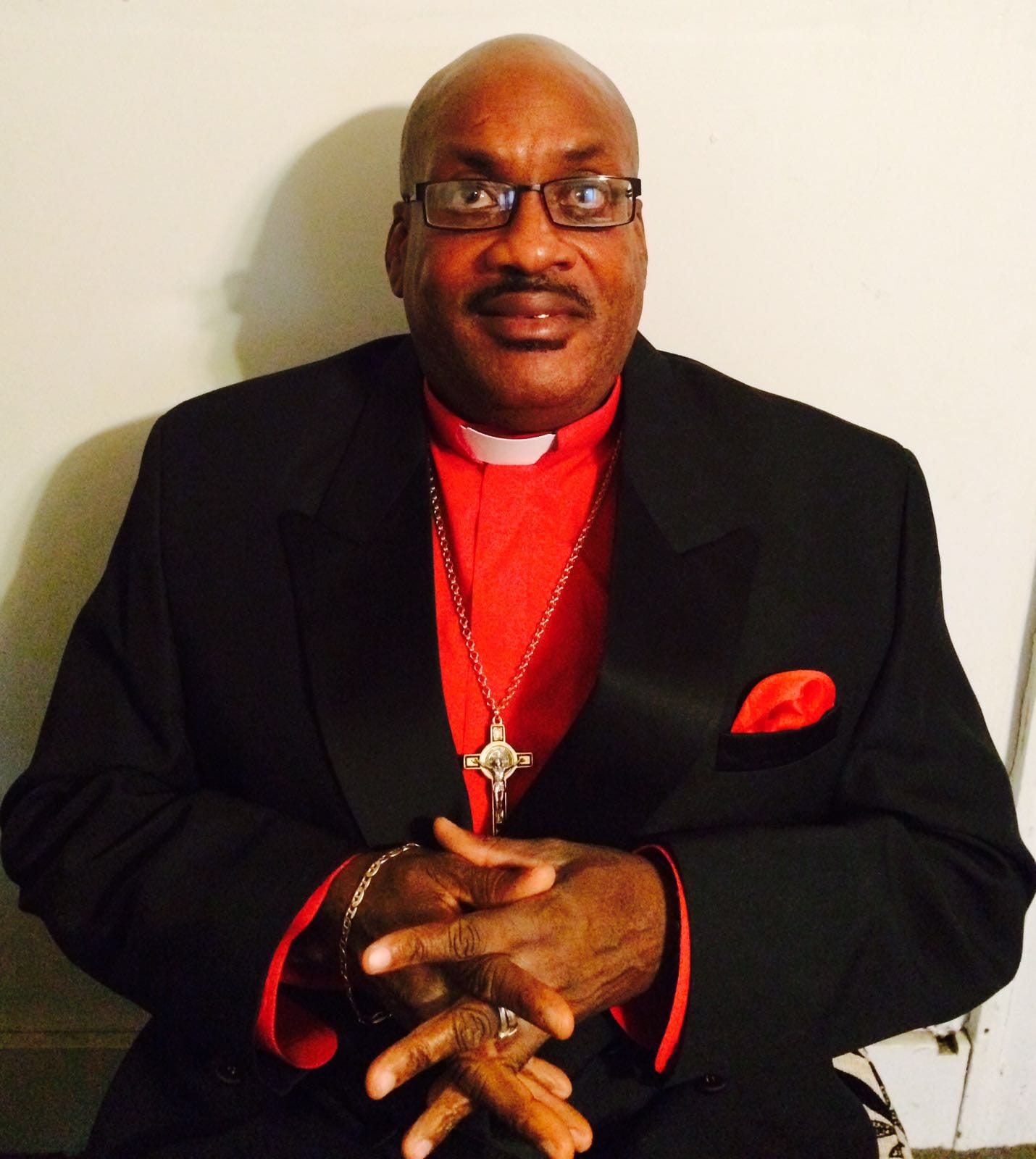

You must be logged in to post a comment.